
Leave A Message
If you are interested in our products and want to know more details,please leave a message here,we will reply you as soon as we can.


The purpose of cyclic corrosion testing is to reproduce the types of corrosion in outdoor corrosive environments. The test exposes the sample to a series of cyclic environments with different conditions. Simple exposure cycles, such as the Prohesion test, expose the sample to a cycle consisting of salt spray and dry conditions. More complex automotive testing methods require cycles of humidity and rest in addition to salt spray and drying cycles. Initially, these test cycles were performed manually, with laboratory operators moving samples from salt spray chambers to humidity chambers, and then to drying or resting devices. Our microprocessor-controlled test chamber can automatically complete these test steps, reducing the uncertainty of the test.
Item No :
GT-F50COrder(MOQ) :
1
Cyclic corrosion testing is a more realistic salt spray test than traditional constant-state exposure. Because actual outdoor exposure typically includes both dry and wet environments, simulating these natural, periodic conditions is meaningful for accelerated laboratory testing. Studies show that after cyclic corrosion testing, the relative corrosion rate, structure, and morphology of samples are very similar to outdoor corrosion results. Therefore, cyclic corrosion testing is closer to real outdoor exposure than traditional salt spray methods. It can effectively evaluate many corrosion mechanisms, such as general corrosion, electrochemical corrosion, and crevice corrosion.
Spraying Process for Cyclic Corrosion Testing
1. The salt spray system consists of a solvent tank, pneumatic system, water tank, spray tower, and nozzles. Utilizing Bernoulli's principle, salt water is transported from the storage tank to the test chamber. The spray nozzles and heating elements provide the required humidity and temperature within the chamber. The salt solution is atomized by compressed air through the spray.
2. The temperature inside the chamber is raised to the specified level by a bottom heating rod. Once the temperature stabilizes, the spray switch is turned on, and the salt spray test begins. Compared to ordinary salt spray test chambers, in this state, the temperature inside the test chamber is achieved by heating the air through the heating rod, ensuring temperature uniformity while minimizing the impact of water vapor on the test results compared to ordinary salt spray test chambers.
3. The movable spray tower design facilitates disassembly, cleaning, and maintenance, and provides more flexible and convenient utilization of the test space.
| Model | GT-F50C | |
| Settable conditions of Spray test | Salt spray test: NSS |
Test chamber: 35℃±2℃; Saturated air tank: 47℃±2℃ |
| Damp heat test |
Test temperature range: 35℃--60℃; Test humidity range: 80%RH~98%RH adjustable |
|
| Static test |
Test temperature range: 20℃--40℃; Test humidity range: 35%RH-60%RH±3%. |
|
| Operating Conditions | Temperature: RT~25℃; Humidity: ≤85% | |
| Laboratory temperature range | 20℃~60℃ | |
| Relative humidity | 35%-98%RH (±3%) | |
| Saturation tank temp. | 47℃—70℃ | |
| Temperature uniformity | ≤±2℃ | |
| Temperature fluctuation | ≤±1℃ | |
1. Controller: The controller uses a U760-SAH 16-bit true-color touchscreen with 120 program groups and a total cycle count of 1200.
2. Temperature Sensor: Corrosion-resistant platinum resistance thermometer PT100Ω/MV.
3. Heating Method: Employs a high-speed titanium alloy heater with multi-point layout for stable and uniform heating.
4. Spray System: Tower-type spray system with high-grade quartz nozzles, preventing crystallization during prolonged operation and ensuring uniform mist distribution.
5. Salt Solution Collection: Meets national standard requirements for funnels and measuring cylinders; sedimentation rate is adjustable and controllable.
6. Two-stage air intake depressurization ensures stable spray pressure.
The humidity system consists of a steam generator, blower, water circuit, and condenser. After the salt spray test, the spray tester will have a demisting program to quickly remove the salt spray from the test chamber. Then, the evaporator will output appropriate temperature and humidity based on the controller's settings. Generally, the humidity will be more precisely calibrated and stabilized after the temperature has stabilized.
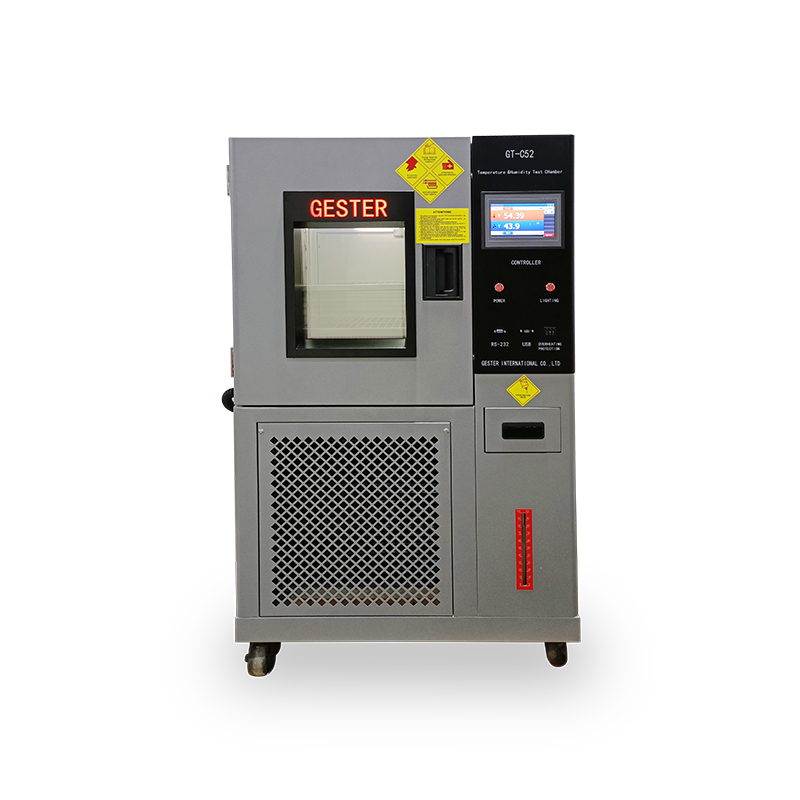
High-Precision Climate Simulation for Reliable Material & Electronic Reliability Testing -This constant temperature humidity chamber features programmable control, wide temperature and humidity ranges, and complies with international standards. Main Features: ✔ Wide Testing Range: Temperature: -60°C to +150°C | Humidity: 20% to 98% RH. ✔ Smart Control: 7-inch programmable color touch screen controller with USB data export. ✔ Premium Components: Equipped with imported French Tecumseh compressor. ✔ International Standards: Fully complies with ISO, ASTM, IEC, JIS, BS.
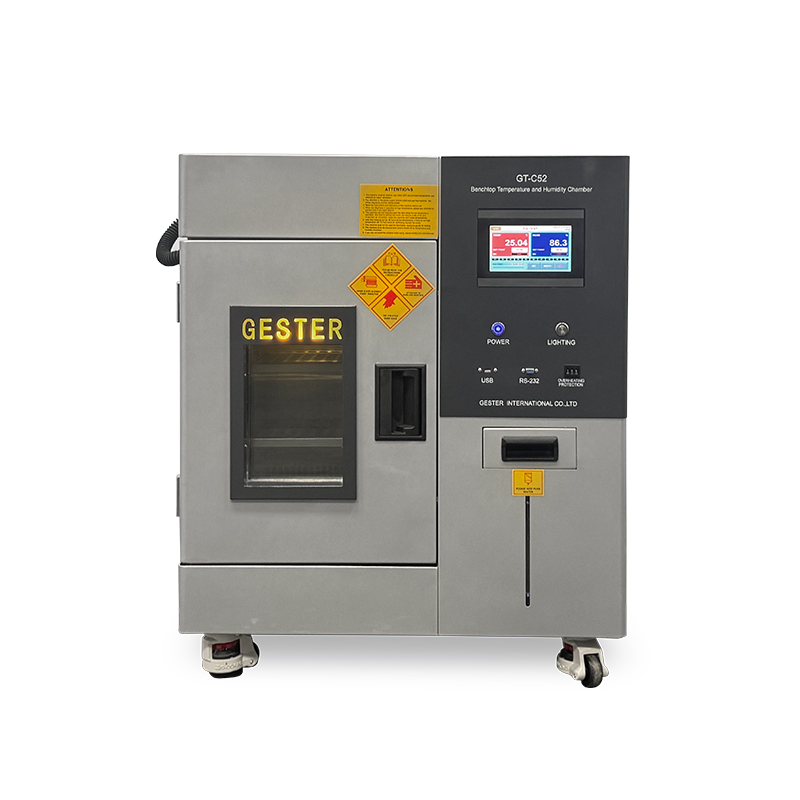
Benchtop temperature and humidity test chamber delivers precise environmental control through stable temperature and humidity settings for conditioning of samples prior to testing. Its compact footprint allows it to be easily placed on a stand or workbench, perfectly suiting laboratories and testing areas where space is limited — without compromising build quality or testing performance.
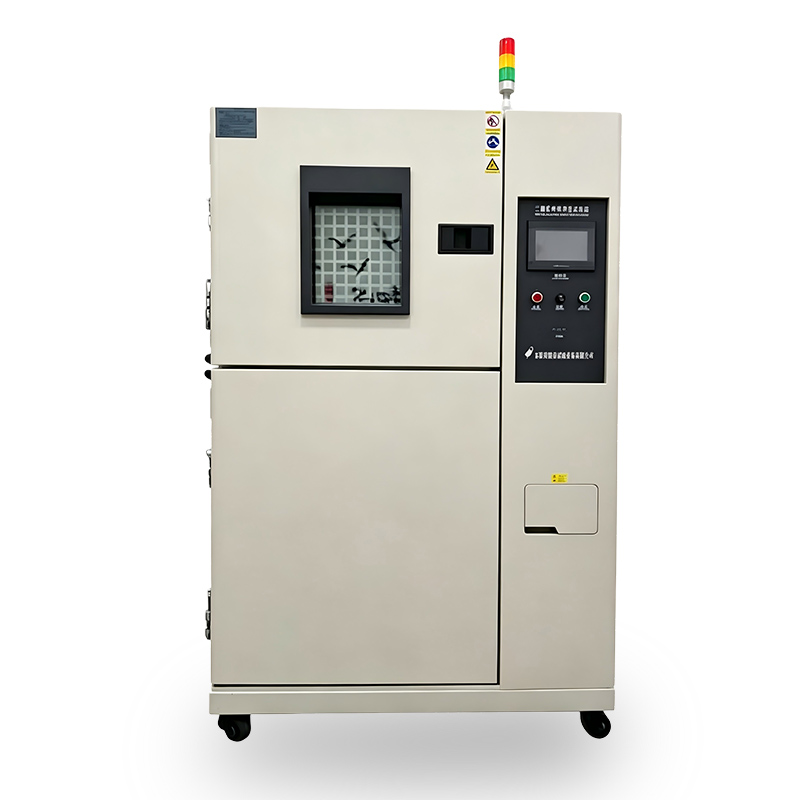
Thermal Shock Test Chamber consists of two independent compartments. The thermal shock machine or material being tested is placed in a test basket or tray and then transferred between the hot and cold chambers. The transfer process is rapid, ensuring quick temperature changes that simulate real-world conditions. This enables manufacturers to evaluate the impact of temperature differentials on product integrity, performance, and reliability.
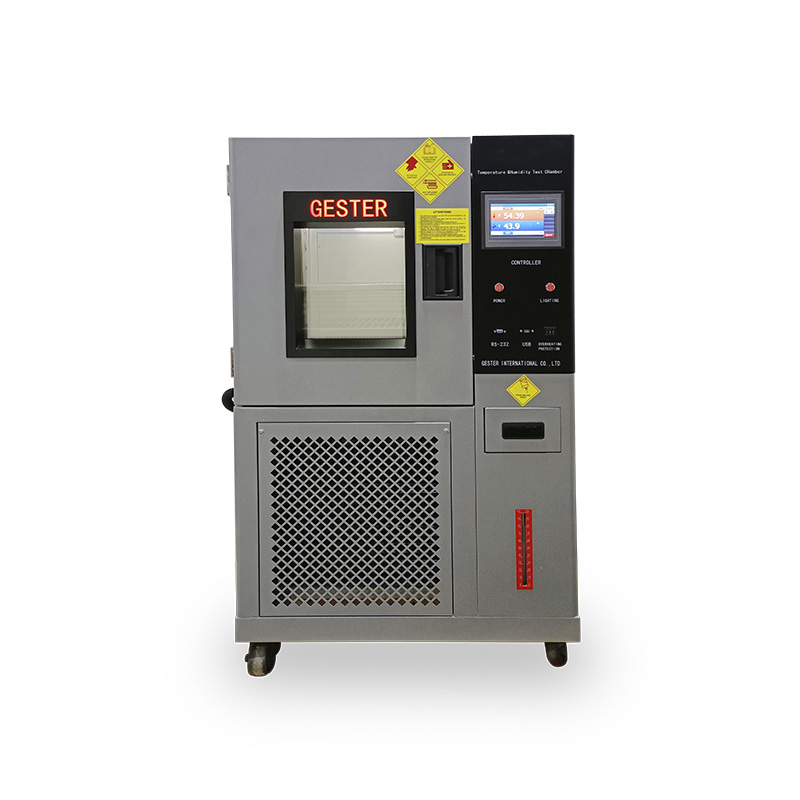
High Low Temperature Test Chamber is devices specifically designed to simulate extreme high- and low-temperature environments, enabling the assessment of the durability, functionality and performance of materials and components following prolonged exposure. Ideal for material durability testing in electronics, aerospace, and industrial applications.
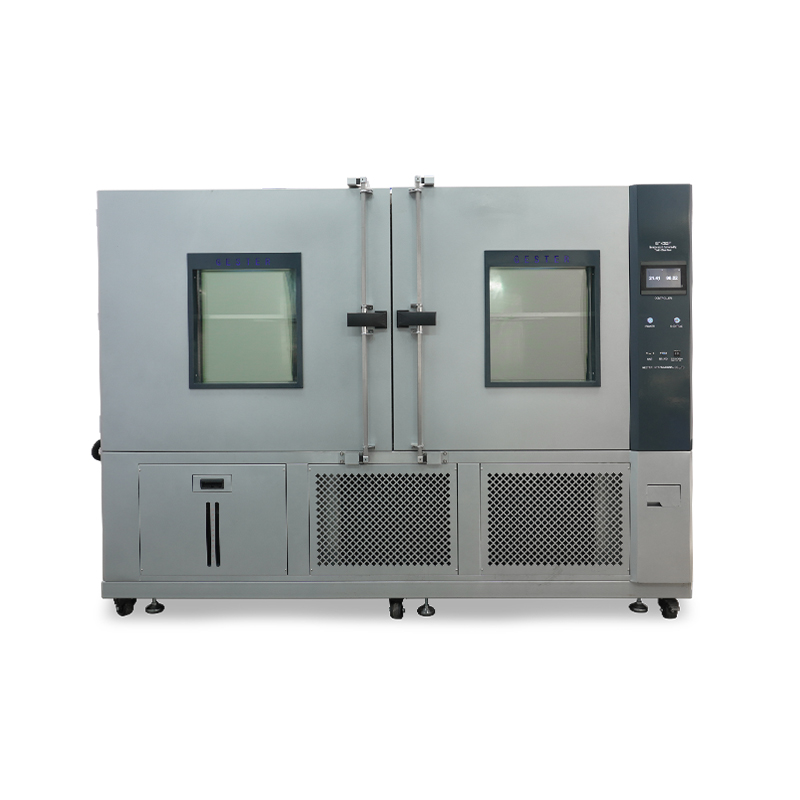
Walk In Environmental Test Chamber, suitable for test instrumentation materials, electricians, electronic products, household appliances, auto parts, chemical coatings,various electronic components and parts of other related products are stored and transported under high temperature and low temperature environment. The adaptability test is used to evaluate its performance indexes.
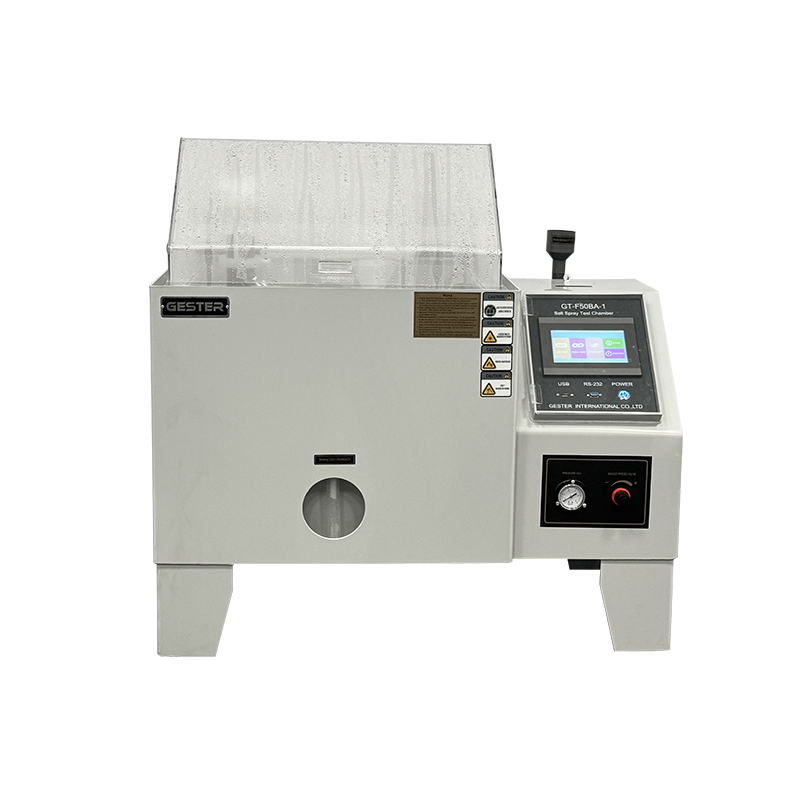
Salt spray test chamber is essential for evaluating the corrosion resistance of metals, coatings, and other materials – ensuring that products meet stringent corrosion resistance standards and enhancing their reliability in real-world applications.
Salt spray cabinet is essential for evaluating the corrosion resistance of metals, coatings, and other materials – ensuring Salt spray test machine that products meet stringent corrosion resistance standards and enhancing their reliability in real-world applications.
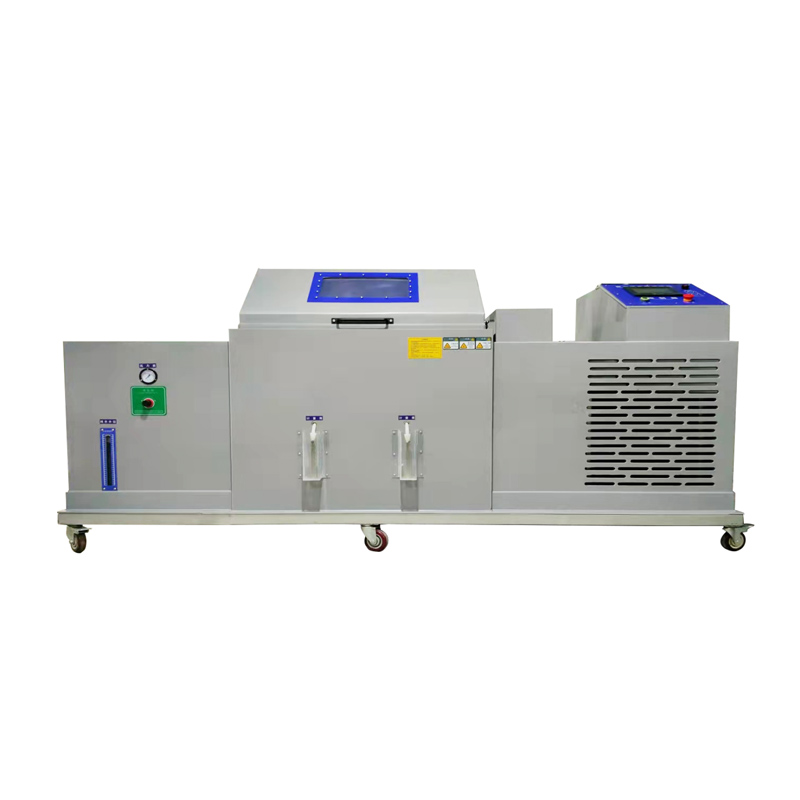
The purpose of cyclic corrosion testing is to reproduce the types of corrosion in outdoor corrosive environments. The test exposes the sample to a series of cyclic environments with different conditions. Simple exposure cycles, such as the Prohesion test, expose the sample to a cycle consisting of salt spray and dry conditions. More complex automotive testing methods require cycles of humidity and rest in addition to salt spray and drying cycles. Initially, these test cycles were performed manually, with laboratory operators moving samples from salt spray chambers to humidity chambers, and then to drying or resting devices. Our microprocessor-controlled test chamber can automatically complete these test steps, reducing the uncertainty of the test.
leave a message
Scan to wechat :

Scan to Whatsapp :