
Leave A Message
If you are interested in our products and want to know more details,please leave a message here,we will reply you as soon as we can.

Aging ovens are critical environmental test equipment for simulating real‑world working conditions across diverse industrial applications. They come in multiple types and serve distinct testing purposes. As an aging chamber supplier or aging test equipment manufacturer, understanding these product categories is essential. In this article, you’ll learn the various types, their applications, core performance parameters, their maintenance, and how to select one that fits your project requirements. Please continue reading to understand better.
Aging ovens are enclosed environmental test chambers built to replicate real‑world stress conditions such as ultraviolet light, high temperature, high humidity and high pressure. These pieces of aging test equipment speed up material degradation processes that would normally take months or years in natural environments.
These aging testers play a very important role in accelerated reliability testing for industrial applications. Furthermore, these aging chambers serve as mechanical‑electronic devices that you can utilize in different applications for evaluating material anti‑aging performance, color fastness and product long‑term reliability. The aging ovens can reproduce harsh environmental stress within a short testing cycle for specimens ranging from polymers, leather, fabrics to electronic components. As a type of industrial aging chamber, they help manufacturers evaluate material durability under controlled conditions.

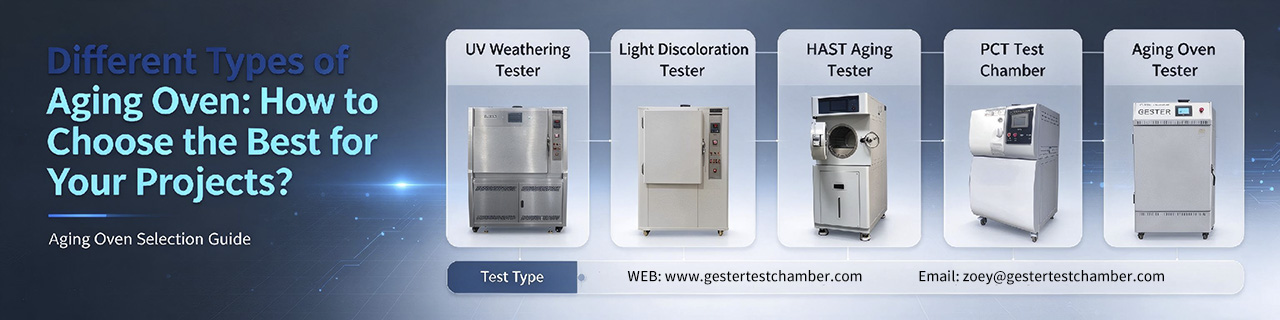
This uv weathering test chamber reproduces surface damage triggered by natural sunlight, rain and dew. It uses UVA‑340 fluorescent UV lamps as light sources to compress months‑long outdoor weathering harm into several days or weeks of laboratory testing. The observable damages include color fading, discoloring, chalkiness, cracking, bubbling, embrittlement and oxidation of test samples.
Its working cycle automatically combines ultraviolet irradiation, simulated rain spray, high‑temperature exposure, condensation and dark phases. You will commonly find this UV weathering chamber in plastic, coating, automotive and exterior material industries. When sourcing this equipment, a uv weathering test chamber manufacturer can help you identify a suitable configuration, while uv aging test chamber manufacturers may offer different models for specific testing requirements. For plastics testing, choosing the best accelerated weathering chamber for plastics testing depends on the required standards, specimen types and exposure conditions.
When your laboratory adopts weathering testers with stable irradiance control and stainless‑steel cabinet construction, you can obtain repeatable test results and avoid frequent equipment replacement. By this, you can save more long‑term operational costs.

You can also call this unit anti‑yellowness tester. This model simulates ultraviolet radiation and heat from sunlight. Operators expose test pieces inside this artificial environment for hours, then compare irradiated specimens against unexposed references with the grey scale to evaluate color fastness and anti‑yellowing performance.
This UV Light Discoloration Test Chamber is widely applied for shoe‑material testing, covering white or light‑colored upper materials, sole materials, leather, PU and textile fabrics. It assesses product defects caused by solar radiation and high container temperature during transportation. Apart from discoloration testing, this machine can work as an aging tester and dyeing oven for multi‑purpose lab use.

HAST chambers are built for highly accelerated stress tests under unsaturated humidity conditions. This high pressure accelerated aging test chamber simulates combined high‑temperature, high‑humidity and high‑pressure stress to predict long‑term product reliability within greatly shortened testing time.
You must not place flammable, explosive, volatile, corrosive or strong‑electromagnetic‑emission samples inside this chamber. This Highly Accelerated Stress Test Chamber finds heavy‑duty usage in semiconductor chips, electronic modules and aerospace component reliability validation. It supports well‑known industry test standards including IEC and JESD series specifications. Different inner‑chamber dimension options are available to match varying sample sizes.

The PCT chamber, also known as pressure cooker test chamber, delivers 100% relative saturated steam humidity for accelerated humidity aging evaluation. It simulates high‑temperature, high‑humidity and pressure climatic stress products encounter in service. This accelerated aging chamber is designed for applications requiring accelerated exposure to saturated steam under pressure.
This aging oven comes with built‑in safety protection devices and emergency stop push‑buttons. OEM and ODM non‑standard customization services are supported. Like HAST equipment, flammable, explosive, volatile and corrosive sample materials are forbidden for testing. It can run classic test settings such as 121℃, 100% RH under defined pressure for continuous hours of aging cycles. Multiple chamber size configurations are offered for different test‑load demands.

These are hot‑air circulation high‑temperature aging ovens. They function as thermal aging chambers that simulate pure high‑temperature circumstances to age test specimens rapidly. Researchers evaluate material aging resistance by observing changes of tensile strength and elongation ratio before and after heating exposure.
You will see this oven applied for leather, plastic, rubber and cloth material assessment. After uniform heating under preset temperature and holding time, technicians observe indexes including light discoloration, debonding, shrinkage and elongation residue to judge aging characteristics. It accelerates deterioration of rubber and plastic specimens under thermal stress. Two temperature‑range variants are available for different high‑temperature test requirements. For specialized applications, a custom thermal aging equipment solution can be selected to match specific temperature and capacity requirements.
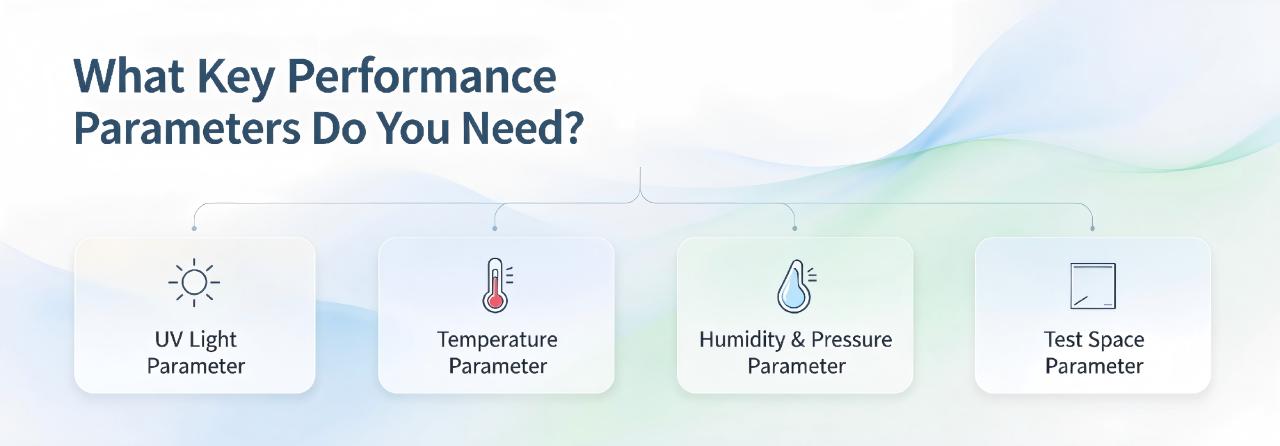
There are different performance ratings for aging ovens that define their test‑condition boundaries such as temperature range, humidity range, pressure capacity and light irradiance. Some projects will only deliver valid test data when your oven meets minimum parameter requirements to reproduce real‑world stress accurately. When comparing an aging test chamber or other aging test equipment, consider whether its specifications match your testing objectives.
This parameter group covers ultraviolet lamp type, lamp power, irradiance value and lamp service lifetime. Some UV testers allow touch‑screen adjustment of irradiance output. Lamp lifetime directly influences running cost and testing consistency.
Temperature parameters include working temperature range, temperature fluctuation and temperature uniformity across test space. Different aging oven types have distinct limits: pure thermal aging ovens can reach up to 300℃; UV weathering machines run within moderate temperature range; HAST and PCT high‑pressure testers normally top at 132℃. Stable temperature performance guarantees repeatable test outcomes.
Humidity settings differ greatly among categories. UV weathering testers control condensation humidity above 75% RH. HAST units support adjustable unsaturated humidity up to 85% RH. PCT chambers run strictly at 100% saturated steam humidity. High‑pressure aging models feature defined box‑internal pressure range for accelerated stress conditions.
Test chamber inner dimension defines how many specimens you can load in one single run. You need to match specimen dimension and holder quantity against your daily testing throughput requirements before purchasing.
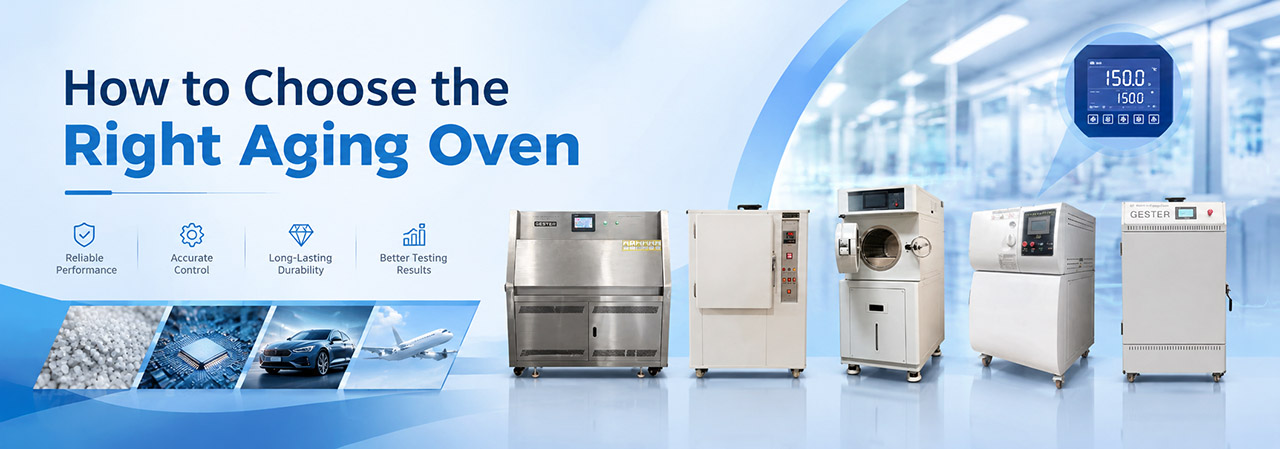
There are different types of aging ovens, and it is important to know the right aging oven that suits your intended application. Whether you need a standard aging chamber or a custom aging chamber manufacturer to provide a tailored solution, your choice should reflect your test requirements.
Start by knowing what your application requires. In this regard, you will need to consider some factors like targeted aging stress (UV light, heat, humidity, pressure), specimen types, applicable industry test standards, and expected test cycle length. The environmental stress factors include exposure to ultraviolet radiation, high temperature, steam humidity and elevated pressure. All the factors mentioned above will help you determine the right aging oven for your application.
You need to know the different types of aging ovens available and where they function effectively. For instance, the intelligent UV accelerated weathering tester is popularly used for outdoor‑exposed material evaluation because of its comprehensive sunlight‑rain‑dew simulation. On the other hand, PCT or HAST chambers are great where electronic components need high‑pressure steam accelerated reliability tests. If you are looking for a high pressure accelerated aging test chamber, verify that the equipment supports the pressure, temperature and humidity conditions required by your test protocol.
Specialized aging ovens i.e. light discoloration UV testers are for specialized functions such as footwear material anti‑yellowing assessment. Identifying the different aging oven types and their functions will guide you in choosing the one that suits your application. Depending on your needs, an aging testing room or aging test room may be appropriate for larger specimens or batch testing, while an aging chamber is suitable for applications that require a more compact testing space.
The temperature, humidity, pressure or UV irradiance range an aging oven can handle varies. Therefore, it is important to evaluate these factors so as to choose the one that can meet your requirements. You should also check inner chamber volume, specimen holder number and maximum acceptable specimen dimension for your test‑sample batches. If you need an aging test chamber for sale, compare the available configurations and specifications before making a purchase.
It is important you check the cabinet material composition of the aging oven. This also includes the treatments or coatings applied on the chamber interior and exterior. Besides hardware construction, verify whether the machine supports your mandatory industry standards such as ASTM, ISO, GB/T or JESD specifications. An experienced aging test equipment supplier can help you identify equipment that meets your required standards.
The maintenance requirements of aging ovens vary. Ensure you inquire about lamp replacement schedules, water consumption, filter replacement intervals of lubrication, inspection protocols and regular calibration work. While some ovens are cheap to maintain, some are expensive to maintain. It is better to choose an aging oven that works with your lab’s maintenance capabilities.
Performance and standard compliance are very crucial when choosing an aging oven type. Therefore, you need to carry out appropriate validation to assess the performance of the selected oven. Such validation are usually carried out under simulated operating conditions to enable proper evaluation of the chamber’s real‑world behavior with your own specimens.
Reach out to GESTER, an experienced aging test equipment manufacturer, to get professional advice on which aging oven best suits your needs. GESTER can provide expert recommendations and help you make the right decision based on your testing requirements. Whether you need a standard aging chamber or customized solutions for thermal aging and UV weathering applications, GESTER can help you find the right equipment for your project.
Aging ovens are available in different types, and their purpose varies based on the intended application. Due to the versatility of these test chambers, they are widely used across many industries ranging from footwear, polymer, automotive, electronics, aerospace and general manufacturing. Whether you need a standard aging chamber, an accelerated aging chamber or a specialized aging tester, the appropriate equipment depends on your testing objectives.
You must consider factors such as maintenance requirements, test‑condition capacity, cabinet material composition and standard compliance when choosing the perfect aging ovens for your applications.
Aging ovens have several applications. Their controllable stress simulation, testing accuracy and repeatability makes them relevant in the footwear, manufacturing, automotive, electronics, aerospace, polymer and leather‑goods industries. They help engineers verify material anti‑yellowing, weathering resistance and long‑term product reliability.
It is important to maintain aging ovens properly to ensure they last long and perform effectively. You must follow correct specimen‑loading rules and engage in regular inspection for lamp aging, seal wear, water‑system blockage and sensor drifting signs. Also, calibrate temperature, humidity or UV irradiance on schedule, replace consumable parts on time, and engage in proper chamber cleaning to ensure longevity and effective performance.
leave a message
Scan to wechat :

Scan to Whatsapp :