inquiry
Leave A Message
If you are interested in our products and want to know more details,please leave a message here,we will reply you as soon as we can.
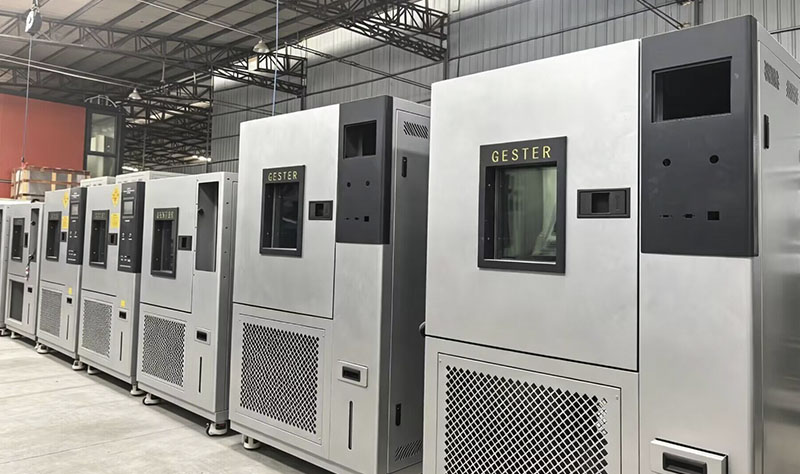
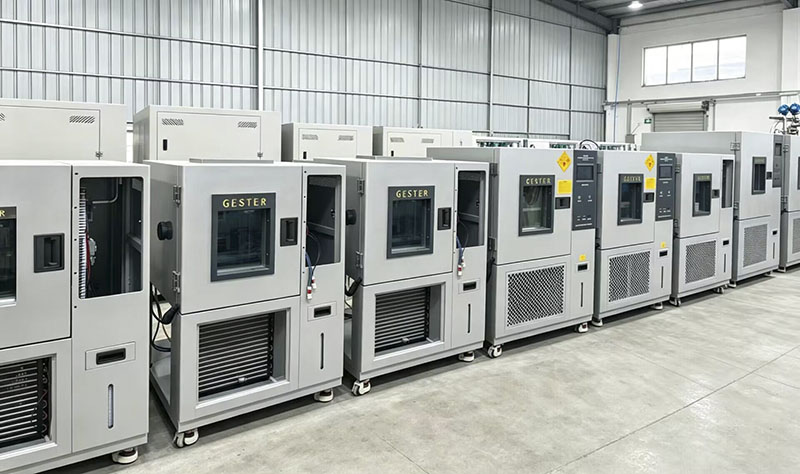
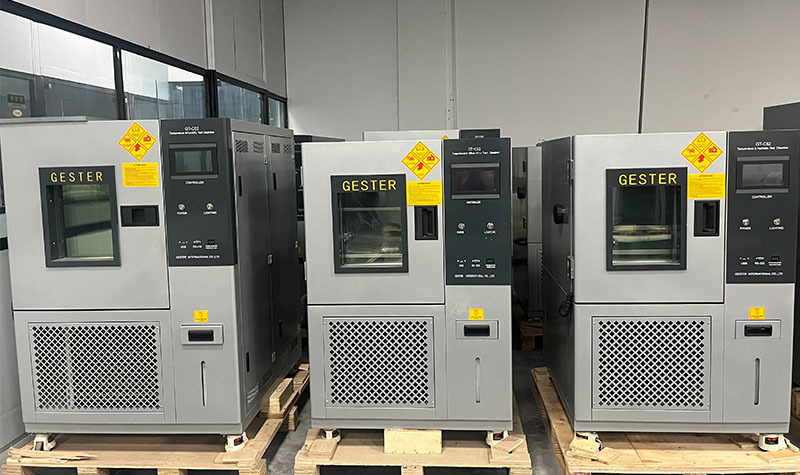
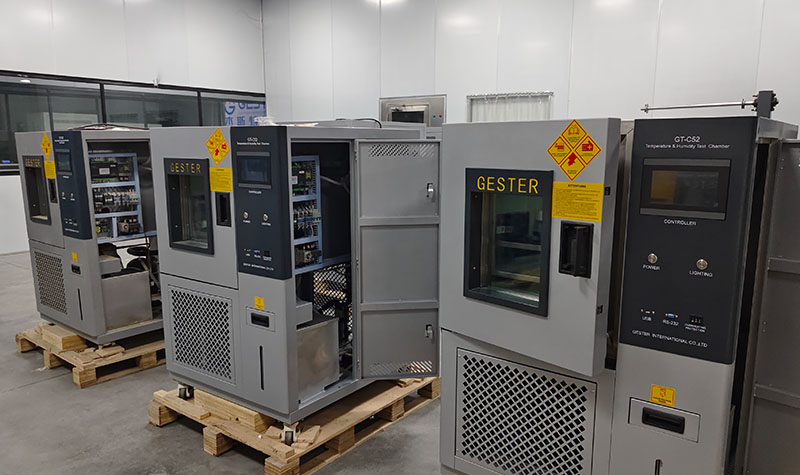
GESTER has the widest selection of test chambers.
Professional Environmental Test Chamber Supplier

GESTER Environmental Test Chambers

The Leading Environmental Test Chamber Provider In China

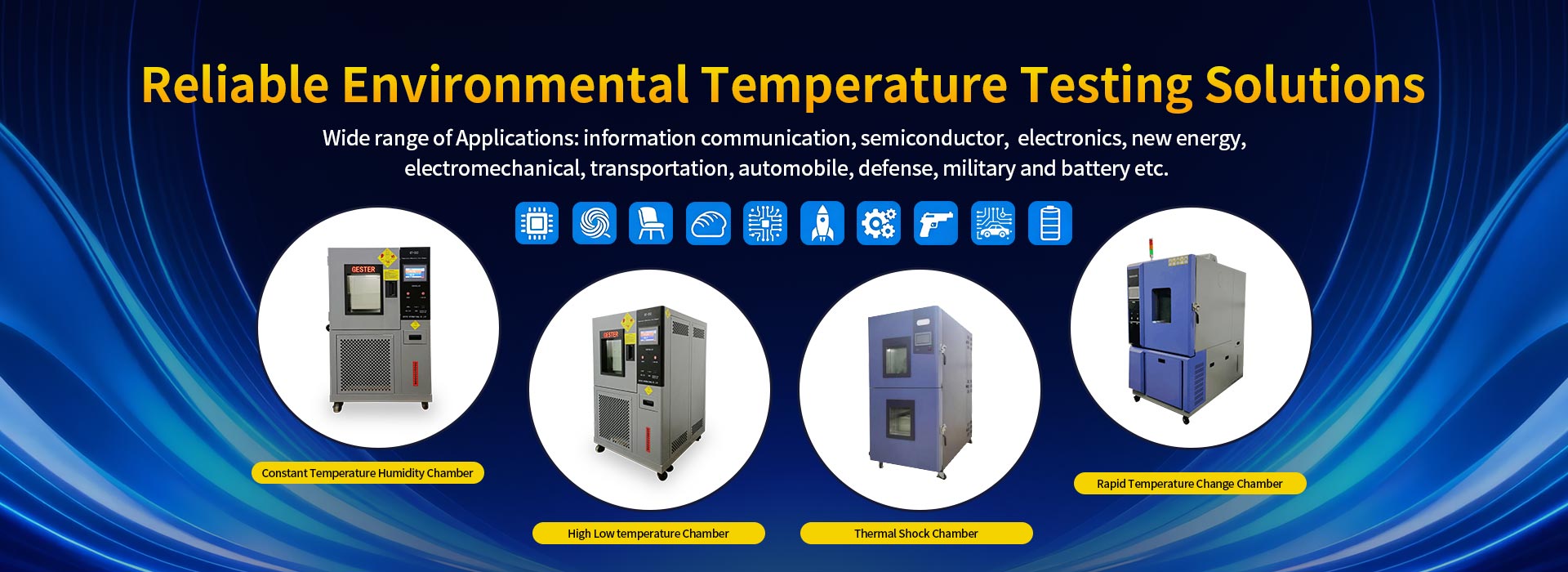
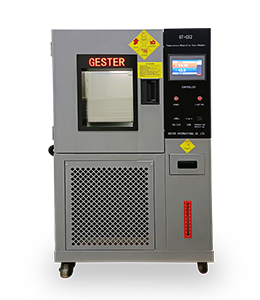
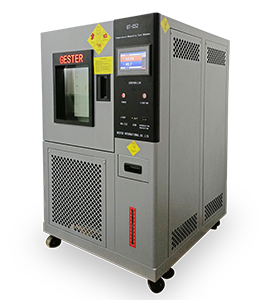
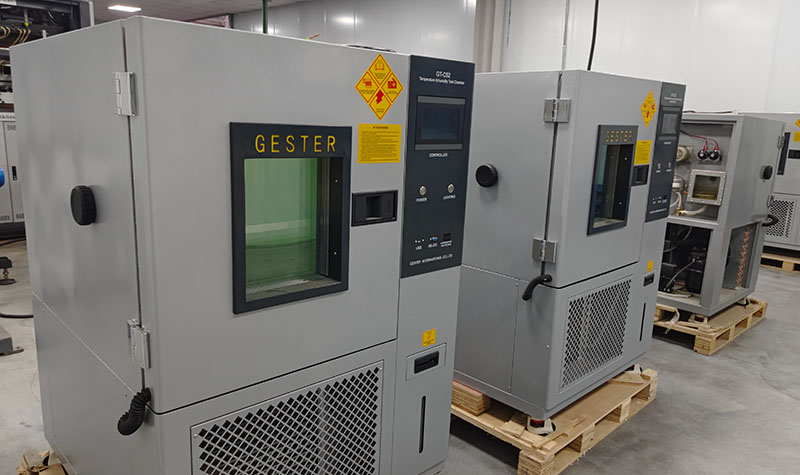
  • Temperature and Humidity Test Chamber

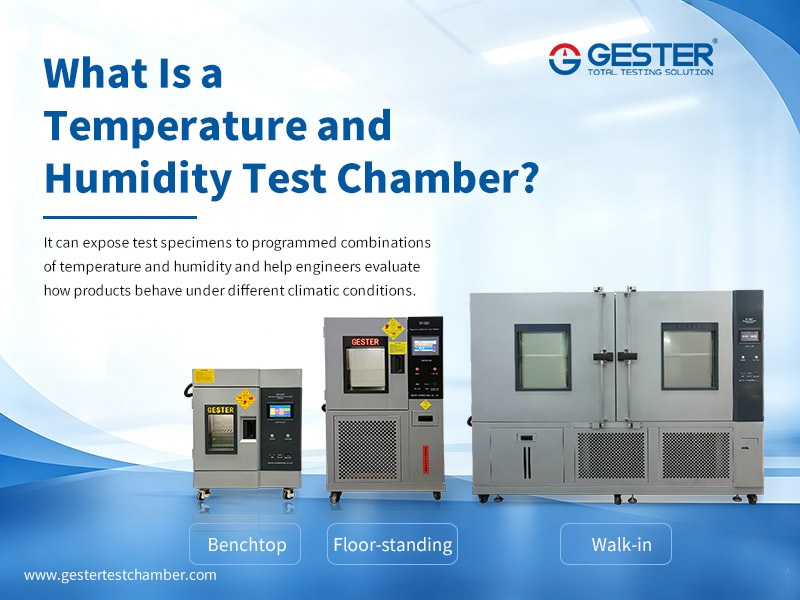
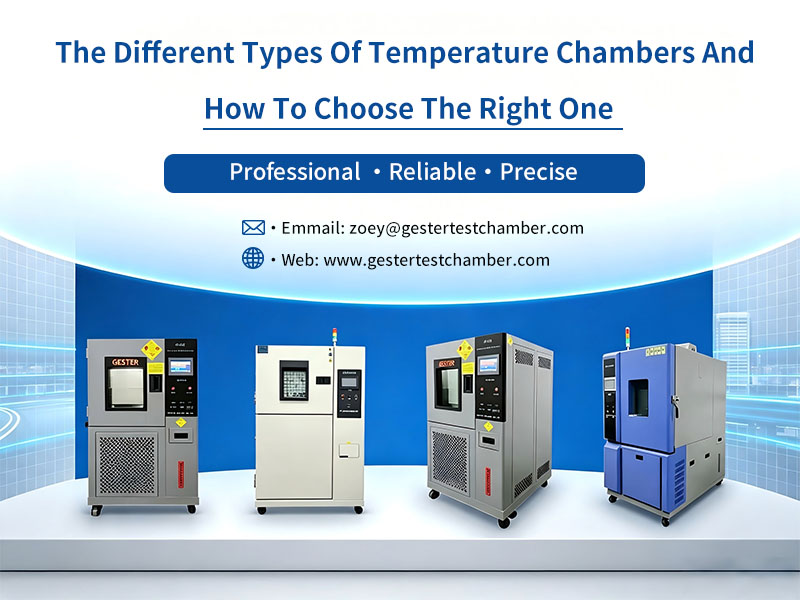
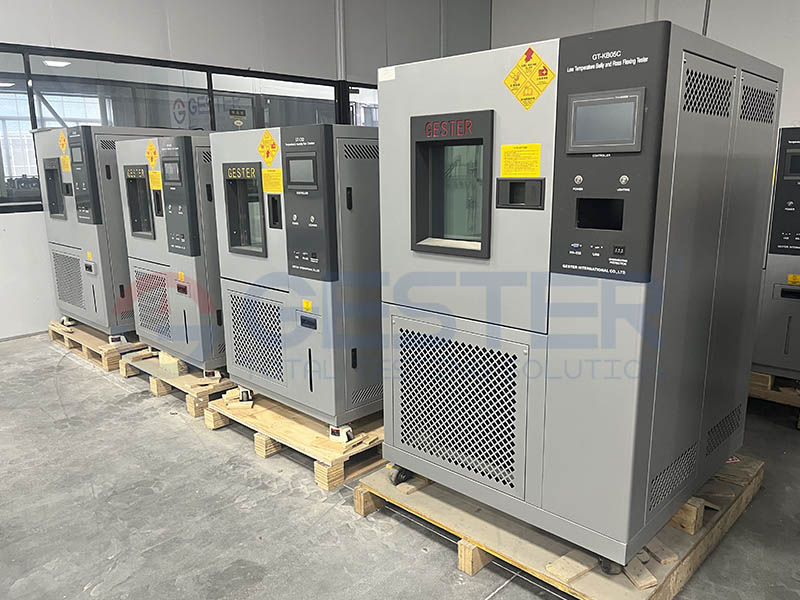
    Our Temperature and Humidity Test Chamber is designed to simulate a wide range of environmental conditions, enabling accurate and reliable testing of product performance, stability, and durability under controlled temperature and humidity levels. Let us help you meet your procurement needs for all types of Temperature Environmental Chamber. We provide customized environmental test chamber solutions that precisely match your specific test application scenarios.

    Read More
    Temperature and Humidity Test Chamber
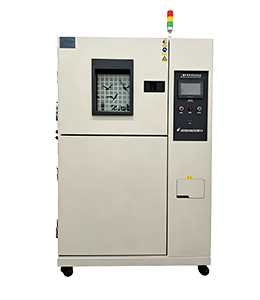
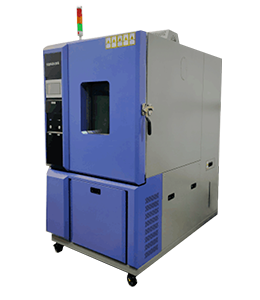
  • Thermal Shock Test Chamber

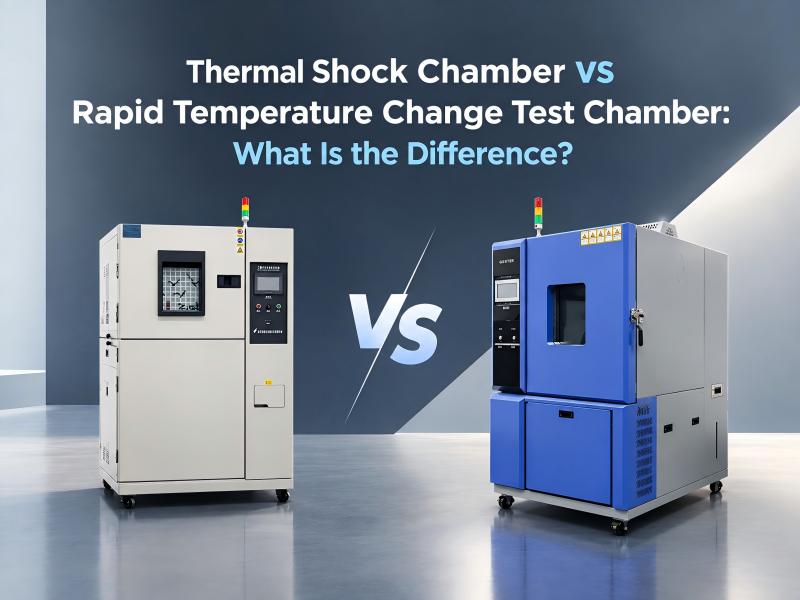
    GESTER supplies two-chamber and three-chamber thermal shock test chambers. Thermal shock chambers are designed to expose products to rapid transitions between extreme hot and cold conditions, revealing weaknesses that may not appear in slower cycling tests. Boasting fast sample switching, quick temperature recovery and precise control, our chambers serve reliability validation across electronics, automotive, aerospace, and defense sectors.

    Read More
    Thermal Shock Test Chamber
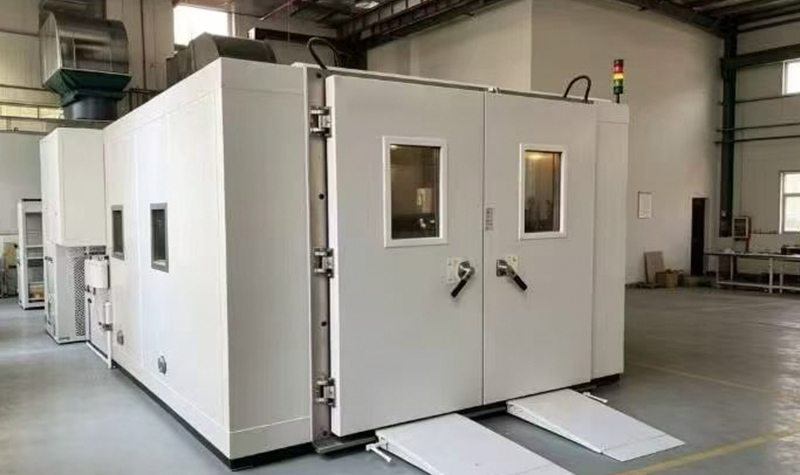
  • High and Low Temperature Test Chamber

    Designed to simulate extreme temperature conditions, High Low Temperature Test Chambers are widely used to evaluate the performance, reliability, and durability of materials, components, and products under high and low temperature environments.

    Read More
    High and Low Temperature Test Chamber
  • Rapid Temperature Change Test Chamber

    This series of Rapid Temperature Change Test Chambers is designed for reliability testing of industrial products, featuring high precision in temperature and humidity control, along with a broad control range. 

    Read More

    Rapid Temperature Change Test Chamber
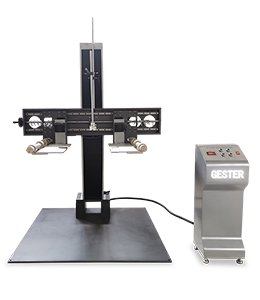
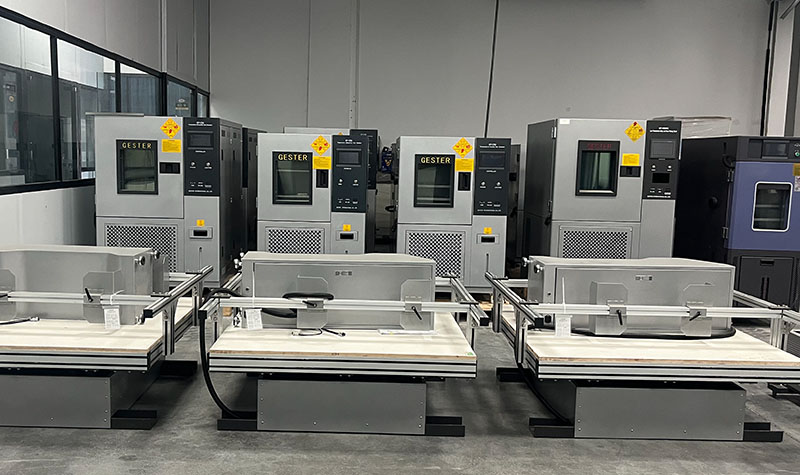
  • Drop & Falling Testing Machine

    Our Drop & Falling Testing Machine series is designed to meet diverse package and product impact testing needs, featuring three main categories: Single-wing Drop Tester for accurate free-fall tests on small to medium packages, Double-wing Drop Tester for large and heavy loads with stable horizontal release, and Zero Drop Tester for zero-drop impact simulation. Each model supports edge, corner, and surface drops, ensuring compliance with ISTA, ASTM, and ISO standards, helping you quickly identify packaging weaknesses and optimize protection.

    Read More
    Drop & Falling Testing Machine

About GESTER

Our clients are located all over the world and serve the whole world.
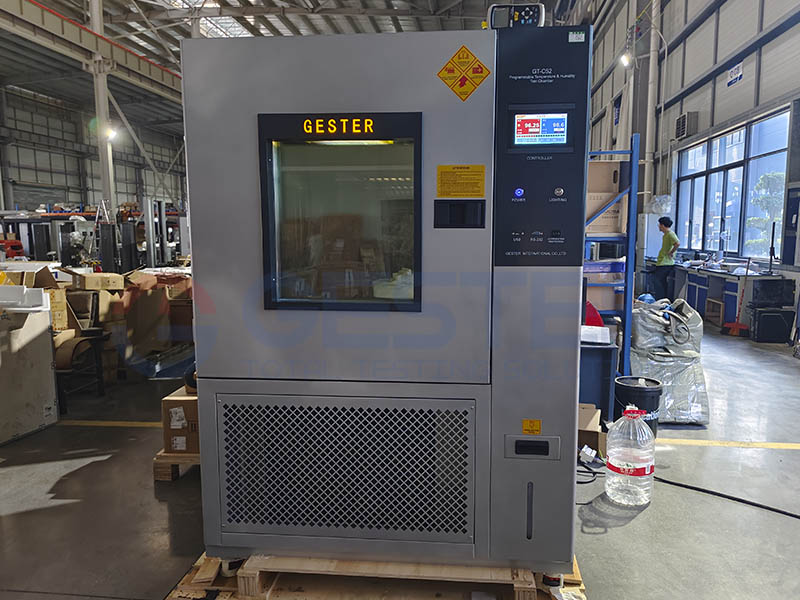
GESTER International Co.,Ltd is professionally engaged in production and R&D of Environmental and Climatic Test Chamber. With more than 25 years experience in research and development,we specialize in providing the Comprehensive solutions of Constant Temperature Humidity Test Chamber, High and Low Temperature Test chamber, Thermal Shock chamber, Rapid Temperature Change Test Chamber, IP Test Chamber, Salt Spray Chamber, Aging Oven and Packaging Transport Testing Machine and Bettery Testing Equipment etc.
Read More
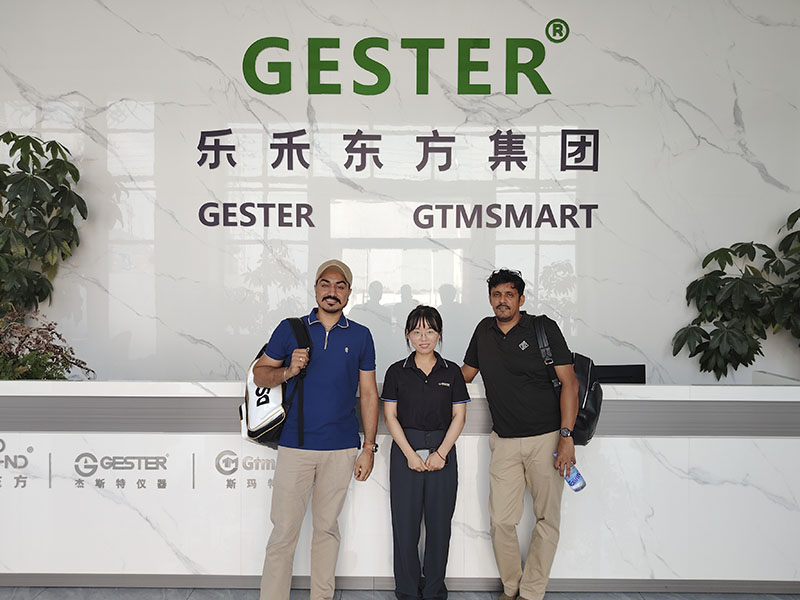
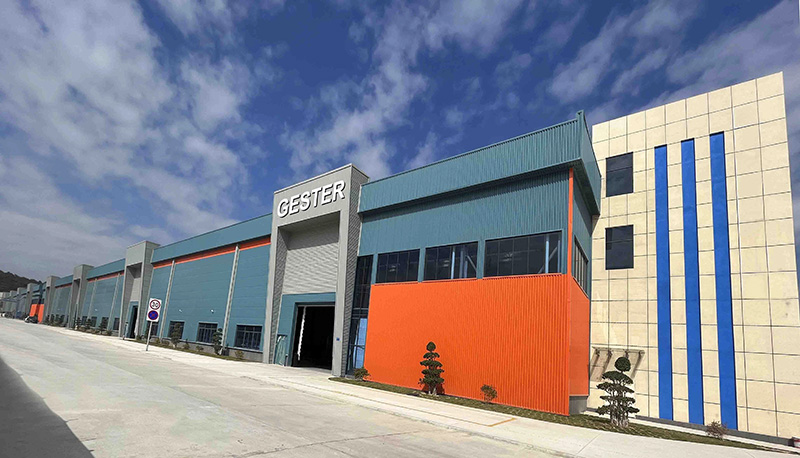
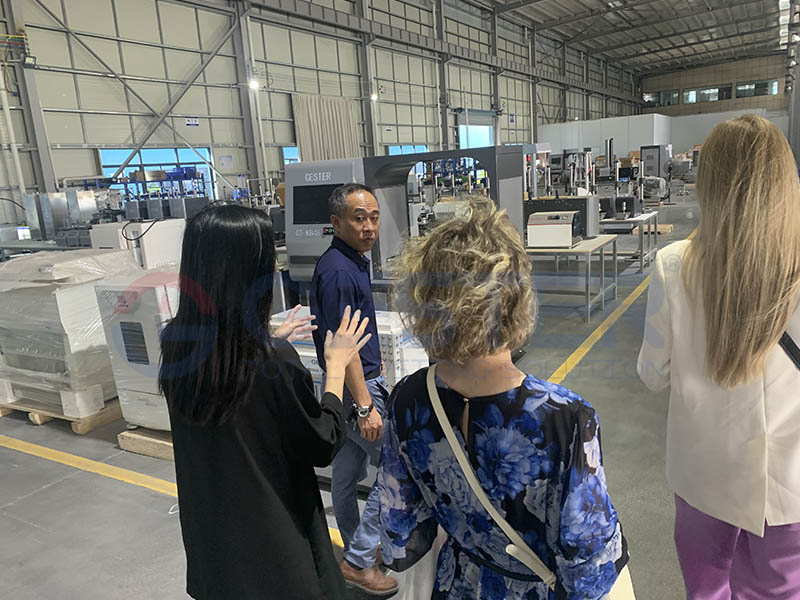
Our Factory

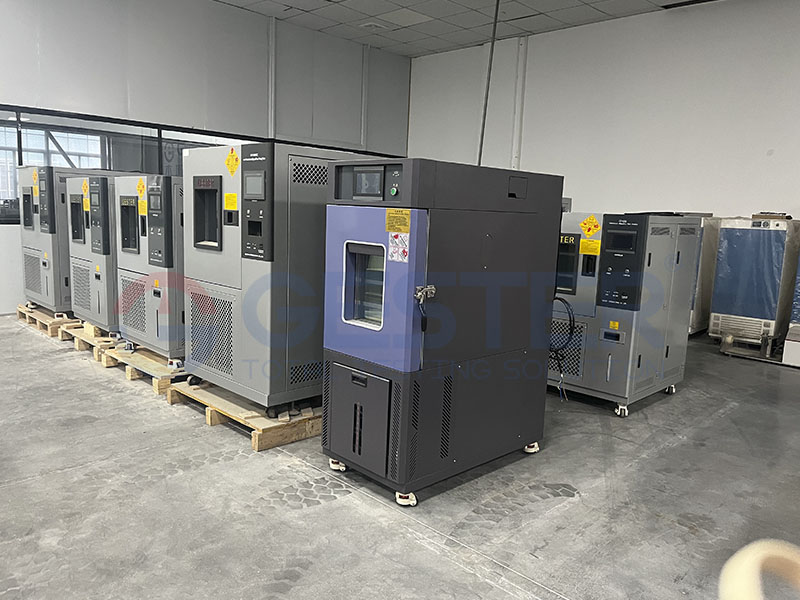
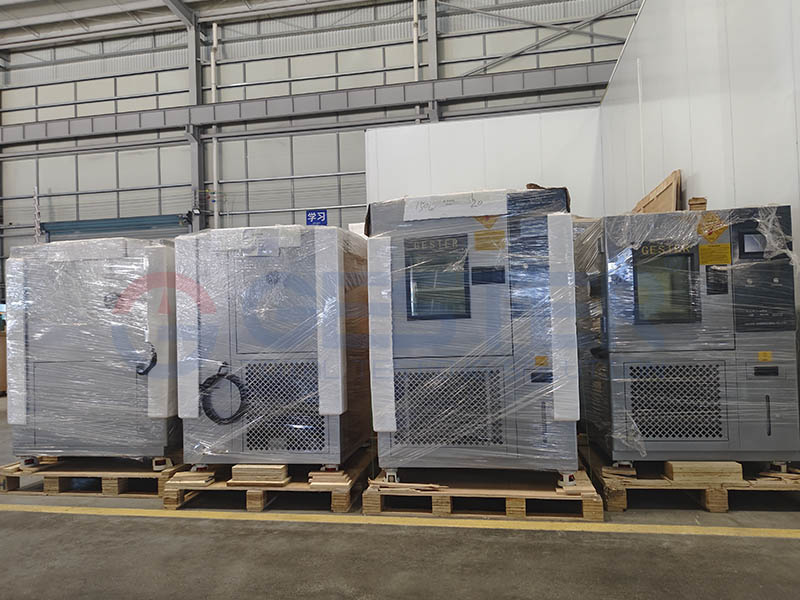
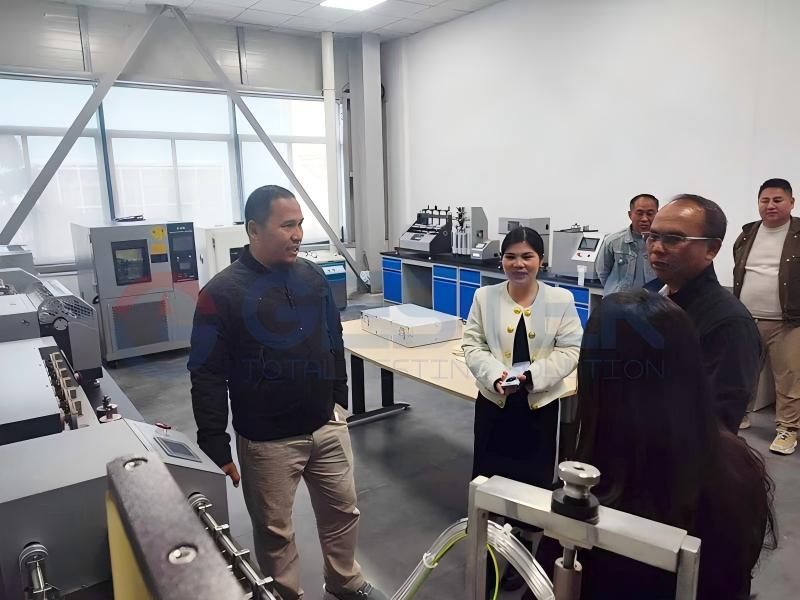
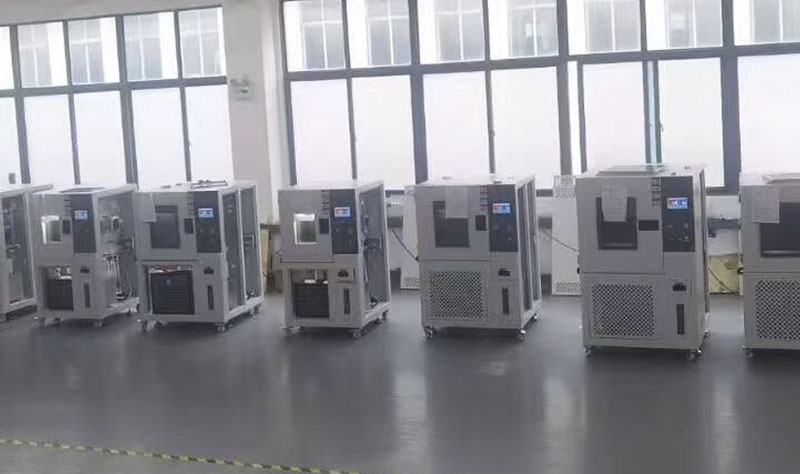
As a professional environmental test chamber manufacturer with strong production capacity and ample stock, GESTER delivers precise, reliable environmental simulation testing and full after-sales service.
  • 1997

    Company established

  • 12000

    Factory Area

  • 168+

    Export Country

  • Semiconductor Chips
    Semiconductor Chips

    Semiconductor Chips ㅤㅤㅤㅤㅤㅤ  Semiconductor Chips Testing Solutions Modern chips are found everywhere, from engine control units to 5G infrastructure. The manufacture and testing of semiconductor chips place extremely stringent demands on the precision, uniformity and stability of temperature control; temperature fluctuations directly affect chip yield and the accuracy of performance assessments. For the semiconductor industry, eliminating these potential risks is directly linked to safeguarding brand reputation and liability. GESTER’s team can customize your equipment to fit your exact needs.     HIGH PRECISION Accurate control of temperature & humidity for reliable test results HIGH STABILITY Excellent uniformity and stability ensure consistent performance IMPROVE YIELD Stable test environment helps reduce failures and improve chip yield COMPLIANCE Meet international standards such as IEC, ISO, GB and more ONE-STOP SOLUTION Equipment, customization, installation, training and after-sales support   Browse our selection of equipment designed to meet the standards of Semiconductor Chips environmental testing.    Temperature Test Chamber Programmable Temperature Humidity Chamber GT-C52 High Low Temperature Test Chamber GT-F58 Thermal Shock Chamber GT-F56A Rapid Temperature Change Test Chamber GT-F51   ㅤㅤㅤㅤㅤㅤㅤㅤㅤㅤㅤㅤㅤㅤㅤㅤㅤㅤㅤㅤㅤㅤㅤㅤㅤㅤㅤㅤㅤㅤㅤㅤㅤㅤㅤㅤㅤㅤㅤㅤㅤㅤㅤㅤㅤㅤㅤㅤㅤㅤㅤㅤㅤㅤㅤㅤㅤㅤㅤㅤㅤㅤㅤㅤㅤㅤㅤㅤㅤ GESTER provide one stop solution for Semiconductor Chips industry environmental testing, tell us about your requirements, let us provide equipment and service for you.   • Local Support: GESTER has supported 100+ VIP clients worldwide in establishing laboratories and showrooms, providing reliable local services for a smooth global purchasing experience.    

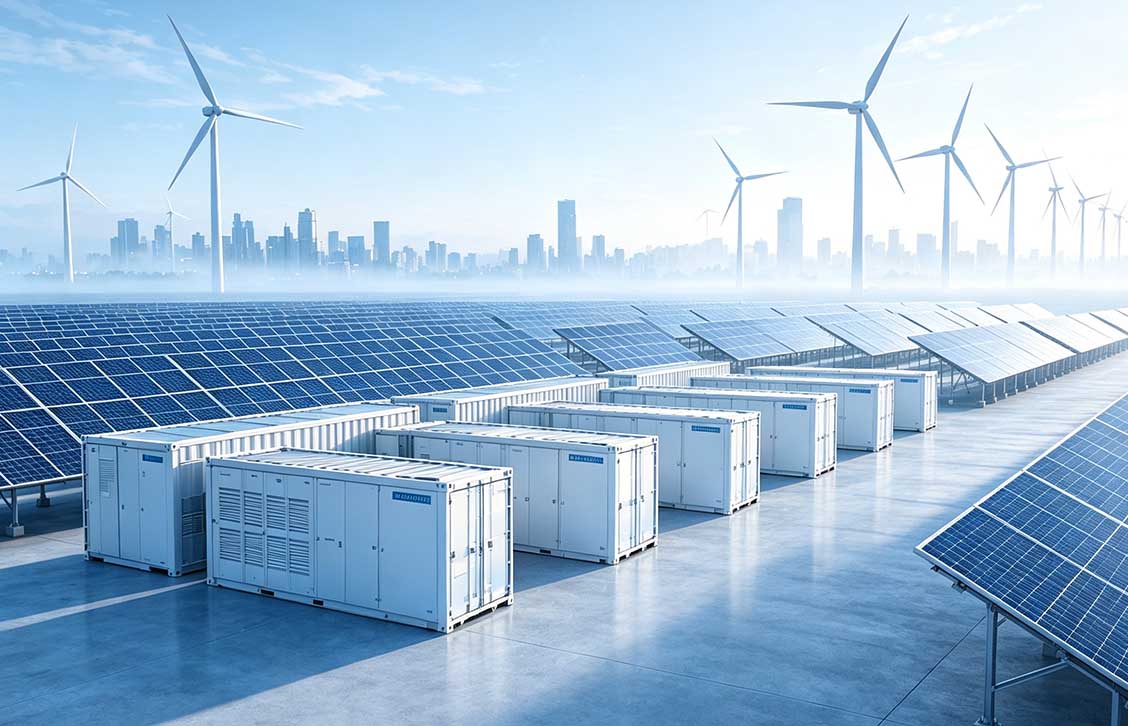
  • New Energy Batteries
    New Energy Batteries

    New Energy Batteries New Energy Batteries Testing Solutions With the continued global growth in demand for electric vehicles (EVs), energy storage systems (ESS), consumer electronics and renewable energy technologies, battery performance and safety have become of paramount importance. Factors such as extreme temperatures, humidity, thermal stress, vibration and long-term ageing can all have a significant impact on battery performance, lifespan and safety.       Environmental testing helps manufacturers identify potential risks before products are launched, ensure compliance with industry standards and enhance the overall reliability of their products. GESTER’s team can customize your equipment to fit your exact needs.   Browse our selection of equipment designed to meet the standards of New Energy Batteries environmental testing.      Temperature Test Chamber Programmable Temperature Humidity Chamber GT-C52 High Low Temperature Test Chamber GT-F58 Thermal Shock Chamber GT-F56A Rapid Temperature Change Test Chamber GT-F51 More Temperature Test Chamber >>>  Battery Testing Equipment   Battery Overcharge and Overdischarge Explosion-Proof Test Chamber GT-I08 IEC 62133 Battery Free Fall Testing Equipment GT-I02B Battery Nail Penetration Testing Machine GT-I04 Electromagnetic Vibration Test Bench GT-I12 More Battery Testing Equipment >>>>>>   ㅤㅤㅤㅤㅤㅤㅤㅤㅤㅤㅤㅤㅤㅤㅤㅤㅤㅤㅤㅤㅤㅤㅤㅤㅤㅤㅤㅤㅤㅤㅤㅤㅤㅤㅤㅤㅤㅤㅤㅤㅤㅤㅤㅤㅤㅤㅤㅤㅤㅤㅤㅤㅤㅤㅤㅤㅤㅤㅤㅤㅤㅤㅤㅤㅤㅤㅤㅤㅤ GESTER provide one stop solution for New Energy Batteries industry environmental testing, tell us about your requirements, let us provide equipment and service for you.   • Local Support: GESTER has supported 100+ VIP clients worldwide in establishing laboratories and showrooms, providing reliable local services for a smooth global purchasing experience.    

  • Electrical & Electronic Products
    Electrical & Electronic Products

    Electrical and Electronic Products ㅤ  Electrical and Electronic Products Testing Solutions During storage, transport and use, electronic products are often subjected to various harmful environmental influences that can affect their performance, reliability and service life. GESTER’s test chambers provide a wide range of controlled environmental conditions, enabling precise environmental testing of electronic products and simulating the harsh environmental conditions they may encounter throughout their lifecycle.       By simulating the various environmental conditions a product may face throughout its lifecycle, we help our customers identify faults at an early stage, optimise production processes and enhance product quality. GESTER’s team can customize your equipment to fit your exact needs.     Browse our selection of equipment designed to meet the standards of Electrical and Electronic Products  environmental testing.    Temperature Test Chamber Programmable Temperature Humidity Chamber GT-C52 High Low Temperature Test Chamber GT-F58 Thermal Shock Chamber GT-F56A Rapid Temperature Change Test Chamber GT-F51   ㅤㅤㅤㅤㅤㅤㅤㅤㅤㅤㅤㅤㅤㅤㅤㅤㅤㅤㅤㅤㅤㅤㅤㅤㅤㅤㅤㅤㅤㅤㅤㅤㅤㅤㅤㅤㅤㅤㅤㅤㅤㅤㅤㅤㅤㅤㅤㅤㅤㅤㅤㅤㅤㅤㅤㅤㅤㅤㅤㅤㅤㅤㅤㅤㅤㅤㅤㅤㅤ GESTER provide one stop solution for Electrical and Electronic Products industry environmental testing, tell us about your requirements, let us provide equipment and service for you.   • Local Support: GESTER has supported 100+ VIP clients worldwide in establishing laboratories and showrooms, providing reliable local services for a smooth global purchasing experience.    

  • Aerospace
    Aerospace

    Aerospace Industry ㅤㅤㅤㅤ  Aerospace Environmental Testing Solutions The aerospace industry holds exceptionally high standards for product reliability, safety, and performance. Without proper environmental testing, latent defects can lead to degraded performance, unplanned failures, or prohibitively costly maintenance issues. GESTER’s team can customize your equipment to fit your exact needs.       Why Choose GESTER for Aerospace Environmental Testing?     Precision Environmental Control Reliable Long-Term Operation Custom Solutions Technical Support Global Service Capabilities Tight, accurate regulation of temperature and humidity delivers repeatable, dependable test results. Engineered for nonstop laboratory use and the demands of stringent certification programs. Test chambers are available in a wide range of sizes and configurations to meet specialized aerospace testing specifications. Our specialist team provides comprehensive engineering and technical support, from equipment selection and installation through to after-sales service. We serve aerospace manufacturers, laboratories and testing organisations worldwide.   Browse our selection of equipment designed to meet the standards of Aerospace environmental testing.    Temperature Test Chamber Programmable Temperature Humidity Chamber GT-C52 High Low Temperature Test Chamber GT-F58 Thermal Shock Chamber GT-F56A Rapid Temperature Change Test Chamber GT-F51  Salt Spray Test Chamber  Salt Fog Chamber GT-F50BA NSS Salt Spray Tester GT-F50BB NSS, ASS, CASS Compound Salt Spray Test Chamber GT-F50C   Rain & Spray Test Chamber Dust Test Chamber GT-F10 Walk in Dust Test Chamber GT-F10B Rain Test Chamber GT-F60 IPX1234 Rain Test Chamber GT-F61 IPX123456 Horizontal Rain Spray Test Chamber GT-F62   IPX56 High-Pressure Waterproof Test Chamber(Horizontal) GT-F63 IPX7 Water Immersion Tester GT-F64 IPX78 Water Immersion Pressure Tester GT-F65 IPX6K Rain Tester(Horizontal) GT-F66 IPX9K High Temperature and High Pressure Jet Tester GT-F67     ㅤㅤㅤㅤㅤㅤㅤㅤㅤㅤㅤㅤㅤㅤㅤㅤㅤㅤㅤㅤㅤㅤㅤㅤㅤㅤㅤㅤㅤㅤㅤㅤㅤㅤㅤㅤㅤㅤㅤㅤㅤㅤㅤㅤㅤㅤㅤㅤㅤㅤㅤㅤㅤㅤㅤㅤㅤㅤㅤㅤㅤㅤㅤㅤㅤㅤㅤㅤㅤ GESTER provide one stop solution for Aerospace industry environmental testing, tell us about your requirements, let us provide equipment and service for you.   • Local Support: GESTER has supported 100+ VIP clients worldwide in establishing laboratories and showrooms, providing reliable local services for a smooth global purchasing experience.    

  • Mechanical & Electrical Products
    Mechanical & Electrical Products

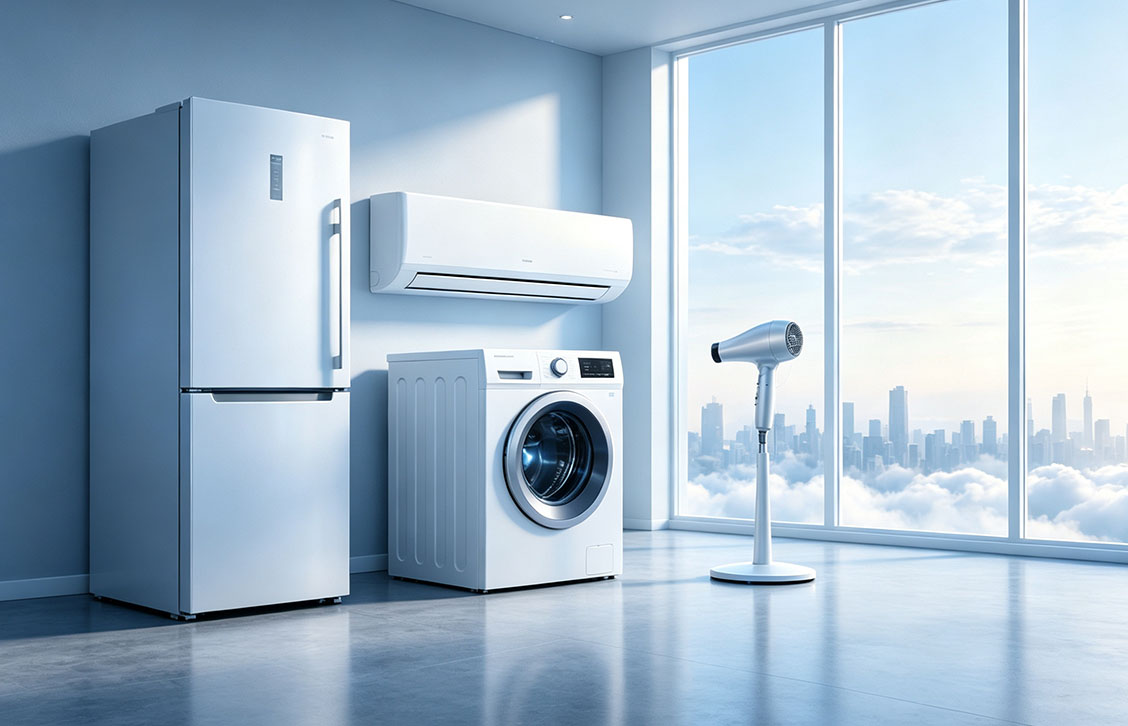
    Mechanical & Electrical Productsㅤ  Mechanical & Electrical Products Testing Solutions Mechanical & Electrical Products are widely used in modern homes, commercial facilities, and industrial environments. Products such as refrigerators, air conditioners, hair dryers, washing machines, and other electrical appliances are frequently exposed to temperature changes, humidity, vibration, transportation shock, and continuous operation.       To ensure stable performance, safety, and long service life, manufacturers must conduct comprehensive environmental reliability testing during product development, qualification, and production stages. GESTER’s team can customize your equipment to fit your exact needs.   Types of environmental testing equipment used in the Mechanical & Electrical Products      Temperature Test Chamber Programmable Temperature Humidity Chamber GT-C52 High Low Temperature Test Chamber GT-F58 Thermal Shock Chamber GT-F56A Rapid Temperature Change Test Chamber GT-F51   ㅤㅤㅤㅤㅤㅤㅤㅤㅤㅤㅤㅤㅤㅤㅤㅤㅤㅤㅤㅤㅤㅤㅤㅤㅤㅤㅤㅤㅤㅤㅤㅤㅤㅤㅤㅤㅤㅤㅤㅤㅤㅤㅤㅤㅤㅤㅤㅤㅤㅤㅤㅤㅤㅤㅤㅤㅤㅤㅤㅤㅤㅤㅤㅤㅤㅤㅤㅤㅤ GESTER provide one stop solution for Mechanical & Electrical Products industry environmental testing, tell us about your requirements, let us provide equipment and service for you.   • Local Support: GESTER has supported 100+ VIP clients worldwide in establishing laboratories and showrooms, providing reliable local services for a smooth global purchasing experience.    

  • Transportation & Automobile
    Transportation & Automobile

    Transportation & Automotiveㅤㅤ  Transportation & Automotive Testing Solutions The rapid development of the modern economy has driven rapid growth in key industries. The car has become an indispensable means of transport for modern people. So, how is quality controlled in the Transportation & Automotive industry? What tests and testing equipment are required? In fact, within the Transportation & Automotive industry, many components require environmental simulation testing.                                                           GESTER provides comprehensive testing solutions for the transport and automotive sectors, equipped with advanced technical solutions for testing and simulating all environmental, road and scenario conditions, suitable for R&D applications as well as the production and quality control of components and complete vehicles.     Types of environmental testing equipment used in the transportation & automobile      Temperature Test Chamber Programmable Temperature Humidity Chamber GT-C52 High Low Temperature Test Chamber GT-F58 Thermal Shock Chamber GT-F56A Rapid Temperature Change Test Chamber GT-F51  Salt Spray Test Chamber  Salt Fog Chamber GT-F50BA NSS Salt Spray Tester GT-F50BB NSS, ASS, CASS Compound Salt Spray Test Chamber GT-F50C   Rain & Spray Test Chamber Dust Test Chamber GT-F10 Walk in Dust Test Chamber GT-F10B Rain Test Chamber GT-F60 IPX1234 Rain Test Chamber GT-F61 IPX123456 Horizontal Rain Spray Test Chamber GT-F62   IPX56 High-Pressure Waterproof Test Chamber(Horizontal) GT-F63 IPX7 Water Immersion Tester GT-F64 IPX78 Water Immersion Pressure Tester GT-F65 IPX6K Rain Tester(Horizontal) GT-F66 IPX9K High Temperature and High Pressure Jet Tester GT-F67    Salt Spray Test Chamber    Transport Simulation Vibration Tester GT-M11 ISTA Incline Impact Tester GT-N49 Zero Drop Test Machine GT-LC06 More Packaging Transport Testing Machine >>>>>>   ㅤㅤㅤㅤㅤㅤㅤㅤㅤㅤㅤㅤㅤㅤㅤㅤㅤㅤㅤㅤㅤㅤㅤㅤㅤㅤㅤㅤㅤㅤㅤㅤㅤㅤㅤㅤㅤㅤㅤㅤㅤㅤㅤㅤㅤㅤㅤㅤㅤㅤㅤㅤㅤㅤㅤㅤㅤㅤㅤㅤㅤㅤㅤㅤㅤㅤㅤㅤㅤ GESTER provide one stop solution for Transportation & Automobile industry environmental testing, tell us about your requirements, let us provide equipment and service for you.   • Local Support: GESTER has supported 100+ VIP clients worldwide in establishing laboratories and showrooms, providing reliable local services for a smooth global purchasing experience.    

  • Battery
    Battery

    The battery industry is vast and consists of batteries and storage batteries for several different uses. Due to the volatile nature of batteries, testing is critical to ensure their safety in the environmental conditions they are exposed to. Conducting battery safety testing in an environmental test chamber and battery testing equipment help ensure the safety of people and products. 

Latest News

  • Thermal Shock Test Chamber: A Purchase Guide
    July 21, 2026
    Thermal Shock Test Chamber: A Purchase Guide

    In global industrial markets, product failures caused by extreme temperature alternations are a leading cause of customer complaints, reliability claims and returns. Even a minor physical deformation or performance drift after temperature shock can downgrade a product’s durability grade and lead to massive shipment rejections.   Modern thermal shock testing requires strictly controlled conditions that simulate real-world extreme temperature changes, including temperature range, switching speed, air circulation and environmental uniformity. A high-quality two-chamber thermal shock tester minimizes test variation, delivers consistent temperature accuracy. Therefore, selecting a suitable thermal shock test chamber is crucial.   What is Thermal Shock Chamber?     Thermal shock tester: Its primary purpose is to evaluate the physical changes and performance of materials under extreme temperature conditions. Thermal shock testing involves rapidly shifting a device under test (DUT) between two extremes—hence the ‘shock.’   It is a core reliability test widely adopted across electronics, electrical components, automation, communication, automotive, metal, chemical and plastics industries. It is also a mandatory compliance requirement under international and regional reliability standards.   Key Factors to Consider When Selecting a Thermal Shock Chamber   What temperature range do you need? Start by asking whether the chamber's thermal capability actually matches your product test requirements. Different industries call for different thermal stress conditions—electronic components, for example, typically need rapid exposure to extreme heat and cold to flush out latent failures caused by thermal stress, material expansion, and solder joint reliability issues.   Do You Need a Two-Chamber or Three-Chamber Thermal Shock Chamber? Thermal shock chambers generally come in two‑chamber or three‑chamber configurations.   A two‑chamber chamber has separate hot and cold compartments with an automatic sample transfer mechanism—the test specimen moves between chambers via a basket system to achieve rapid temperature changes. The upside? Fast thermal transition and simpler maintenance compared to more elaborate setups.   A three‑chamber chamber, on the other hand, includes a hot chamber, a cold chamber, and a separate test chamber, where conditioned hot or cold air is introduced into the testing area through a controlled airflow system. Depending on the applicable standards and test procedures, some methods may even require an intermediate ambient chamber.   How Fast Should the Temperature Transition Be? Thermal shock testing is all about subjecting products to sudden temperature swings—and the resulting rapid expansion and contraction create thermal stress. The real focus is whether that stress causes structural damage or performance failures: think glass items cracking from abrupt thermal differentials, or solder joints on electronic boards coming loose.   What Temperature Accuracy and Uniformity Are Required? Reliable thermal shock testing demands stable, repeatable temperature control. That means paying close attention to two key metrics: temperature fluctuation and temperature uniformity.   Temperature fluctuation refers to how much the temperature deviates around the setpoint during steady‑state operation. Temperature uniformity tells you whether every spot inside the chamber holds the same temperature—no hot or cold pockets.   Does the Manufacturer Provide Technical Support and Customization? Before you buy, take a hard look at the manufacturer's capabilities. Choosing an experienced thermal shock chamber supplier goes a long way toward ensuring reliable performance over the equipment's lifetime. Look for companies with a proven track record in the industry—their depth of experience often translates into better build quality and more knowledgeable support.   Support services offered by thermal shock chamber manufacturers also play a significant role. Consider the availability of technical assistance.    Why Chooes GESTER Thermal Shock Test Chamber ?   • Fast Response and Delivery: We fully understand the importance of time to our customers, so we strive to ensure quick response and timely delivery. By optimizing our supply chain management and production processes, we achieve efficient product delivery.   • Continuous Improvement and Innovation: We remain constantly attuned to industry technologies and trends, and are actively committed to research, development and innovation. Through continuous learning and improvement, we are able to provide reliable solutions to our customers.   • Professional Technical Support: Our engineers and professional team have accumulated nearly 30 years of comprehensive industry experience, offering customized technical support and solutions based on specific customer needs. Whether it is product selection, installation and commissioning, or after-sales maintenance, we will support our customers with a professional and efficient attitude.   • Local Support: GESTER has over helped 100+VIP Clients to set up laboratory/show room. from various countries who assist in providing local services. Enable you to avoid the inconvenience and worries associated with cross-border procurement.   • Excellent Service: Our service is designed to proactively identify and prevent potential issues, ensuring maximum productivity and minimizing downtime. We provide professional after-sales service for test equipment, safeguarding product testing.     FAQ   How are thermal shock test and constant temperature test different? Constant temperature test evaluates product performance under stable fixed temperature conditions, while thermal shock test measures product resistance to rapid, extreme temperature alternations and the resulting thermal stress damage.   What are the major standards used for thermal shock testing? Major standards for thermal shock testing include IEC 60068-2-14, MIL-STD-810 and GB/T 2423.22.   Which factors can affect the thermal shock test results? Different factors like temperature accuracy, transition time, air circulation uniformity and dwell time can affect thermal shock test results.  

    Read More
  • Why Choose GESTER as Your Professional Environmental Test Chamber Manufacturer?
    July 10, 2026
    Why Choose GESTER as Your Professional Environmental Test Chamber Manufacturer?

    In today’s crowded market, it doesn’t matter if you build automotive parts, consumer electronics, aerospace systems, semiconductors, or new energy batteries. Every product has to stand up to harsh, changing environmental conditions across its entire lifecycle.   That’s where environmental reliability testing comes in. It spots potential failures early, lifts overall product quality, and reduces costly risks before items reach the market. But accurate, repeatable results don’t happen by accident. For engineers, laboratories, and quality control teams, choosing the right environmental test chamber manufacturer is one of the most important decisions you can make.   GESTER has nearly 30 years of experience building testing equipment. We deliver professional environmental testing solutions to industries worldwide. Through advanced technology, custom-built solutions, strict quality control, and dedicated technical support, we help manufacturers boost product reliability and meet even the most demanding testing requirements.   - Professional Environmental Test Chamber Manufacturing Experience   Picking an environmental test chamber supplier with solid engineering capability, real manufacturing experience, and a deep understanding of how testing works across different applications.   As an established environmental test chamber manufacturer, GESTER has designed and built environmental simulation equipment for nearly every major industry. We know that no two products have the same testing needs. Some require rapid thermal cycling, others demand steady humidity control over months of testing, and many need to replicate the exact stresses of shipping, storage and daily operation.   Our chambers are built to simulate those real-world conditions accurately. With a controlled, repeatable test environment, you can measure product durability, spot design weaknesses and improve reliability with confidence.   Our in-house manufacturing capabilities cover: Full engineering and custom design support Precision production and fabrication processes Rigorous quality inspection at every stage Tailored equipment for specialized applications Technical support that lasts the full lifetime of your equipment We keep refining our designs and processes, so our customers around the world get equipment they can rely on year after year.   Testing Solutions Built for Your Industry   Every industry faces its own reliability challenges. A good environment test equipment manufacturer doesn’t sell one-size-fits-all machines — they build solutions that fit your specific requirements.     GESTER supplies complete environmental testing solutions across a wide range of sectors:   Automotive Industry Modern vehicles pack more electronics, sensors and battery systems than ever before. All of them need to perform reliably through temperature swings, humidity exposure and vibration.   Our chambers help automotive teams run reliability testing on: Electronic components and control units Sensors and onboard systems Interior and exterior trim parts Battery modules and related components Accurate environmental simulation means more durable parts and more stable performance on the road.   Electrical and Electronic Products From consumer devices to industrial electrical equipment, electronics are exposed to temperature shifts, moisture and continuous operating stress.    Battery and New Energy Industry With electric vehicles and renewable energy scaling faster than ever, battery reliability and safety aren’t just box-ticking requirements — they’re non-negotiable. Temperature cycling and environmental simulation testing let you evaluate: Consistent battery performance across conditions Thermal resistance and long-term stability Overall product safety margins Long-term reliability through repeated charge cycles   GESTER builds custom test solutions tailored for new energy manufacturers, so you can develop safer, more dependable products with confidence in your data.   Aerospace Industry Aerospace components operate under some of the most extreme conditions imaginable, and the safety standards that govern them leave zero room for error.   Our aerospace-focused environmental testing solutions help manufacturers validate performance and reliability at every stage — from early development through formal qualification.   High-Precision Testing Performance and Reliable Results   Accurate test results don’t happen by chance. They rely on two things: stable environmental control, and equipment that performs consistently, run after run.   When your simulation is reliable and repeatable, engineers can replicate real-world conditions with confidence and make clear, data-driven judgments about product performance.   For manufacturers, this level of accuracy delivers real, tangible benefits: Lower risk of field failures and costly warranty claims Faster, more streamlined product development Smoother quality and certification workflows Stronger, longer-lasting trust from your customers   Investing in dependable reliability testing equipment strengthens your entire quality management system — and pays off for years down the line.   Why Global Customers Choose GESTER as Their Environmental Test Chamber Manufacturer   When companies evaluate environment test equipment suppliers, they look for three things above all: proven reliability, real technical expertise, and support that lasts long after installation.   Here’s what GESTER delivers:   Professional Manufacturing Experience Nearly 30 years building testing equipment has given us a deep, hands-on understanding of what customers across different industries actually need.   Complete Testing Solutions From standalone chamber supply to fully customized testing systems, we support customers across a wide range of sectors and use cases.   Strong Customization Capability Our flexible engineering team thrives on solving specific, targeted testing challenges that standard equipment can’t handle.   Choose GESTER for Dependable Environmental Testing Solutions   Environmental testing sits at the core of modern product development, quality control, and long-term reliability improvement.   Picking the right environmental test chamber manufacturer doesn’t just give you better equipment — it helps you reduce product risks, run more efficient testing, and build higher-reliability products overall.   Backed by decades of manufacturing know-how, advanced testing technology, flexible customization, and worldwide technical support, GESTER provides reliable environmental testing equipment for automotive, electronics, aerospace, semiconductor, battery, and many other industries.   Reach out to GESTER today to talk through your environmental testing requirements. We’ll help you find the right solution for your application.  

    Read More
  • Step-by-step Custom High Low Temperature Test Chamber GT-F58 Process
    June 11, 2026
    Step-by-step Custom High Low Temperature Test Chamber GT-F58 Process

    High and low temperature test chambers are professional environmental testing equipment used for sample conditioning before tests and high-low temperature alternating tests for various materials. They can be configured in diverse styles to satisfy unique temperature, humidity and safety requirements of different testing scenarios.   This guide covers all core information about the custom production and configuration process of the High Low Temperature Test Chamber GT-F58.   From confirming functional demands, selecting core components and main materials to assembling equipment and conducting precision debugging, you will find all details right here.     Step 1: Confirm Functional Requirements for GT-F58 High Low Temperature Test Chamber   Defining detailed functional requirements is the primary and critical step before manufacturing the GT-F58 high low temperature test chamber. All subsequent production work needs to follow the confirmed requirements to ensure the equipment meets actual testing standards.   Define Core Testing Purposes The GT-F58 high low temperature test chamber has two main core applications. Firstly, it serves for conditioning of samples prior to formal testing, creating a stable pre-test environment for different test specimens. Secondly, it is applied to conduct high-low temperature alternating tests on a wide range of materials, so as to detect the performance changes of materials under alternating extreme temperature conditions.   This equipment is widely applicable to multiple industries that require environmental reliability testing. Clarifying the specific usage scenarios helps standardize the overall configuration of the test chamber.   Clarify Temperature and Humidity Parameters The GT-F58 high low temperature test chamber supports diversified configurations. You need to confirm the customized temperature range, humidity range and safety specifications according to testing standards.    Step 2: Select Equipment   Every part is chosen strictly based on design standards and usage demands.   Main Structural Material Selection The main structure of the GT-F58 high low temperature test chamber adopts aluminum as the  material. Aluminum features exquisite appearance, stable physical properties and excellent anti-fouling performance. It is not easy to be corroded in long-term high and low temperature alternating environments, and the daily cleaning and maintenance work of the equipment is simple and convenient.   Drive Component Selection This test chamber is equipped with a servo motor drive system. Compared with traditional driving structures, the servo motor can realize more accurate test load control during operation. Meanwhile, the servo motor runs smoothly, effectively reducing the overall operating noise of the equipment and creating a quiet testing environment.   Control System Selection The GT-F58 high and low temperature test chamber is fitted with a single PLC touch screen control system. The integrated control structure simplifies complex operation steps. Operators can complete parameter setting, program switching and running monitoring through the touch screen, making the whole testing operation more convenient and intuitive.   Loading Device Selection The loading device of the low temperature chamber part of GT-F58 adopts an electric control movement structure. The electric control mode realizes flexible adjustment of the loading area, greatly expands the available test space, and can accommodate test specimens of different sizes to meet diverse testing demands.   Step 3: Assemble and Manufacture GT-F58 High Low Temperature Test Chamber   After determining materials and components, the formal assembly and manufacturing of the GT-F58 high low temperature test chamber starts. The whole process follows standardized operating procedures to ensure the tight combination of all parts and stable mechanical performance.   Process Main Structural Parts Process the aluminum materials according to the equipment size drawings, including cutting, bending and splicing of structural plates.    Install Servo Drive System Fix and install the servo motor and matching transmission parts on the reserved position of the main structure. After installation, check the connection tightness of the drive structure to ensure the power output is stable and the transmission is smooth, avoiding stuck operation during load testing.   Assemble PLC Touch Screen Control System Embed the PLC host and touch screen into the operating area of the equipment.  Debug the electric control circuit and mechanical moving parts to ensure the loading device can move freely and position accurately under electric control, and the effective test space meets the design standard.   Integrate All Components Integrate the main structure, drive system, control system and loading device as a whole. Check all connecting parts, circuits and mechanical structures one by one to eliminate assembly hidden troubles and ensure all functional modules cooperate normally.   Step 4: Precision Debugging and Performance Calibration   Assembly is followed by overall precision debugging and performance calibration, which is the key link to ensure the testing accuracy and service performance of the GT-F58 high low temperature test chamber. All indicators are tested in strict accordance with factory standards.   Test Load Control Accuracy Run the high and low temperature test chamber with standard test loads, and verify the control effect of the servo motor on the test load. Adjust the drive parameters repeatedly to make the load control reach the designed high precision standard.   Check Operating Noise Detect the operating noise of the whole equipment in the full running state.  Simulate daily testing operations such as parameter setting, program starting and stopping to confirm that the control system is sensitive to operate and the operation logic is simple.   Inspect Test Space Availability Adjust the electric control loading device to the limit position, measure the actual effective test space inside the chamber, and confirm that the test space is extensive enough to satisfy various specimen placement requirements.   Final Inspection and Finishing Conduct a full inspection of the appearance, structure, functions and performance of the finished GT-F58 high and low temperature test chamber. Clean the equipment surface, sort out the circuits and accessories, and complete the final finishing work. For delivered products, adopt professional packaging to protect the equipment from damage during transportation.   Conclusion   The custom production process of the GT-F58 High Low Temperature Test Chamber includes four core links: requirement confirmation, material and component selection, integral assembly and precision debugging. Every step focuses on details to ensure the equipment has beautiful appearance, convenient operation, accurate control, low noise and large test space.   GESTER designs and manufactures customized high low temperature test chambers in accordance with customers' unique testing demands and parameter specifications. You can contact us for all your customized environmental testing equipment needs.    

    Read More
  • How to Customize Benchtop Temperature and Humidity Chamber for Your Project
    June 06, 2026
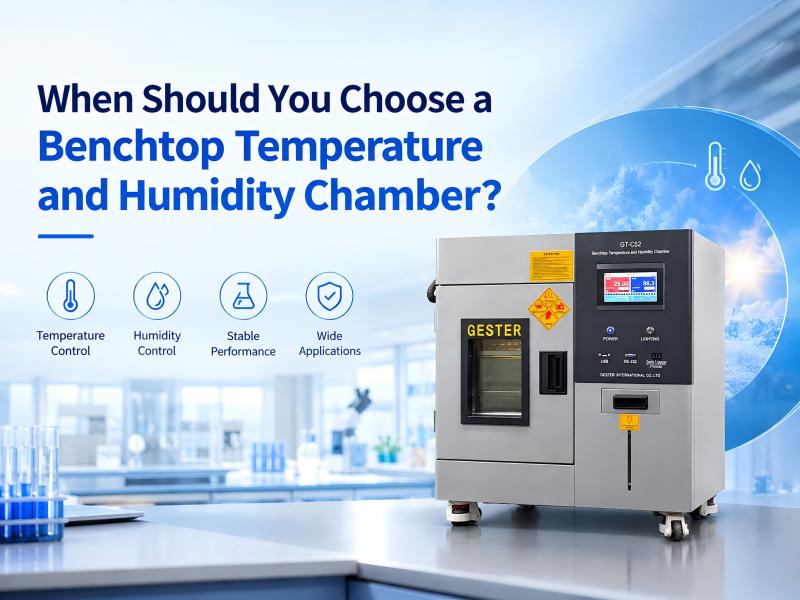
    How to Customize Benchtop Temperature and Humidity Chamber for Your Project

    Lots of temperature chamber benchtop customization projects end up with unsatisfied testing performance due to mismatched core configuration, improper component selection and non-targeted structural design.   Today, you will explore a complete guideline on how to customize benchtop temperature and humidity chambers for any lab and industrial testing project. From requirement confirmation, core configuration selection, chamber dimension definition, manufacturing & assembly techniques.   Benefits of Customizing Benchtop Temperature and Humidity Chamber for a Specific Project   Customized benchtop environmental chambers are tailored with exclusive parameter settings and structural layouts to match unique sample testing requirements across multiple industries.    • Helps optimize temperature & humidity control accuracy to realize required testing performance and reliable product reliability verification.   • Allows flexible structural modification to adapt varied sample sizes, loading weight and testing wiring demands during lab operation.   •Improves equipment exterior aesthetics and inner chamber corrosion resistance for long-term continuous operation.   •Reduces unnecessary redundant function configuration to cut down long-term equipment running power consumption.   •Supports energy-saving, eco-friendly chamber design to promote sustainable environmental testing equipment manufacturing.   How to Customize Benchtop Temperature and Humidity Chamber   The full customization route starts with clarifying project testing requirements, selecting matching core component grades, defining inner & outer chamber dimensions, finishing precision manufacturing and assembly, then adding customized surface treatments.   We split the full customization into 5 clear sequential steps:   Step 1: Specify your Project’s Needs   Your customization starts with full definition of actual testing requirements, first confirming target application fields: the customized chamber is for electrical & electronic product reliability test, mechanical parts environmental screening or general material pre-test conditioning before lab inspection.   You can consult our technical engineers anytime for detailed requirement communication.   Step 2: Choose the Right Grade of Benchtop Chamber Core Configuration   Benchtop temperature test chambers rely on matched refrigeration, humidification, sensing and control assemblies to realize programmable high-low temperature alternating test and constant temperature & humidity conditioning for various samples. Each core component grade directly determines chamber precision, stability and service life, though chamber design also faces constraints like compressor heat emission, inner chamber condensation risk and sensor drift under extreme low-temperature environment.   Step 3: Confirm Benchtop Chamber Internal Volume & Outer Dimension   Inner effective volume and outer cabinet dimension are decisive indicators to match your sample loading quantity, specimen size and lab desktop placement limitation, also directly affecting airflow circulation uniformity inside test compartment. All customized dimension design shall comply with mainstream industry specification benchmarks:   IEC 60068 (international environmental test standard for electronic products) defines effective inner space design rule: total sample volume shall not exceed 35% of chamber inner usable volume;   GB/T 10586-2013 specifies the gap distance between sample outer surface and inner chamber wall for uniform temperature distribution.   Different industries follow unique safety and placement standards for benchtop size design; core factors deciding customized chamber dimension include: Single batch test sample overall size and total loading weight Required inner airflow uniformity and heat dissipation allowance for heat-generating specimens Lab desktop bearing load and placement space restriction Target temperature fluctuation range (ultra-wide temp range needs thicker thermal insulation layer to increase outer cabinet size)   Step 4: Choose a Suitable Manufacturing & Assembly Technique   Custom benchtop environmental chamber production covers cabinet shell fabrication, inner chamber processing, core refrigeration/humidity system matching, control system integration and final mechanical assembly; each fabrication technology decides finished equipment precision, air tightness and long-term operational stability.   Step 5: Apply Internal & Exterior Surface Finishing on Benchtop Chamber   Proper surface finishing is an indispensable customization step to improve chamber anti-corrosion ability, appearance and long-term operating durability; inner and outer parts adopt differentiated finishing solutions per working environment.   After all finishing and full assembly, strict QC inspection is compulsory for customized benchtop chamber before delivery.   Why Choose GESTER for your Custom Benchtop Temperature and Humidity Chamber   As a professional China-based custom benchtop temperature and humidity chamber manufacturer, GESTER has invested in advanced CNC processing, precision assembly and aging test equipment to deliver fully tailored desktop environmental chambers with customized dimension, parameter and auxiliary functions while maintaining competitive factory-direct pricing.   We guarantee flexible MOQ arrangement and fast production turnaround for all customized chamber orders regardless of small-batch lab prototype or bulk industrial procurement demand.   Conclusion   Custom-made benchtop temperature and humidity chambers deliver targeted testing performance without users investing in complex independent component research and assembly. More laboratories and manufacturing enterprises choose customized finished chambers rather than purchasing standard off-the-shelf equipment and later reforming structure by themselves to satisfy unique high-low temperature alternating test and pre-sample conditioning needs.   At GESTER, our professional R&D and production team helps streamline your whole customization project and realize fully personalized benchtop chamber matching all your testing specifications.   FAQs   How do you Choose a custom Benchtop Temperature and Humidity Chamber Fabrication Partner? You need to assess the supplier’s industry experience, core R&D capability, complete processing equipment inventory, past finished customized chamber project cases, formal factory certification and production delivery cycle; arrange factory site inspection for long-term large-quantity cooperative procurement if possible.   What are the Common Challenges in Benchtop Chamber Customization? Typical customization difficulties include inner chamber condensation under extreme temperature difference, temperature uniformity deviation caused by unreasonable airflow design, controller program mismatch with user’s customized test curve and sealing aging leading to humidity control drift during long-term cycling test.   What is your MOQ for Custom-made Benchtop Temperature and Humidity Chambers? Normally our standard MOQ starts from 1 unit for custom benchtop chamber, and we provide flexible quantity adjustment based on customized parameter complexity, inner volume and additional auxiliary functions.   What are the Core Applications of Custom Benchtop Temperature and Humidity Chambers? Customized desktop chambers are widely used for pre-test sample conditioning and high-low temperature alternating cycling reliability test of electrical, electronic components, mechanical spare parts, polymer and new material products to verify product quality and environmental adaptability under simulated varied temperature & humidity lab conditions.

    Read More
  • What Is Salt Spray Test Chamber and Why Does It Matter in Semiconductor and Electronics Industry
    May 20, 2026
    What Is Salt Spray Test Chamber and Why Does It Matter in Semiconductor and Electronics Industry

      In practice, salt spray test chambers are typically used in critical reliability verification where corrosion resistance requirements are strict, and fault tolerance is minimal. The purpose of this article is to help you analyze what problems a salt spray test chamber specifically solves in semiconductor and electronic applications and in which scenarios it is applicable. By clarifying these premises can you make the right testing equipment selection and material treatment decisions.   What Is Salt Spray Test Chamber   A salt spray test chamber is a specialized environmental testing device that simulates salt spray corrosion environments, evaluate the corrosion resistance of materials and components after surface treatment. In semiconductor and electronics manufacturing, this chamber is not designed for basic performance detection, but for precisely validating the durability of surface treatments under corrosive conditions. Even stable control of key parameters such as temperature, salt concentration, pH value and spray volume can often provide convincing data support for material selection and process optimization. Thus, when applying a salt spray tester to your projects, think of it not simply as a spray device, but as a key reliability verification tool used to precisely assess the anti-corrosion performance of semiconductor and electronic components. Basic Properties of Salt Spray Test Chamber   Stable Environmental Simulation Unlike natural corrosion that is random and uncontrollable, salt spray test chambers can maintain consistent temperature, humidity, salt concentration and spray volume within a set range. This property makes them suitable for long-term, repeatable corrosion resistance tests of electronic components. It can adapt to diversified verification needs of semiconductor packaging, PCB boards, connectors and other components.   Consistent Test Results Under the same test settings, the data obtained from the chamber has good repeatability. For components that require long-term service in harsh environments, consistent test results can help you predict service life and optimize production processes.   Why It Matters in Semiconductor and Electronics Industry   In engineering testing and material selection for semiconductors and electronics, choosing a salt spray chamber is solving the corrosion risks that components face in actual service environments.   When your semiconductor packages, PCBs or connectors are used in high-humidity, coastal or salt-fog environments, surface treatments such as electroplating, anodizing, painting and rust-proof oil may degrade over time, leading to component failure and affecting product safety. A salt spray chamber can simulate these harsh conditions in advance, helping you screen qualified materials and processes before mass production.   When your electronic products need to meet international industry standards, unqualified corrosion resistance will lead to failure to enter the market. The chamber’s compliance with multiple mainstream standards ensures that your test results are recognized by global clients and regulatory bodies.   If your components are used in automotive electronics, outdoor communication equipment or marine electronics, long-term corrosion damage will increase maintenance and replacement costs. By conducting salt spray tests, you can reduce the failure rate of finished products and bring more stable benefits to your project.   It is because the salt spray test chamber verifies product reliability at key corrosion failure points that it is often used in semiconductor and electronics scenarios where stability is paramount, and failure is not an option. Understanding this role will allow you to make more accurate decisions in testing and material selection.   Application Scenarios in Semiconductor and Electronics Industry   Salt spray test chambers are mainly used to assess the corrosion resistance of products after surface treatments such as electroplating, anodizing, painting and rust-proof oil coating. It is suitable for two major test systems: • Neutral salt spray test (NSS) • Acidic corrosion experiments (AASS, CASS)   Typical application objects include semiconductor packaging parts, printed circuit boards (PCBs), electronic connectors, relay components, automotive electronic parts and outdoor communication equipment.   Compliance Standards   The salt spray test machine complies with mainstream international and regional standards, ensuring the validity and universality of test data: • CNS: 3627, 3885, 4159, 7669, 8886 • JIS: D-0201, H-8502, K-5400, Z-2371 • ISO: 3768, 3769, 3770 • ASTM: B-117, B-268 • GB-T2423 • DIN 50021   Key Specifications of Salt Spray Test Chamber   The chamber provides multiple models to match different sample sizes and test volumes, with unified core control performance: Model  GT-F50BA-1 GT-F50BA-2 GT-F50BA-3 GT-F50BA-4 GT-F50BA-5 Inside Chamber Dimension (WxDxH cm) 60x45x40 90x60x50 120x100x50 160x100x50 200x120x60 Outside Chamber Dimension (WxDxH cm) 107x60x118 141x88x128 190x130x140 230x140x140 270x150x150 Test Chamber Volume 108L 270L 600L 800L 1440L Brine Tank 15L 25L 40L 40L 40L   Core Test Parameters   Test Chamber Temperature • Brine test (NSS, ACSS): 35℃±1℃ • Corrosion resistance test (CASS): 50℃±1℃   Pressure Barrel Temperature • Brine test (NSS, ACSS): 47℃±1℃ • Corrosion resistance test (CASS): 63℃±1℃ • Brine Temperature: 35℃~50℃ • Brine Concentration: 5% sodium chloride solution; or 5% sodium chloride solution with 0.26g/L copper chloride (CuCl₂·2H₂O) • Compressed Air Pressure: 1.00±0.01kgf/cm² • Spray Volume: 1.0~2.0ml/80cm²/h (average value after at least 16 hours collection) • Test Chamber Relative Temperature: Above 85% PH-value • Neutral: 6.5~7.2 • Acidic: 3.0~3.2 • Spray Method: Continuous spray or intermittent spray   How to Determine if You Need a Salt Spray Test Chamber   Using a salt spray test equipment is more likely to maximize your project benefits when your application meets the following conditions: • Harsh service environments: If your semiconductor or electronic components are used in coastal, high-humidity, salt-fog or outdoor environments, and failure may cause safety risks or economic losses. • Surface treatment verification: If your materials adopt electroplating, anodizing, painting, rust-proof oil and other anti-corrosion treatments, and you need to verify the effectiveness of the process. • Standard compliance: If your products need to enter the international market and must pass tests specified by CNS, JIS, ISO, ASTM and other standards. • Long-term reliability demand: If you need to predict the service life of components and reduce after-sales failure rate.   Situations to Avoid Using • Benign indoor environments: If the service temperature, humidity and corrosion level are within the range of conventional materials, no additional salt spray test is needed. • Limited budget: For small-batch, low-value products with low reliability requirements, the cost can be optimized by entrusting third-party testing or using alternative methods.   FAQ   How to choose the right model of salt spray test chamber? You can select the model according to the size and quantity of your test samples, mainly referring to the inner chamber dimension and test chamber volume.   Understanding the application boundary and verification value of the salt spray test chamber can help you establish clearer logic in testing plan formulation and material selection. You can tell us your product type, test requirements and application environment, and our professional team will recommend the most suitable testing solution for you!

    Read More
  • The Key Role of High Low Temperature Chambers in New Energy Materials Industry
    May 15, 2026
    The Key Role of High Low Temperature Chambers in New Energy Materials Industry

    As the global new energy materials industry accelerates its growth—powering breakthroughs in lithium-ion batteries, photovoltaic materials, energy storage composites, and thermal management materials—extreme temperature environments have become one of the most critical challenges to material performance and stability. Whether facing sustained low temperatures in frigid regions or intense high temperatures during heavy-duty operation, new energy materials must retain consistent physical, chemical, and mechanical properties to guarantee the safety and efficiency of downstream applications. High low temperature chambers serve as an irreplaceable tool for environmental simulation and reliability verification, turning unproven material performance into quantifiable, real-world validated data.     Why New Energy Material Reliability Matters So Much   New energy refers to energy sources that are distinct from conventional ones such as coal, oil, natural gas, and large- and medium-scale hydropower—sources that have yet to be widely utilized but are being actively researched and developed. Examples include solar energy, wind power, modern biomass energy, geothermal energy, ocean energy, and hydrogen energy.   New energy products are playing an increasingly vital role in the development of modern society. Whether it be electric vehicles, solar power generation equipment or wind turbines, they are all contributing to solving energy problems and promoting sustainable development. New energy materials are the key materials used in the conversion and utilisation of these new energy sources, as well as in the development of new energy technologies. Their stability is directly linked to daily operations, energy supply security and long-term service life; any failure could lead to large-scale system breakdowns or disruptions to daily use.   The high and low temperature test chamber is a critical piece of equipment for testing new energy materials. It is primarily used to simulate extreme temperature environments and evaluate the weather resistance and stability of materials or products. In new energy R&D, by precisely controlling temperature variations, it helps engineers verify performance under different climatic conditions, providing data support for product safety and reliability.   Applications of High Low Temperature Chambers   High and low temperature test chambers run through all R&D stages of new energy materials, from materials and cells to complete modules.   Lithium-ion Battery Materials – High low temperature chambers simulate frigid zone winters to test low-temperature start-up, discharge capacity, and rate performance of batteries. They also conduct cyclic charge/discharge tests at elevated temperatures to accelerate aging and predict long-term service life and capacity retention rates.   Fuel Cell Components – Proton exchange membrane fuel cells have extremely strict water and heat management requirements. Cold start capability represents a key technical bottleneck for fuel cell commercialization. Test chambers simulate below-freezing environments (such as -30℃) to verify successful start-up after freezing and study ice crystal damage to the catalytic layer and proton exchange membrane.   Photovoltaic Materials – By simulating day–night temperature differences, chambers test thermal fatigue of interconnect solder tape, aging of encapsulation materials, and bonding reliability between different laminated layers, preventing delamination and field failures.   Polymer and Composite Materials – High low temperature chambers provide a full range of temperature conditions from low-temperature freezing to high-temperature melting, simulating the effects of different operating environments on material properties.   What Makes High Low Temperature Testing for New Energy Materials Different   Although new energy materials must perform in the same real-world climates as traditional materials, their testing demands are distinct—and standard material testing setups are often insufficient.The core difference lies in the extreme temperature sensitivity of new energy materials. Battery electrode materials, electrolytes, photovoltaic encapsulants, and thermal interface materials all require stable, uniform thermal conditions to produce accurate performance data. Unlike conventional tests, new energy material testing often needs long-term sample conditioning, rapid temperature transitions, and repeated high-low temperature cycling.Moreover, testing environments have strict safety constraints: test spaces must be free of high-concentration dust, flammable gases, and strong electromagnetic radiation, with stable power protection to avoid interfering with sensitive material samples. These specialized requirements make dedicated high low temperature chambers essential, rather than modified general-purpose equipment.   GESTER High and Low Temperature Test Chamber   GESTER High and low temperature test chamber for conditioning of samples prior to testing. It also can be used for a variety of materials of high - low temperature alternating test. High low temperature test chamber is available in a variety of configurations to meet your specific temperature, humidity and safety requirements.    High and Low Temperature Chamber Precision 1. The main structure of the high and low temperature chamber is made of aluminum, beautiful and easy to maintain. 2. Servo motor drive, test load control more accurate, and the noise is even smaller. 3. Sing PLC touch screen control, operation more convenient. 4. In addition, the high low temperature chamber loading device using electric control movements, more extensive test space.   High Low Temperature Chamber Test Space Options Capacity 80L 150L 225L 408L 612L 1000L Inside dimension WxHxD(cm) 40x50x40 50x60x50 50x75x60 60x85x80 80x90x85 100X100X100 Outside dimension WxHxD(cm) 95x136x94 100X146X104 100x161X117 110x171x137 130x181x137 152x 210x 127   GESTER is a premier supplier of high-quality high low temperature test chambers for all stages of new energy material development. From material-level screening and cell-level validation to pack-scale certification, we offer solutions to meet any requirement. Modern high low temperature test chambers are no longer simple temperature change equipment, but intelligent testing platforms integrating multiple functions, equipped with observation windows and test holes that allow researchers to monitor samples in real time during temperature changes

    Read More
  • What Is Thermal Shock Tester? & Why it is Important
    May 20, 2026
    What Is Thermal Shock Tester? & Why it is Important

    Are you seeking reliable testing equipment to assess material and product performance under extreme temperature fluctuations? Thermal shock tester is a specialized environmental test device that simulates rapid high–low temperature alternation to verify product reliability. This article provides clear and comprehensive information on thermal shock test chamber’s definition, key specifications, compliance standards and applications. You may wish to consider it as your testing solution.   What is Thermal Shock Tester?   Thermal shock tester (2 Chambers) GT-F56A is a professional environmental testing instrument used to simulate sudden and extreme temperature transitions. It consists of a high-temperature chamber and a low-temperature chamber, and can quickly transfer test samples between the two chambers to create drastic thermal expansion and contraction effects. This equipment is specially designed to detect physical changes, performance degradation, structural damage or functional failure of materials and products under harsh temperature shocks, so as to ensure their stability and durability in actual use scenarios. It is widely used in reliability testing and quality screening of components and finished products in many industries.   Key Specifications of Thermal Shock Tester   The GT-F56A two-chamber thermal shock chamber has stable and precise performance parameters, which can meet the requirements of various conventional and professional thermal shock tests. Outside dimensions (WHD): 1300 * 2050 * 1500 mm Basket dimensions (WHD): 600 * 500 * 500 mm Temperature of the high-temperature chamber: RT +10~180℃ Rise time of the high-temperature chamber: RT ~180℃ ≤45min Temperature of the low-temperature chamber: -60~45℃ Rise time of the low-temperature chamber: RT ~125℃ ≤45min; RT ~-60℃ ≤70min Temperature uniformity: ±2.0℃ Temperature fluctuation: ±0.5℃ These parameters ensure that the equipment can provide accurate, uniform and stable temperature control during the test, reducing test errors and ensuring the authenticity and repeatability of test results.   Compliance Standards of Thermal Shock Tester   The GT-F56A thermal shock tester which can meet the certification and inspection requirements of different industries. GJB150.3-86 GJB150.4-86 GJB150.5-86 GB-2423.1-2008(IEC68-2-1)A: Low Temperature Testing Method GB-2423.2-2008(IEC68-2-2)B: High Temperature Testing Method GJB360.8-2009(MIL-STD.202F): High temperature life test Compliance with these standards means that the test data of the equipment is authoritative and universal, and can be used for product qualification, factory inspection and R&D verification.   Structure of Thermal Shock Chamber   Insulated chamber Outer wall material: High-quality carbon steel plate, surface treated with electrostatic color spray coating. Inner wall material: Matte stainless steel plate SUS304#. Insulation material: 100mm rigid polyurethane foam insulation layer + fiberglass.   High-low temperature mode The thermal shock machine can achieve a constant temperature effect at both high and low temperatures. The high-temperature chamber can be used to achieve a constant high temperature effect. Both chambers can be independently controlled.   Chamber door Single door, two left-opening doors equipped with explosion-proof handles. Additionally, heating wires are installed at the door frame to prevent condensation at low temperatures.   Observation window Observation window located on the main door of the thermal cycling test chamber, equipped with electrically heated coating providing moisture-proof and thermal insulation effects.   Wire penetration hole A φ50mm wire penetration hole is located on the left side of the thermal shock machine, equipped with rubber isolation plugs and caps.   Sample rack Stainless steel sample rack guided by left-right movable sliding rails.   Moving device Temperature shock test chamber equipped with four universal mobile casters, allowing the equipment to move without dead angles.   Drainage device A water collection tray is placed at the lower edge of the main door, and a condensate water drain hole is opened at the center position of the bottom of the thermal cycling test chamber. The condensate water is discharged through a connecting pipe from the drainage outlet at the back of the equipment.   Moving method of the suspended basket The suspended basket is moved up and down along the guide rails by motor-driven or pneumatic means.   Application of Thermal Shock Test Equipment   Thermal shock tester with two chambers is a testing device commonly used in various industries such as electronics, electrical components, automation, communication, automotive, metals, chemicals, and plastics. Its primary purpose is to evaluate the physical changes and performance of materials under extreme temperature conditions.   Thermal shock testing is especially critical for semiconductors, integrated circuits, defense science and technology, automotive electronics, and new material research and development. It is required in many reliability standards for semiconductors, automotive components, military and aerospace systems, and space technologies.   Its core application purpose is to evaluate the physical changes and performance stability of materials and products under rapid and extreme temperature conditions, so as to optimize product design, improve product quality and reduce the risk of failure in actual use.     Key Factors Affecting Thermal Shock Test Performance   Temperature Control System The heating and cooling system is the core of a thermal shock tester. The stability of temperature rise and fall, temperature uniformity, and conversion speed between high and low temperature chambers directly determine the accuracy and repeatability of test results. A high‑performance system can achieve fast and stable temperature switching, ensuring that samples bear real thermal shock stress.   Chamber Structure and Sealing Two‑chamber thermal shock testers rely on reasonable partition design and good sealing performance to reduce heat exchange between chambers and maintain stable set temperatures. Poor sealing will lead to temperature drift, extended test time, and distorted test data.   Test Sample Parameters The size, material, heat capacity, and placement of samples will affect the temperature response speed and uniformity during the test. Reasonable sample loading and placement help ensure that each part of the sample bears consistent thermal shock.   Why Thermal Shock Tester is Important   Supporting different stages of product development. In the engineering development phase, thermal shock testing can be used to discover product design and process defects. During product finalization or design qualification and mass production stages, it provides a basis for acceptance decisions. When applied as environmental stress screening, the purpose is to eliminate early failures of products.   Ensuring reliability across industries. In aerospace, solder joints and conformal coatings on avionics must survive thousands of thermal shock cycles.   Simulating real-world conditions. Thermal shock events can occur naturally in many environments: moving equipment from a cold aircraft cargo hold to a warm flight deck; starting a ground vehicle in subzero temperatures; electronics stored in unheated enclosures and powered on rapidly; outdoor equipment exposed to direct sunlight after nighttime cooling; and transitioning between altitude levels where ambient temperature rapidly changes.   FAQs   What is the core function of the GT-F56A thermal shock tester? It is used to simulate rapid alternation between high and low extreme temperatures, and test the physical changes and reliability of materials and products under thermal shock.   Does the GT-F56A thermal cycling test chamber meet international and military test standards? Yes, it complies with GJB, GB and IEC, MIL-STD and other mainstream standards, and the test results are authoritative.   What is the temperature control accuracy of the GT-F56A thermal shock chamber? Its temperature uniformity is ±2.0℃ and temperature fluctuation is ±0.5℃, with high control precision.   Final Thoughts   This article helps you quickly grasp the definition, specifications, standards and application fields of two-chamber thermal shock tester, enabling you to make more suitable selection for environmental reliability testing. GESTER provides high-quality and stable GT-F56A thermal shock chamber and customized testing solutions to meet the test needs of various industries. Should you require our products and services, please do not hesitate to contact us.  

    Read More
  • What is Constant Temperature Humidity Chamber – A Complete Guide
    May 12, 2026
    What is Constant Temperature Humidity Chamber – A Complete Guide

    With a constant temperature humidity chamber, you can reproduce real‑world temperature and humidity environments to validate product reliability and stability.   In this guide, we are going to explore everything about constant temperature humidity chambers. Besides, you will also learn how to choose a suitable chamber, core technical specifications, typical applications, control systems, capacity options among other vital aspects.   So, before selecting your next temperature humidity test chamber for lab or production testing, read this guide.     What is the temperature humidity chamber   GESTER temperature and humidity chamber can simultaneously simulate various temperature and humidity conditions in programmable cycles for environmental testing. Testing on samples helps improve product reliability and reduce risks associated with new product development. It has become essential core equipment in electronics, automotive, aerospace, medical, energy and other industries.     Constant Temperature Humidity Chamber Operations   As impressive as a temperature humidity test chamber is as a testing equipment, you cannot hide from the complexity of programming it correctly. Some of its remarkable features present operational challenges, hence necessitating a clear understanding of key operations, including:   · Programming Test Cycles Programming manipulates the operation of your chamber by subjecting it to a series of setpoint instructions as it runs on its controller. It attempts to give your final test profile a structured form, including ramping, soaking, and cycling.   Benefits Crafts high-precision test profiles. Achieves complex environmental simulations without the need for manual intervention. Creates intricate temperature and humidity cycles or complex step patterns on your test protocol. Its accuracy eliminates the need for additional operator supervision.   · Selecting Appropriate Test Space This essential planning operation leaves you with the right chamber capacity for your products, and it only utilizes the internal dimensions (Width x Depth x Height) to make your prescribed choice.   For more effective testing, you can match your product size to the appropriate chamber model.   Capacity 80L 150L 225L 408L 612L 1000L Inside dimension WxDxH(cm) 40x40x50 50x50x60 75x60x50 80x60x85 80x85x90 100x100x100 Outside dimension WxDxH(cm) 91x100x139 100x110x149 125x120x139 130x122x182 130x153x190 150x167x189   Benefits Reduced risk of test space overloading. No airflow obstruction inside the working area. Reduced energy wastage from conditioning unnecessary space. Accurate environmental distribution around the test sample.   · Setting Temperature & Humidity Specifications Setting parameters on your chamber should only be undertaken with a clear understanding of your test requirements. This will keep your test valid by averting conditions that may lead to false pass or fail results.   You can undertake this operation to instill specific climatic conditions, such as high-temperature storage or damp heat testing. For effective testing, you should first understand the applicable standards for your product before settling on setpoints.   Temperature range -20~150℃, -40~150℃, -60~150℃ optional (can be custom-made) Humidity range 20%~98%, can be set. Rate of temperature increasing Room temperature~150℃ For heating in average (without loading) About 45 mins About 3.5℃/min Room temperature~-20℃ For cooling in average (without loading) About 45 mins About 1.2℃/min Machine precision Control accuracy (test precision)   Temperature ±0.5℃ Humidity ±1%RH Distribution accuracy (uniformity) Temperature ±1.0℃ Humidity ±2%RH   Benefits Allows you to test products against international specifications. Allows you to tailor test conditions for specific product use environments. Makes it easier for you to reproduce test conditions for compliance auditing. Allows for precise control of temperature and humidity ramping rates.   · Utilizing the Control System The control system requires you to focus on the touch screen interface where you want to input your test profile. This consequently leads to the execution of your programmed sequences.   You can rely on the Touch screen, 680 temperature controller which features an LCD programmable display. The control mode is a touch pad for easy operation.   System capacity: 120 groups program X 100 sections. Required segmentation sections of each group can be arbitrarily divided, and each program can freely link to another.   Cycle setting: each operation procedure can carry out 9999 times or heaps of times cycle and repeated performance, and to the degree, divide further 5 segmentation sections to do part cycle of the extra.   Benefits Quicker test profile creation. Clean and intuitive user interface. High degree of programming flexibility. No need for external programming devices.   Benefits of Constant Temperature Humidity Chamber   Be it in electronics manufacturing or aerospace component validation, the constant temperature humidity chamber has always been highly appreciated. This unique temperature humidity chamber promises an array of distinct upsides, including:   Testing with a constant temperature humidity chamber promises superior-quality finished products characterized by reliability and durability under extreme climates.   It allows you to craft unique environmental test sequences in line with your specific product use requirements.   During testing, you are less likely to experience condition deviations that can invalidate your results or degrade your test sample.   Accelerated testing hardly requires you to run tests for the product’s entire expected life, as the chamber organically generates accelerated stress conditions.   The repeatability of the chamber is mirrored in the resulting test data, which demonstrates high consistency across multiple test runs.     How to Effectively Use Your Constant Temperature Humidity Chamber   Setting a test profile and running a valid test requires you to apply a high level of know-how. Here are foolproof pointers to help you process your testing with ease and utmost efficiency.   Always place test samples with adequate spacing to allow for proper air circulation within the chamber.   The specific steps are as follows:   1. Connect power line to Miniature circuit breaker. (L-Live wire; N-Neutral wire; PE-protective earthing conductor)    2. Turn on.(On the back of machine)   3. Add pure water(12-13L) into tank. The water level shall be about 80. 1st tube: test temperature; 2nd tube: the alarm for excessive temperature; 3rd tube: test humidity.   4. Open the door, fixed the cotton cloth on the third sensing tube.  Another side is placed on the small sink, Another side shall be placed on the small sink, make sure to water can be absorb to sensing tube.   5. Place specimens on holder, and close the door.   6. Press “POWER” button, to enter Main Interface. On first one(LANGUAGE), choose “English”.   7. Choose testing method accord to need (“OPER.SCREEN” and “PROG SET”).   8. OPER.SCREEN:  Set time, temperature and humidity. Click “START” to running.   9. When the set time is reached, take out the specimens.   10. Close the door and power.   Typical Industries & Applications   Constant temperature humidity chambers are essential in industries requiring environmental reliability testing.   · Electronics & Semiconductor Test circuit boards, chips, sensors, and connectors under temperature/humidity stress.   · Automotive Validate electromechanical components, batteries, and interior materials.   · Aerospace & Defense Test high‑reliability components and materials under extreme climates.   · Pharmaceutical & Medical Verify drug stability, packaging barrier properties, and device reliability.   · Energy & Power Test batteries, fuel cells, photovoltaic modules, and energy materials.   · Other Applications Materials science, packaging, consumer electronics, communications, and new product development.   FAQS On Temp Humidity Chamber   What is the Requirement of ambient air quality Do not contain high concentration dust and flammable gas, without strong electromagnetic radiation source nearby.   What is a Constant Temperature and Humidity Chamber? A constant temperature and humidity test chamber is a device designed to simulate continuous temperature and humidity testing conditions. It typically consists of a sealed test chamber, heating and cooling systems, humidification and dehumidification systems, and a temperature and humidity control system. Consequently, it is capable of providing precise control over temperature and humidity, making it possible to test the performance of various materials, products, or equipment under diverse environmental conditions.   Why Conduct Environmental Simulation Testing? Unlike simple bench testing under ideal room conditions, this approach promises to expose your products to the real-world stresses they will actually face, making it your ideal solution for ensuring long-term reliability and safety.   What is the power requirement for the temperature humidity chamber?‌ AC1¢3W 380V 50/60HZ, voltage change allowed value: ±10% of fixed voltage.  

    Read More

leave a message

leave a message
If you are interested in our products and want to know more details,please leave a message here,we will reply you as soon as we can.