
Leave A Message
If you are interested in our products and want to know more details,please leave a message here,we will reply you as soon as we can.

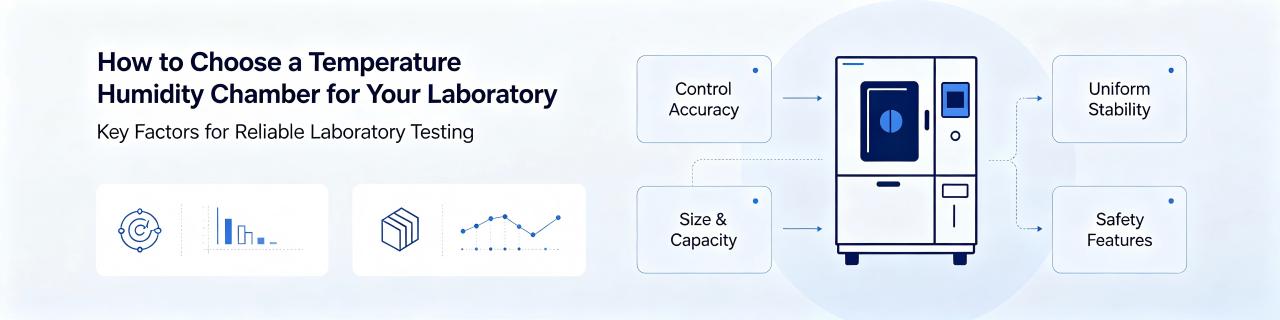
With growing demands for product reliability across electronics, automotive components, textile materials, medical devices and industrial products, manufacturers can no longer rely only on component-level data or product descriptions. Manufacturers and testing laboratories must perform environmental simulation testing to verify material and product performance under controlled temperature-humidity conditions using reliable temperature and humidity test equipment.
Be sure to consider factors beyond the purchase cost of the temperature humidity chamber when selecting equipment for your lab. Testing standards, temperature-humidity range, chamber volume, measurement accuracy, degree of automation, and data management are key considerations.
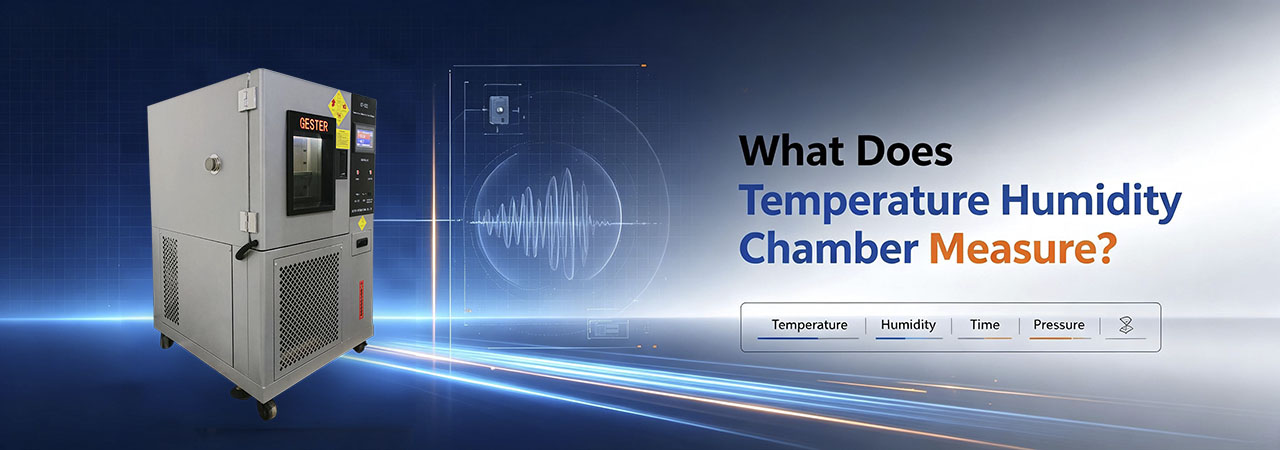
GESTER Temperature and Humidity Test Chambers provide precise and reliable environmental simulation for testing product performance, reliability, durability, and stability under controlled temperature and humidity conditions. Also known as temperature and humidity testing chamber systems, temperature/humidity chamber systems, or environmental test chambers, these systems are widely used to evaluate how products and materials perform under different climatic environments.
During testing, samples are placed inside the chamber. The equipment follows programmed test profiles to adjust temperature and humidity. It maintains stable climatic conditions for required dwell or cycling periods. Test results help evaluate product aging, material stability, corrosion risk, mechanical property changes, and functional reliability under different climate scenarios.
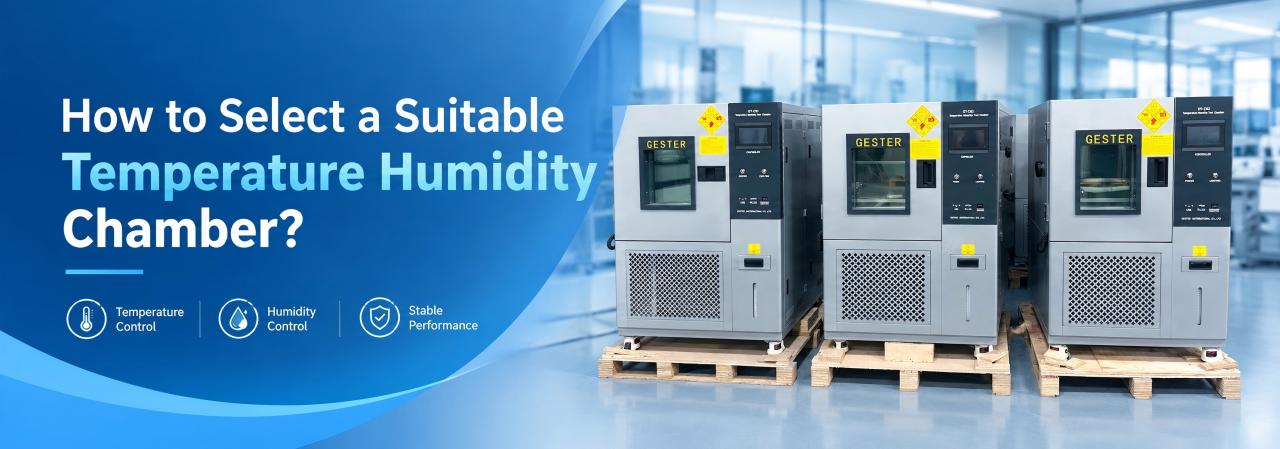
Selecting the right temperature humidity test chamber is essential for labs performing environmental reliability testing to get valid test results. The most expensive model is not always your best option.
Confirm whether the chamber supports the testing standards you routinely execute.
Common standards include:ISO, ASTM, IEC, JIS, BS.
If your lab serves diverse global customers and multiple markets, choose a chamber compatible with multiple standards to improve testing flexibility.
Different samples and test protocols demand different temperature-humidity working windows.
Small electronic components may require moderate temperature ranges
Automotive or industrial components may need extended low-temperature capability down to -60°C
Most general-purpose testing requires humidity coverage of 20%-98% RH
Laboratories should evaluate the full portfolio of specimens routinely tested. Select a working range that covers existing test conditions while also reserving capacity for potential future test requirements.
Temperature humidity test chambers come in three primary form factors: benchtop, floor-standing (reach-in), and walk-in models.
Benchtop Temperature Humidity Chamber: Compact footprint for limited-space labs, suited for small-size specimens, typical volume around 20L-80L. A benchtop temperature and humidity chamber is particularly suitable when laboratory space is limited.
Floor-standing Temperature Humidity Chamber: Medium-large capacity from 50L up to 1000L, fits most general-lab batch-sample testing.
Walk-in Temperature Humidity Chamber: Custom-sized large-volume chamber for oversized assemblies, full-product testing or large-batch simultaneous exposure.
For laboratories requiring larger-capacity industrial constant temperature and humidity equipment, floor-standing and walk-in configurations can provide greater testing space and flexibility.
Measure your maximum sample dimension and batch quantity before finalizing chamber internal volume. Avoid undersizing which restricts sample loading; also avoid over-specifying volume that wastes lab space and capital budget.
Repeatability and uniformity are vital performance metrics for environmental test chambers.
The reliability of temperature-humidity test results depends on:
Temperature control stability
Humidity control precision
Temperature & humidity uniformity across the full workspace
Program execution consistency
Sensor performance
A well-calibrated stable chamber delivers comparable results operated by different lab technicians and builds confidence in issued test reports. Quality-control labs and third-party testing laboratories rely on consistent chamber output to pass-fail products and audit supplier performance. For applications requiring highly controlled conditions, a high precision constant temperature and humidity laboratory setup can provide the stability needed for demanding environmental testing.
Traditional environmental testing required manual setting and manual logging of readings, creating higher risk for human error.
Modern constant temperature and humidity test chamber systems improve laboratory efficiency with:
Multi-segment programmable test profiles
Automatic temperature-humidity closed-loop control
Digital test-data recording and USB export
Programmable cycling and dwell functions
Data traceability
For smaller laboratories and applications with limited sample quantities, a small temperature humidity test chamber can provide a practical solution while maintaining controlled temperature and humidity conditions.
Before purchasing a constant temperature and humidity chamber, laboratories should confirm:
Does the equipment satisfy your required testing standards?
Are temperature-humidity ranges suitable for your product portfolio?
Can the chamber deliver stable, repeatable and uniform test conditions?
Is the chamber volume and configuration matched to specimen dimensions?
Does it provide reliable programmable control?
Does it support digital data export and report management?
Can the system accommodate anticipated future testing requirements?
Using these selection criteria helps you source high-value test equipment that serves laboratory needs both short-term and long-term.
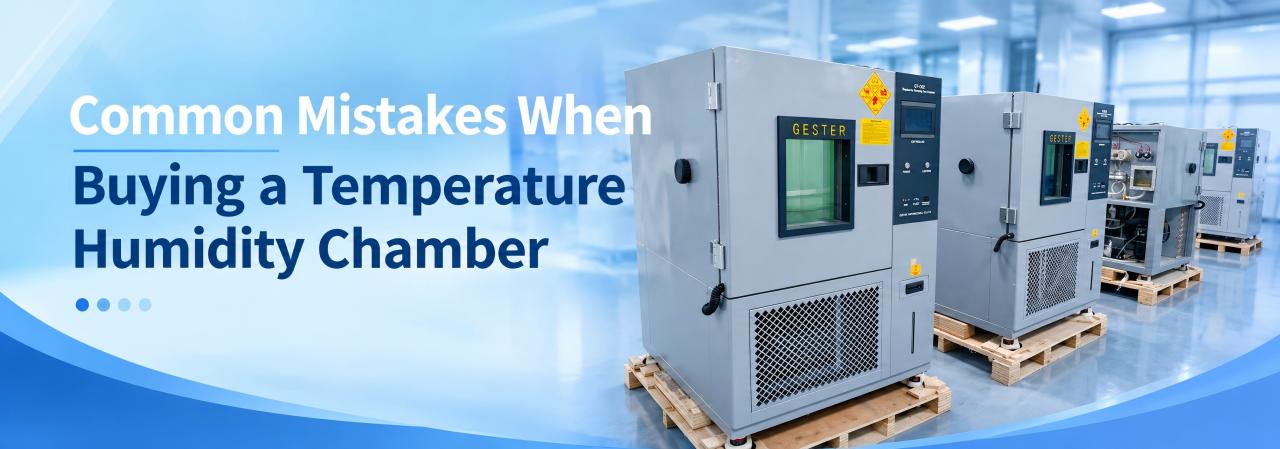
Choosing purely based on the lowest upfront cost often reduces total value over equipment service life. Poor uniformity or unstable control leads to repeated retesting, wasting labour and sample materials.
Laboratories should evaluate total value including:
Testing reliability & consistency
Daily-operation efficiency
After-sales maintenance and spare-part availability
Long-term service usability
Confusing Different Environmental-Chamber Functions
Temperature humidity controlled chamber: simulates combined temperature and humidity conditions for damp-heat aging and stability evaluation
Thermal-shock chamber: delivers fast extreme-temperature transitions without precise humidity control
Selecting equipment mismatched to test objectives produces meaningless data and investment waste.
Common standards include ISO, ASTM, IEC, JIS and BS. Laboratories should select hardware matching standards required by their target markets and customers.
Benchtop suits small samples and space-limited labs. Floor-standing covers most general-purpose medium-volume testing. Walk-in chambers are for oversized products or large-batch simultaneous exposure.
Multi-segment programming enables automatic cycling-test execution without continuous manual adjustment. This improves repeatability and laboratory productivity for complex climate-profile tests.
A single constant temperature humidity chamber performs combined temperature-humidity exposure. Additional test equipment such as thermal-shock or salt-spray chambers will still be needed for complete multi-factor environmental assessment.
A well-selected temperature and humidity test chamber enables laboratories to deliver reliable environmental-simulation testing for electronic goods, automotive parts, textile materials and industrial products according to global standards.
Not sure which temperature humidity chamber fits your laboratory requirements? Our specialists can help you select the right solution according to your testing-standard demands and specimen applications. Please find further information on our smart environmental-testing solutions.
How to Customize Benchtop Temperature and Humidity Chamber for Your Project – Source: GESTER
What Is a Temperature and Humidity Test Chamber? – Source: GESTER
leave a message
Scan to wechat :

Scan to Whatsapp :