inquiry
Leave A Message
If you are interested in our products and want to know more details,please leave a message here,we will reply you as soon as we can.
GESTER has the widest selection of test chambers.
Professional Environmental Test Chamber Supplier
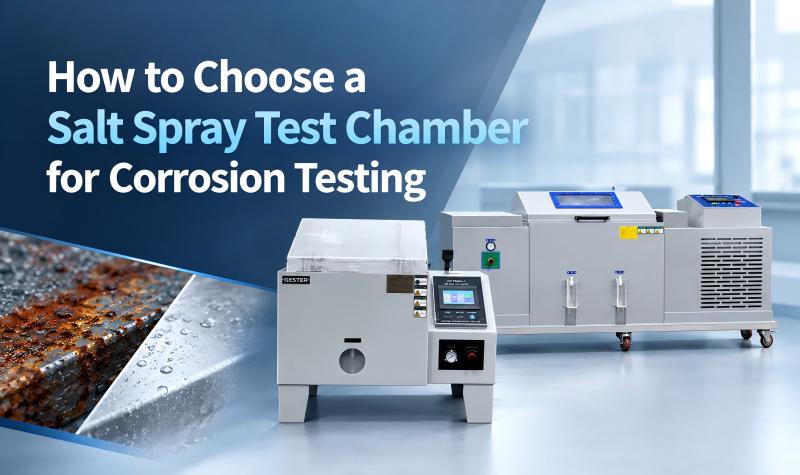
  • How to Choose a Salt Spray Test Chamber for Corrosion Testing
    How to Choose a Salt Spray Test Chamber for Corrosion Testing
    Sep 10, 2026
      Not all salt spray test chambers are built for every corrosion-testing application. Therefore, you need a test chamber specifically designed to deliver repeatable, accurate corrosion test results.   For over many years, GESTER has been fabricating high-performance salt spray testing machines and salt spray test chambers. As an experienced test-equipment engineer at GESTER, I will explain how you can choose the right salt spray test chamber.   But first, let’s be clear on one important fact:     Why Corrosion Testing Requires Specialized Salt Spray Test Chambers     Like any other material-testing laboratory, industrial quality-control labs need reliable ways to evaluate anti-corrosion performance of metals, coatings, platings and surface finishes. That is where salt fog test equipment such as salt spray test chambers comes in.   Unfortunately, corrosion testing, whether for automotive, hardware, marine or electronic products, faces many sources of measurement uncertainty. It is one of the most critical quality-verification procedures for surface-treated components.   According to ISO and ASTM documentation, invalid corrosion-test reports are attributed to many factors. Among the key reasons is poorly performing salt spray machine hardware that cannot maintain stable test conditions.   Owing to the unique and demanding artificial corrosive atmosphere inside the chamber — full of salt mist, acid vapors, shifting temperature and humidity — you need a specially built salt spray test chamber.   Such salt spray chambers are tested to meet strict laboratory and industry standards. For instance, among the key salt-spray-chamber requirements is compliance with ISO, ASTM, and JIS standards.   In short, these salt spray test chambers must protect lab operators as a priority, alongside ensuring valid, repeatable corrosion-test data for your products.     Choosing Salt Spray Test Chamber for Corrosion Testing     For smooth, uninterrupted corrosion-testing workflows, you need a salt spray test chamber that can guarantee measurement stability and predictability. Besides, it must help reduce the total cost of laboratory operation.   Even though it is highly recommended to seek professional advice when buying salt spray test equipment, you must have certain information at hand. Here are 9 important factors to consider when buying salt spray test chambers.   1. Select the Right Chamber Construction Material   Look for a salt spray test chamber built with highly anti-corrosive inner tank materials. Ideally, heavy-duty PVC or PP composite delivers exceptional durability and salt-fog resistance.   PVC and PP inner chambers perform exceptionally well compared to other options such as ordinary steel or thin stainless steel chambers. For aggressive CASS or long-duration cyclic corrosion testing, 316L stainless steel wetted parts are strongly recommended. Apart from these qualified materials, other materials are not the perfect choice for harsh salt-fog laboratory environments.   High-quality PP / PVC material makes it a perfect chamber material for salt spray lab conditions. The material is easy to form while guaranteeing high strength, resistance to abrasion, superior salt-mist corrosion resistance, better chemical resistance against acetic acid and copper-accelerated solutions, and easy-to-maintain properties.   2. Chamber Design and Configuration   Salt spray test chambers must conform to a unique design and construction. The quality standards, such as uniform fog distribution, stable temperature control and consistent salt-solution delivery, all depend on the construction.   From experience, we design salt spray test chambers depending on the specific application. Of course, what kinds of samples you will test is also a determining factor here. Here are some design guidelines: Design must conform to stringent ISO, ASTM and JIS test-method regulations Sloped roof design — sloped inner ceiling will prevent condensed salt solution from dripping directly onto test specimens Thick anti-corrosive inner tank material to enhance chemical resistance and mechanical strength Fully sealed chamber body with durable silicone gaskets to stop salt mist leakage Easy-access cover or door with robust locking design Modular design where applicable, for easy maintenance and component replacement (nozzles, solution reservoir, collection funnels) High-precision anti-corrosion ceramic spray nozzles for uniform fog generation Independent saturated air barrel for stable pre-heating of compressed air supply Sample support racks, fog-collecting funnels, salt solution reservoir as core accessories Other accessories that form part of the chamber design include over-temperature alarm systems, drainage valves, pH monitoring ports, liquid-level sensors, etc.   It does not matter whether you are buying standard salt spray tester, salt fog cabinet or compound salt spray test chamber. Every custom-configured chamber for corrosion testing must feature a robust construction based on any of the above guidelines.   Even when you want cyclic corrosion chambers that alternate salt-spray, humidity and drying phases, it is the construction that determines the suitability for this unique application.   3. Consider Supported Test Types (NSS, AASS, CASS, Compound Cyclic)   Salt spray chambers for corrosion testing must support correct test modes to match your product specifications. Let’s summarize common salt-spray test modes for these chambers in the table below:   Test Modes for Salt Spray Test Chamber Remarks NSS (Neutral Salt Spray) · Neutral 5% NaCl salt solution, 35 °C chamber temperature · Widely used for general‑purpose corrosion resistance quality check AASS (Acetic‑Acid Salt Spray) · Acidified salt solution with acetic acid, controlled low‑pH environment · For decorative electroplated coatings and surface finishes CASS (Copper‑Accelerated Acetic‑Acid Salt Spray) · Salt solution mixed with acetic acid and copper chloride, higher test temperature of 50 °C · High‑aggressiveness test for automotive exterior decorative plating Compound / Cyclic Corrosion Test · Alternate cycles of salt spray, high‑humidity damp exposure and drying conditions · Reproduce real‑world outdoor corrosion for more realistic assessment   Let’s put this into perspective: Assuming you are looking for a chamber for routine hardware quality inspection, then a suitable selection can be basic NSS‑capable salt spray tester. On the other hand, in areas that are testing automotive decorative plating parts, the correct option would support AASS and CASS functions.   At the same time, if your lab needs to simulate real‑world coastal outdoor conditions, then you should choose compound cyclic salt spray test chamber.   Remember, all these functional capabilities will eventually determine the salt spray test chamber price.   As you can see, the whole idea here is to ensure the chamber you are choosing for corrosion testing can generate correct corrosive atmosphere matching product standards. Therefore, they must have unique solution‑delivery and temperature‑control mechanisms. Besides, the construction must prevent chamber‑material degradation from contaminating test specimens.   4. Verify International Standard Compliance   If you are performing third‑party‑report‑oriented corrosion testing, then basic NSS function alone may not be enough. There are specific industry standards that these chambers must comply with.   Remember, different product sectors reference different global corrosion‑test standards. These are high‑requirement lab applications that need specially designed salt spray chamber systems.   Among these key salt spray chamber standards are: ‑ ISO 9227 ‑ ASTM B117, ASTM G85 ‑ JIS Z 2371   Therefore, even as you choose custom anti‑corrosion chambers for harsh lab environments, they must satisfy these critical standard requirements. But more importantly, before you buy such chambers for your laboratory environment, ensure you get quality calibration and performance test reports.   5. Consider Your Actual Test Environment & Sample Conditions   Laboratory corrosion‑testing conditions vary greatly: long‑run continuous testing, high‑acid solution usage, large‑volume batch‑sample testing, limited lab floor space, to strict temperature limits.   That is why at Gester, we insist you do not settle for general‑purpose low‑grade test chambers. Your quality‑control lab requires chambers specifically fabricated for such demanding test conditions.   Let’s look at some requirements for salt spray chambers for different corrosion‑testing scenarios:   Corrosion‑Testing Scenario Recommended Chamber Features & Test Modes Automotive decorative plating parts · Material: PVC / PP inner tank or 316L wetted components · Supported test modes: NSS, AASS, CASS · Rugged sealed construction for long continuous running General hardware & surface‑coating quality‑control · Material: PVC / PP inner tank · NSS mode compliance to ISO 9227 and ASTM B117   Furthermore, your salt spray test chamber may have additional accessories such as: ‑ Data logging systems — Allow for recording temperature, test runtime and cycle status. Advanced systems store full test history for lab traceability. ‑ Over‑limit safety alarms — Helps protect samples and equipment during unattended long‑hour testing. Common mechanisms include over‑temperature alarm, low‑salt‑solution level warning, and power‑failure protection.   In short, an experienced test‑equipment engineer will help you customize a perfect salt spray test chamber for your unique laboratory environment.   6. Salt Spray Test Chamber Dimensions & Internal Capacity   You can choose from standard sizes or custom options. To choose the right size of salt spray test chamber for corrosion testing, you must consider:   ‑ Number and physical size of test specimens to place inside the chamber ‑ Determine dimensions based on length (L) by width (W), by height (H) of the inner test workspace ‑ Calculate internal loading space and external footprint occupied in your laboratory ‑ Determine clearance within the chamber: specimens must not touch chamber walls, and must leave enough space for salt fog to circulate freely without blocking mist distribution.   Note: Always discuss the right chamber size with your test‑equipment manufacturer.   7. Safety & Operational Compliance   You need a salt spray test chamber in your laboratory to protect both lab personnel and guarantee credible test results. Always choose a chamber that has passed all quality testing and relevant standards.   Usually, these requirements may vary depending on your laboratory and product‑testing conditions. Some of the most common safety and operational compliance standards are: ‑ ISO 9227 ‑ ASTM B117 / ASTM G85 ‑ JIS Z 2371 ‑ CE safety compliance for lab equipment   If possible, the manufacturer should support third‑party performance verification to ensure full compliance. Remember, you cannot compromise on safety and measurement reliability when it comes to salt spray test chambers for corrosion testing.   8. Specimens to Be Tested Inside the Chamber   The specimens you will load into the chamber depend on many variables in corrosion‑testing work. For instance, you may want to test plated metal hardware, painted components, electronic enclosures, automotive trim parts, fasteners, etc.   Again, knowing exactly what specimens you plan to test in the salt spray chamber will determine: ‑ Internal size and loading‑rack configuration ‑ Required test modes (NSS / AASS / CASS / cyclic compound test) ‑ Standard‑compliance requirements ‑ Overall chamber design and configuration   At times, each product category may require specific chamber functions fabricated for unique corrosion‑testing workflows.   9. Control System and Operation Features   Another important variable to consider is the chamber’s control interface and operating features. That is, how exactly will lab technicians set‑up, run and monitor corrosion tests within your laboratory workflow?   Common control and operating options include: ‑ Simple mechanical timer control for basic NSS testing ‑ Microprocessor‑based programmable controller for complex cyclic compound test sequences ‑ Local touch‑screen operation ‑ Built‑in test‑data logging function   With every control solution, the chamber will come with all the necessary accessories for daily test‑setup and maintenance processes.     Why Choose GESTER Salt Spray Test Chambers     With years of experience and research in fabricating high‑grade salt spray testers and corrosion cabinets, GESTER understands the strict accuracy and safety concerns of industrial and laboratory corrosion testing. Our salt spray test chambers feature heavy‑duty and robust anti‑corrosion construction.   We use high‑grade PVC / PP or optional 316L stainless‑steel wetted components, ensure all chambers comply with ISO, ASTM and JIS standards. Depending on your unique laboratory and specimen‑testing requirements, every salt spray chamber is customized to match your dynamic industrial and lab needs.   What’s more? Gester salt spray test chambers are known for a perfect balance between high quality and price. Tell us more about your corrosion‑testing project today, and our engineers will design and fabricate custom salt spray test chambers for your application. Salt Spray Tester GT-F50BB Salt Fog Chamber GT-F50BA Compound Salt Spray Test Chamber GT-F50C  
    Read More
  • How to Test Battery Performance Under Extreme Temperature Conditions
    How to Test Battery Performance Under Extreme Temperature Conditions
    Sep 01, 2026
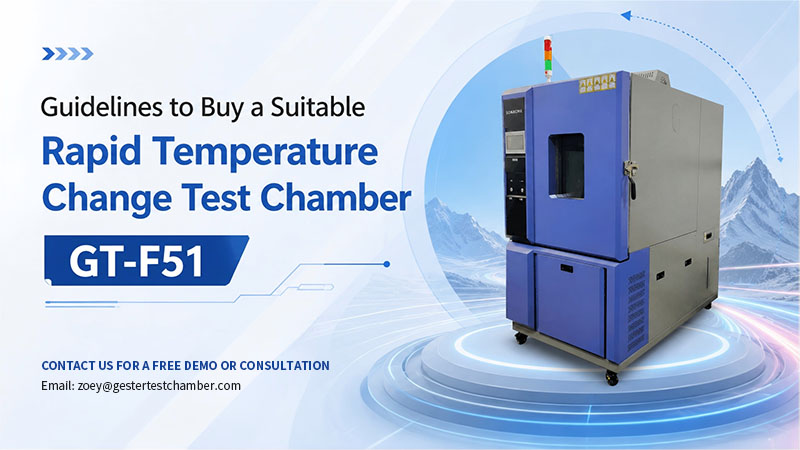
      Battery performance can change significantly when a battery is exposed to extreme temperatures. Low temperatures may reduce available capacity and power output, while high temperatures can accelerate degradation, increase internal resistance, and create additional safety risks.   For battery manufacturers, electric vehicle developers, energy storage companies, and battery testing laboratories, environmental testing is therefore an important part of battery reliability validation.   At GESTER, we provide environmental test chamber solutions for battery and new energy applications, including temperature and humidity chambers, high and low temperature test chambers, thermal shock chambers, and rapid temperature change test chambers.   This guide explains how to test battery performance under extreme temperature conditions, what parameters should be monitored, and how to select the appropriate environmental test equipment. Why Test Batteries Under Extreme Temperatures?   Batteries are rarely operated under constant laboratory conditions. Electric vehicles may experience freezing winter temperatures, while batteries used in energy storage systems can be exposed to high ambient temperatures.   Temperature affects several important battery characteristics:   Capacity and energy output Charge and discharge performance Internal resistance Voltage stability Charging efficiency Cycle life Thermal stability Safety performance   Testing batteries at controlled high and low temperatures helps manufacturers understand how their products behave outside normal operating conditions.   Environmental testing can also help identify potential problems before batteries enter mass production or commercial applications. How Temperature Affects Battery Performance   1. Low-Temperature Performance At low temperatures, electrochemical reactions inside a battery become slower. This can increase internal resistance and reduce the battery's ability to deliver power. Typical effects include: Reduced discharge capacity Lower output power Increased internal resistance Slower charging Reduced charging efficiency Increased risk of lithium plating during inappropriate charging conditions For this reason, low-temperature testing is particularly important for batteries intended for electric vehicles, outdoor equipment, energy storage systems, and other applications exposed to cold environments.   2. High-Temperature Performance High temperatures can accelerate chemical reactions and aging mechanisms inside a battery. Depending on the battery chemistry and operating conditions, excessive temperature can contribute to: Faster capacity degradation Increased self-discharge Reduced cycle life Electrolyte degradation Increased thermal stress Potential safety risks High-temperature testing therefore helps engineers evaluate whether a battery can maintain stable performance during operation in hot environments. What Environmental Test Chamber Should Be Used?   Different battery temperature tests may require different environmental testing equipment.   Temperature and Humidity Test Chamber A programmable temperature and humidity chamber is suitable when the test requires controlled temperature and humidity conditions. GESTER's Temperature and Humidity Test Chamber GT-C52 series, for example, is designed for programmable environmental simulation. Depending on configuration, the chamber can provide temperature ranges such as -20°C to +150°C, -40°C to +150°C, or -60°C to +150°C, with humidity control available for applicable configurations. This type of chamber can be used for battery environmental conditioning, temperature-humidity testing, reliability evaluation, and other controlled environmental tests. Our temperature and humidity test chambers are available in various configurations, from compact benchtop chambers to large-capacity and walk-in environmental chambers. Programmable temperature and humidity control allows users to create specific test profiles and simulate different environmental conditions with high repeatability.     High and Low Temperature Test Chamber When humidity is not required and the primary objective is to evaluate battery performance under extreme temperatures, a high and low temperature test chamber can be more appropriate. GESTER's High and Low Temperature Test Chamber GT-F58 series is designed to simulate extreme high- and low-temperature conditions and can be incorporated into reliability testing programs where temperature exposure is the primary test condition. This configuration is particularly useful for testing battery performance across a defined temperature range.     Thermal Shock Test Chamber Some applications require rapid transitions between hot and cold environments rather than gradual temperature changes. A thermal shock test chamber exposes the test specimen to rapid temperature transitions. This can reveal weaknesses caused by sudden thermal changes that may not be detected during slower temperature cycling. GESTER provides two-chamber and three-chamber thermal shock solutions for applications requiring rapid hot-to-cold or cold-to-hot transitions.     Rapid Temperature Change Test Chamber For reliability programs requiring controlled and relatively fast temperature changes, a rapid temperature change chamber can be considered. This type of equipment is useful when the test procedure specifies defined temperature transition rates and repeated environmental cycles.   Important Considerations When Testing Batteries   Battery testing requires more than simply placing a battery inside a temperature chamber.   Temperature Uniformity   The temperature inside the chamber should remain sufficiently uniform so that the battery is exposed to a consistent environmental condition.   Poor temperature uniformity can introduce unnecessary variation into test results.   Temperature Stability   The chamber should maintain the target temperature throughout the test.   Stable temperature control is especially important during long-duration battery testing.   Temperature Change Rate   Some test procedures require a specific temperature ramp rate.   Therefore, engineers should confirm the required heating and cooling rates before selecting the chamber.   Chamber Capacity   The chamber should have sufficient working space for the battery sample, fixtures, sensors, and electrical connections.   For larger battery modules or battery packs, a larger environmental chamber may be required.   Safety Configuration   Battery testing may involve charging, discharging, elevated temperatures, or abnormal conditions.   For potentially hazardous battery tests, the chamber configuration should be selected according to the battery type, test procedure, energy level, and applicable safety requirements.   GESTER also provides dedicated battery testing equipment, including explosion-proof overcharge and overdischarge test chambers, alongside environmental chambers for new energy battery testing. How GESTER Supports Battery Environmental Testing     Battery performance testing often involves multiple environmental stresses rather than a single temperature test.   GESTER provides a range of environmental and battery testing equipment for new energy applications, including:   Temperature Humidity Chamber Benchtop Temperature and Humidity Chamber GT-C52 Floor-standing Temperature and Humidity Chamber GT-C52 Walk-in Temperature and Humidity Chamber GT-C52 Temperature Chamber High Low Temperature Test Chamber GT-F58 Thermal Shock Chamber GT-F56A Rapid Temperature Change Test Chamber GT-F51 Comprehensive Environmental Chamber Rapid Thermal Shock Three-Combined Environmental Test Chamber GT-F70 Battery Testing Equipment Battery Extrusion Testing Machine GT-I05 Electromagnetic Vibration Test Bench GT-I12 Battery Impact Testing Machine GT-I10 Battery Short Circuit Testing Machine GT-I09 Battery Burning Tester GT-I07 Battery Squeeze Acupuncture Testing Machine GT-I06 Battery Nail Penetration Testing Machine GT-I04 IEC 62133 Battery Free Fall Testing Equipment GT-I02B Battery Pack Drop Testing Machine GT-I02 Battery Overcharge and Overdischarge Explosion-Proof Test Chamber GT-I08   This portfolio allows battery manufacturers and laboratories to combine environmental simulation with mechanical and safety testing according to their testing requirements.   GESTER has nearly 30 years of experience in environmental and climatic test chamber R&D and manufacturing, with solutions covering temperature and humidity testing, high and low temperature testing, thermal shock, rapid temperature change, battery testing, and other reliability applications. Conclusion   Testing battery performance under extreme temperature conditions is an important part of battery reliability and safety evaluation.   Low temperatures can affect capacity, power output, charging performance, and internal resistance, while high temperatures can accelerate degradation and increase thermal stress.   A well-designed test should control the environmental conditions, monitor electrical performance, repeat testing across relevant temperatures, and compare the results against the applicable test requirements.   The right environmental test chamber depends on the required temperature range, humidity conditions, transition rate, sample size, test duration, electrical test setup, and safety requirements.   For battery manufacturers and laboratories looking for a suitable environmental testing solution, GESTER can provide temperature chambers, high-low temperature chambers, thermal shock systems, rapid temperature change chambers, and dedicated battery testing equipment based on the specific application.
    Read More
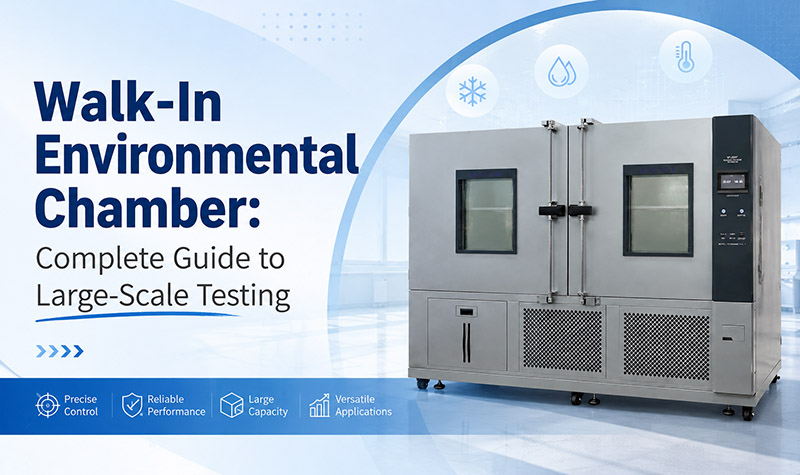
  • Walk-In Environmental Chamber: Complete Guide to Large-Scale Testing
    Walk-In Environmental Chamber: Complete Guide to Large-Scale Testing
    Aug 25, 2026
      As products become larger, more complex, and more demanding in terms of reliability, conventional laboratory environmental chambers may no longer provide sufficient testing space. This is where a Walk-In Environmental Chamber becomes an important solution.   A walk-in environmental chamber provides a large controlled test environment for evaluating products, assemblies, materials, vehicles, battery systems, and other large-scale samples under simulated environmental conditions. Compared with standard benchtop or floor-standing chambers, walk-in chambers offer substantially greater internal capacity and can be customized around the dimensions, testing requirements, and operating conditions of the application.   For manufacturers, research laboratories, automotive companies, aerospace organizations, electronics manufacturers, and new energy companies, walk-in environmental chambers can support large-scale reliability and environmental simulation testing.   GESTER specializes in environmental and climatic test chambers and provides standard and customized environmental testing solutions. The company's product portfolio includes temperature and humidity chambers, high and low temperature chambers, thermal shock chambers, rapid temperature change chambers, salt spray chambers, rain and spray testing equipment, and other environmental simulation systems. What Is a Walk-In Environmental Chamber?     A Walk-In Environmental Chamber is a large-scale environmental testing system designed to create and maintain controlled environmental conditions around products or test specimens that are too large to fit inside conventional laboratory chambers.   The walk in temperature chamber creates a controlled environment in which engineers can expose products to defined temperature and humidity conditions and evaluate their performance, durability, reliability, and environmental resistance.   Unlike a conventional environmental chamber, the key characteristic of a walk-in chamber is its large internal test space.   This makes it suitable for applications involving large assemblies, multiple products, production-scale samples, and equipment that cannot be disassembled for laboratory testing. Why Use a Walk-In Environmental Chamber?     Environmental conditions can significantly affect the performance and service life of industrial products.   Temperature changes can cause thermal expansion and contraction. High humidity can contribute to corrosion, moisture absorption, insulation degradation, and material deterioration. Repeated environmental cycling can also reveal weaknesses that may not appear during normal laboratory conditions.   A walk-in temperature humidity chamber allows manufacturers to reproduce controlled environmental conditions before products are deployed in real-world environments.   1. Test Large Products Large products may simply be too big for a conventional chamber. A walk-in temperature humidity chamber can provide sufficient internal volume for: Automotive components and assemblies Large electronic equipment Battery systems Industrial equipment Large materials and structures Aerospace components Production-scale products   2. Test Complete Assemblies Some products cannot be accurately evaluated after being separated into individual components. Testing a complete assembly can provide a more realistic understanding of how different components interact under environmental stress.   3. Test Multiple Samples Simultaneously Large internal space can also be used to place multiple specimens inside the same controlled environment. This can improve testing efficiency when the test procedure permits multiple samples to be evaluated simultaneously.   4. Support Production-Level Testing Walk-in temperature and humidity test chambers can be designed for industrial environments where testing requirements go beyond conventional laboratory R&D. They can support product validation, reliability testing, quality control, and environmental conditioning at a larger scale. Walk-In Environmental Chamber vs. Standard Environmental Chamber     The primary difference is test space and application scale.   A standard environmental chamber is generally appropriate for components, materials, small products, and laboratory research. GESTER's temperature and humidity chamber range includes compact benchtop models and floor-standing configurations from smaller capacities through larger chambers.   A walk-in temperature humidity test chamber is designed when the product, assembly, or quantity of samples exceeds the physical capacity of a conventional chamber.   A simple rule is: If the product cannot physically fit inside a standard environmental chamber, a walk-in environmental chamber may be the more appropriate solution. Main Applications of Walk-In Environmental Chambers   Walk-in environmental chambers can be used across many industries because environmental simulation is an important part of product reliability testing.   Automotive Testing Automotive components and assemblies may be exposed to significant temperature and humidity changes throughout their service life. Walk-in temperature humidity test chambers can be used for testing: Automotive electronic systems Interior components Electrical assemblies Large components Battery systems Vehicle-related equipment Environmental simulation can help engineers identify potential performance changes and reliability issues before products enter field operation.   Aerospace Testing Aerospace equipment must operate reliably under demanding environmental conditions. Large environmental chambers can provide controlled conditions for evaluating components and assemblies that cannot fit into conventional laboratory chambers. Potential applications include: Aerospace components Electronic systems Structural assemblies Materials Avionics-related equipment   Electronics and Semiconductor Applications Electronic products can be sensitive to temperature and humidity. Environmental testing can help evaluate: Thermal performance Moisture resistance Component reliability Long-term stability Environmental durability For larger electronic systems, a walk-in chamber provides the necessary space for testing complete assemblies rather than individual components.   New Energy and Battery Testing Battery systems can require environmental testing at different stages of development. Large chambers may be used for: Battery modules Battery packs Energy storage systems Large battery assemblies Related components For battery testing, the chamber configuration should be selected according to the product size, required environmental range, safety requirements, test procedure, and applicable regulations.   Industrial Equipment Testing Industrial equipment may need to operate under controlled or extreme environmental conditions. Walk-in temperature humidity chambers can accommodate large machinery, assemblies, and production-scale products for environmental reliability evaluation. Temperature and Humidity Testing in a Walk-In Chamber   One of the most common applications is combined temperature and humidity testing. A temperature and humidity chamber controls temperature and relative humidity to reproduce specified environmental conditions. GESTER's standard temperature and humidity chamber series is designed for programmable environmental simulation, while the company's walk-in temperature and humidity chamber configuration is intended for larger products and assemblies. Typical testing procedures may include:   Constant Temperature Testing The product is maintained at a defined temperature for a specified period. This can be used to evaluate performance and stability under constant environmental exposure.   Constant Humidity Testing The test environment is maintained at a defined relative humidity level. This can help assess moisture-related effects on materials and components.   Temperature-Humidity Cycling Temperature and humidity conditions are changed according to a programmed test profile. This type of testing can be useful for identifying problems associated with repeated environmental changes.   Long-Duration Environmental Exposure Some reliability programs require products to remain under controlled environmental conditions for extended periods. A walk-in temperature and humidity chamber provides sufficient space for larger products while maintaining the required environmental conditions throughout the test. Key Features to Consider When Selecting a Walk-In Environmental Chamber   Choosing a walk-in environmental chamber requires more than simply selecting the largest available chamber. The system should be designed around the actual testing application.   1. Chamber Size Determine the required internal dimensions based on: Product dimensions Number of samples Sample arrangement Required clearance Access requirements Future testing requirements Do not size the chamber only according to the current product. If product dimensions are expected to increase, additional internal capacity may be worthwhile.   2. Temperature Range The required temperature range depends on the test standard and application. Before selecting the chamber, define: Minimum temperature Maximum temperature Operating temperature Temperature cycling requirements Heating and cooling rate requirements   3. Humidity Range If humidity testing is required, determine: Minimum relative humidity Maximum relative humidity Required humidity accuracy Humidity cycling requirements Condensation requirements Not every environmental test requires humidity control, so a temperature-only chamber may be sufficient for some applications.   4. Temperature Uniformity For large chambers, temperature uniformity becomes especially important. The chamber should maintain consistent environmental conditions throughout the usable test space so that samples in different positions are exposed to comparable conditions.   5. Air Circulation Large internal volumes require effective air circulation. Proper airflow helps distribute conditioned air throughout the chamber and contributes to stable environmental conditions.   6. Control System A programmable controller allows users to create and execute defined environmental test profiles. Important considerations include: Temperature setting Humidity setting Test duration Programmed cycles Data recording Alarm functions Communication and data export   7. Safety Configuration Large environmental chambers may require additional safety features depending on the product being tested. For example, applications involving batteries or electrical products may require specialized safety considerations. The chamber configuration should therefore be discussed with the manufacturer before purchase. Why Choose GESTER for Walk-In Environmental Testing Solutions?     GESTER International Co., Ltd. specializes in the R&D and manufacturing of environmental and climatic test chambers and has nearly 30 years of experience in the field. The company's product range covers temperature and humidity chambers, high and low temperature chambers, thermal shock chambers, rapid temperature change chambers, salt spray chambers, and other environmental simulation equipment.   GESTER's environmental testing solutions are designed for laboratories, research institutions, manufacturers, and industrial applications worldwide.   The company also provides customization, installation and calibration support, maintenance, repairs, and operator training.   For large-scale environmental testing projects, customization can be particularly important because chamber dimensions, temperature requirements, sample loads, test procedures, and safety requirements can vary significantly between applications. Frequently Asked Questions   What is a walk-in environmental chamber? A walk-in environmental chamber is a large environmental testing system designed to simulate controlled environmental conditions for large products, assemblies, multiple samples, and industrial-scale test specimens.   What is a walk-in temperature and humidity chamber used for? It is used for environmental reliability testing of large products and assemblies. Typical applications include automotive components, battery systems, aerospace equipment, industrial products, electronics, and large materials.   What is the difference between a walk-in chamber and a standard environmental chamber? The main difference is internal test capacity. Standard chambers are generally used for smaller samples and products, while walk-in chambers provide a much larger test space for large assemblies and production-scale samples.   Can a walk-in environmental chamber control humidity? Yes. A walk-in temperature and humidity chamber can be configured to control both temperature and relative humidity according to the requirements of the test application.   Can walk-in environmental chambers be customized? Yes. Walk-in temperature and humidity test chambers can be customized according to product dimensions, temperature and humidity requirements, chamber capacity, testing procedures, safety requirements, and installation conditions.   What products can be tested in a walk-in chamber? Depending on the chamber configuration, large automotive components, battery systems, electronic assemblies, aerospace equipment, industrial products, materials, and other large-scale samples can be tested.   How do I determine the required chamber size? Consider the dimensions and weight of the test product, the number of samples, sample arrangement, required clearance, airflow requirements, and potential future testing needs.   Do walk-in environmental chambers require special installation? Yes. Installation planning should consider floor space, electrical power, ventilation, heat dissipation, access routes, drainage, maintenance space, and other site requirements.   How long does a walk-in environmental test take? Test duration depends entirely on the product, test standard, environmental profile, and test objective. Some tests may last several hours, while reliability or aging programs can require much longer exposure periods. Conclusion   A Walk-In Environmental Chamber provides a practical solution when conventional environmental chambers cannot accommodate the size, quantity, or configuration of the test product. From automotive components and battery systems to aerospace assemblies, electronics, industrial equipment, and production-scale products, large environmental chambers can provide controlled conditions for reliability, durability, and environmental performance testing. The right chamber should be selected according to the product dimensions, environmental conditions, test profile, applicable standards, installation environment, safety requirements, and future testing needs. For large-scale or specialized applications, working with an experienced environmental chamber manufacturer can help ensure that the chamber is correctly configured from the beginning.   Looking for a Walk-In Environmental Chamber for your application? Contact GESTER with your required chamber dimensions, temperature range, humidity range, test product, test standard, and testing requirements. GESTER's technical team can help develop a suitable environmental testing solution based on your project.     Related Products Benchtop Temperature Humidity Chamber GT-C52 Floor-standing Temperature Humidity Chamber GT-C52 Walk-in Temperature Humidity Chamber GT-C52F   More Resources:   Environmental Test Chamber: Complete Guide to Environmental Testing Equipment – Source: GESTER What Is a Temperature and Humidity Test Chamber? – Source: GESTER Temperature Chamber vs Temperature Humidity Chamber: What Is the Difference? – Source: GESTER The Different Types Of Temperature Chambers And How To Choose The Right One – Source: GESTER  
    Read More
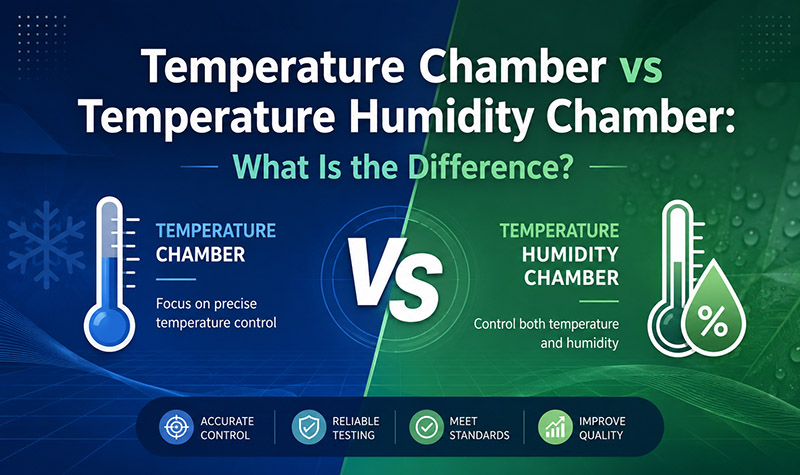
  • Temperature Chamber vs Temperature Humidity Chamber: What Is the Difference?
    Temperature Chamber vs Temperature Humidity Chamber: What Is the Difference?
    Aug 21, 2026
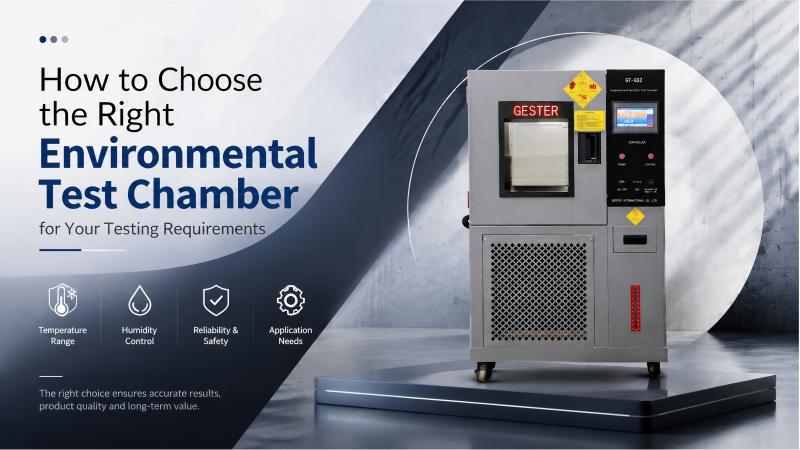
    When manufacturers need to verify product reliability under changing environmental conditions, choosing the right environmental test chamber is essential. Two commonly considered options are the temperature chamber and the temperature humidity chamber.   Although both types of equipment are designed to simulate controlled environmental conditions, they serve different testing purposes. A temperature chamber primarily controls temperature, while a temperature humidity chamber controls both temperature and relative humidity. Understanding this difference can help laboratories, manufacturers, and R&D teams select the most suitable testing solution for their products.   For companies evaluating environmental test equipment, GESTER provides temperature and humidity test chambers, high and low temperature test chambers, rapid temperature change chambers, and other environmental simulation solutions for a wide range of industries.     What Is a Temperature Chamber?   A temperature chamber is an environmental testing device designed to expose test samples to controlled temperature conditions. Depending on the chamber configuration, it can simulate high temperatures, low temperatures, or programmed temperature cycles.   The main purpose is to determine how a product, component, material, or assembly performs when exposed to thermal stress.   Typical applications include:   High-temperature testing Low-temperature testing High-low temperature cycling Temperature conditioning before other tests Product reliability and durability evaluation Thermal performance verification For example, a high and low temperature test chamber can be used to evaluate whether electronic components, automotive parts, materials, or other products continue to operate reliably after exposure to extreme temperatures.   GESTER's high and low temperature chambers are designed for sample conditioning and high-low temperature alternating tests, with multiple chamber sizes available for different testing requirements. What Is a Temperature Humidity Chamber?   A temperature humidity chamber, also called a temperature and humidity test chamber or climatic chamber, controls both temperature and relative humidity inside the test space. A temperature humidity chamber can be used for: Constant temperature and humidity testing Damp heat testing Temperature-humidity cycling Moisture resistance testing Accelerated aging Reliability testing Environmental conditioning   This is particularly useful because humidity can accelerate corrosion, moisture absorption, insulation degradation, swelling, oxidation, material aging, and other forms of environmental damage.   A temperature humidity chamber can therefore provide comprehensive simulation of environmental conditions encountered during product storage, transportation, and operation.   GESTER's temperature and humidity test chambers are designed to simulate controlled environmental conditions for evaluating product performance, stability, durability, and reliability. Temperature Chamber vs Temperature Humidity Chamber: The Main Difference   The simplest way to understand the difference is: Temperature Chamber = Temperature Control Temperature Humidity Chamber = Temperature + Humidity Control   A temperature chamber is generally sufficient when the test standard only requires high, low, or changing temperatures. A temperature humidity chamber is more suitable when the test requires both temperature and relative humidity to be controlled.   Temperature Chamber A temperature chamber focuses on thermal conditions such as: High temperature Low temperature Temperature cycling Thermal conditioning It is suitable when humidity does not need to be controlled during the test.   Temperature Humidity Chamber A temperature humidity chamber adds humidity control to temperature control. It can be used for: Constant temperature and humidity testing High temperature and high humidity testing Damp heat testing Environmental conditioning Temperature-humidity reliability testing Therefore, the choice should be based on the actual test conditions required by your product and applicable standards.   When Should You Choose a Temperature Chamber?   A temperature chamber may be the better choice when:   1. You Only Need Temperature Testing If your testing program focuses on high and low temperatures, humidity control may not be necessary.   2. You Need Temperature Cycling Temperature chambers can be used to expose products to programmed changes between high and low temperatures.   3. Your Test Standard Does Not Require Humidity Always check the applicable standard before selecting the equipment. If humidity is not specified, a temperature-only chamber may be sufficient.   4. You Are Testing Thermal Performance For materials and components where temperature is the primary environmental stress, a temperature chamber can provide the required test environment.   When Should You Choose a Temperature Humidity Chamber?   A temperature humidity chamber is generally more appropriate when:   1. Humidity Is Part of the Test Requirement If the test standard specifies both temperature and relative humidity, you need a chamber capable of controlling both parameters.   2. Moisture Can Affect Product Reliability Humidity can influence corrosion, electrical insulation, material properties, dimensional stability, and other performance characteristics.   3. You Need Damp Heat Testing Combined temperature and humidity conditions can be used to evaluate product durability under demanding environmental conditions.   4. You Test Electronics or New Energy Products Temperature and humidity can both influence the reliability of electronic components, semiconductor products, battery-related products, and other industrial equipment.   GESTER provides environmental testing solutions for industries including semiconductor and electronics, new energy batteries, automotive, aerospace, and mechanical and electrical products.   Can a Temperature Humidity Chamber Replace a Temperature Chamber?   In many cases, a temperature humidity chamber can also perform temperature-only tests because temperature remains one of its controllable parameters.   However, this does not mean it is always the best choice.   If your laboratory only performs temperature testing, a dedicated temperature chamber may be sufficient. If your laboratory needs both temperature-only and temperature-humidity testing, a programmable temperature humidity chamber can provide greater testing flexibility.   The decision should therefore consider your current testing requirements and future testing plans.   How to Choose the Right Environmental Test Chamber   Before purchasing an environmental test chamber, consider the following factors.   1. Test Standard First determine which ISO, ASTM, IEC, JIS, GB, or other standard applies to your product. The standard should define the required environmental conditions and test procedure.   2. Temperature Range Determine the minimum and maximum temperature required for your testing program. Do not select a chamber based only on its maximum temperature. The complete operating range is important.   3. Humidity Range If humidity testing is required, determine the required relative humidity range and control accuracy.   4. Test Chamber Size Choose the chamber volume according to: Sample dimensions Number of samples Required airflow Future testing requirements For laboratories with limited space, a benchtop temperature humidity chamber can be a practical solution.   5. Test Profile Determine whether you need: Constant temperature Constant temperature and humidity Temperature cycling Rapid temperature changes Thermal shock Different test objectives require different environmental chamber configurations.   GESTER Environmental Test Chamber Solutions   GESTER provides a range of environmental and climatic test chambers for laboratory and industrial applications. GESTER also provides customized environmental test chamber solutions according to specific test applications and customer requirements. Programmable Temperature Humidity Chamber GT-C52 High Low Temperature Test Chamber GT-F58 Thermal Shock Chamber GT-F56A Rapid Temperature Change Test Chamber GT-F51  Salt Spray Test Chamber  Salt Fog Chamber GT-F50BA NSS Salt Spray Tester GT-F50BB NSS, ASS, CASS Compound Salt Spray Test Chamber GT-F50C   Rain & Spray Test Chamber Dust Test Chamber GT-F10 Walk in Dust Test Chamber GT-F10B Rain Test Chamber GT-F60 IPX1234 Rain Test Chamber GT-F61 IPX123456 Horizontal Rain Spray Test Chamber GT-F62   IPX56 High-Pressure Waterproof Test Chamber(Horizontal) GT-F63 IPX7 Water Immersion Tester GT-F64 IPX78 Water Immersion Pressure Tester GT-F65 IPX6K Rain Tester(Horizontal) GT-F66 IPX9K High Temperature and High Pressure Jet Tester GT-F67   Frequently Asked Questions   Is a temperature chamber the same as a temperature humidity chamber? No. A temperature chamber controls temperature, while a temperature humidity chamber controls both temperature and relative humidity.   What is a temperature chamber used for? A temperature chamber is used to evaluate product and material performance under controlled high, low, or changing temperature conditions.   What is a temperature humidity chamber used for? It is used to simulate controlled temperature and humidity environments for reliability, durability, conditioning, and environmental testing.   Do I need humidity control for temperature cycling? Not necessarily. If the test only requires temperature changes, a temperature chamber may be sufficient. If humidity is included in the test profile, a temperature humidity chamber is required.   Which chamber should I choose? Start with the applicable testing standard and determine the required temperature range, humidity range, test volume, and test profile. Then select the chamber configuration that matches these requirements.   Conclusion   The difference between a temperature chamber and a temperature humidity chamber is mainly the environmental variables they control.   A temperature chamber is designed for temperature-focused testing, such as high-temperature, low-temperature, and temperature cycling tests.   A temperature humidity chamber controls both temperature and humidity, making it suitable for environmental tests where moisture can affect product performance and reliability.   The right choice depends on your testing standard, product characteristics, temperature range, humidity requirements, sample size, and test method.   If you are looking for a temperature chamber or temperature humidity chamber for your laboratory or production facility, GESTER can provide standard and customized environmental test chamber solutions based on your specific testing requirements.  
    Read More
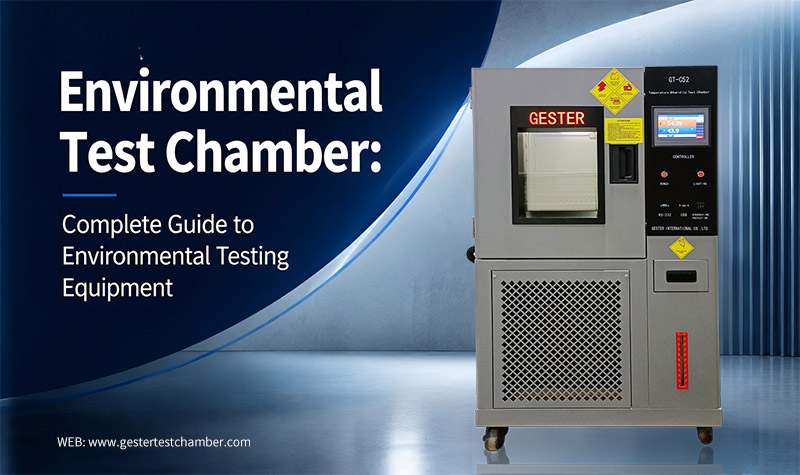
  • Environmental Test Chamber: Complete Guide to Environmental Testing Equipment
    Environmental Test Chamber: Complete Guide to Environmental Testing Equipment
    Aug 17, 2026
      Environmental test chambers are essential laboratory testing systems used to simulate controlled environmental conditions and evaluate how products, materials, components, and assemblies perform under temperature, humidity, thermal shock, corrosion, water, dust, aging, and other environmental stresses.   For manufacturers and testing laboratories, the right environmental testing equipment can help identify potential failures before products enter the market, verify product reliability, support quality control, and meet applicable testing requirements.   This complete guide explains what an environmental test chamber is, the major types of environmental testing equipment, common applications, important testing factors, applicable standards, and how to select the right chamber for your laboratory or production environment.   What Is an Environmental Test Chamber?   An environmental test chamber is a controlled testing system designed to reproduce specific environmental conditions in a laboratory.   Instead of waiting for products to experience natural temperature changes, humidity, rain, dust, corrosion, or other environmental conditions over months or years, manufacturers can use controlled laboratory equipment to expose test samples to defined conditions and monitor their performance.     Depending on the test objective, an environmental testing system may control or simulate: Temperature Relative humidity High and low temperatures Rapid temperature changes Thermal shock Water and rain Dust Salt spray Corrosive environments UV and accelerated weathering Heat aging High-temperature and high-humidity aging Other environmental stresses   The purpose is not simply to expose a product to a harsh environment. The test should reproduce a controlled and repeatable condition so that test results can be compared between samples, production batches, or product designs. Why Is Environmental Testing Important?   Products can experience significant environmental changes during manufacturing, transportation, storage, installation, and actual use. For example, an electronic component may be exposed to high humidity during operation, while an automotive component may experience rapid temperature changes between hot and cold environments. Outdoor equipment may encounter rain, dust, salt spray, and UV radiation. Environmental testing helps manufacturers understand how products respond to these conditions before failures occur in the field.     Key Benefits of Environmental Testing   1. Product Reliability Evaluation Environmental testing can reveal weaknesses in materials, components, assemblies, and finished products. 2. Quality Control Controlled environmental tests provide repeatable conditions for production quality verification and product comparison. 3. Product Development Engineers can use environmental testing during design verification to identify weaknesses and improve product construction. 4. Failure Analysis Testing can help determine whether temperature, humidity, corrosion, water, dust, or other environmental factors contribute to product failure. 5. Standards and Compliance Many industries require products to undergo specific environmental tests according to applicable international, national, or industry standards. 6. Accelerated Reliability Evaluation Some environmental tests expose products to controlled stresses that can accelerate the appearance of potential defects compared with normal field exposure. Major Types of Environmental Testing Equipment     Environmental testing is a broad field. Different products require different environmental simulations. GESTER provides a range of environmental and climatic testing equipment designed for different laboratory and industrial applications.   Temperature and Humidity Test Chamber A temperature and humidity test chamber controls temperature and relative humidity to reproduce specified environmental conditions. These chambers are widely used for evaluating: Electronic products Semiconductor components Automotive components Batteries Materials Packaging Electrical components Industrial products Temperature and humidity testing can help evaluate dimensional stability, electrical performance, material changes, corrosion risks, and long-term reliability. GESTER's temperature and humidity test chamber solutions include benchtop and larger configurations for different sample sizes and laboratory requirements. Related equipment: Temperature and Humidity Test Chamber / Programmable Temperature Humidity Chamber High and Low Temperature Test Chamber A high and low temperature test chamber is designed to expose products to controlled high- and low-temperature environments. The objective is to determine whether products can maintain their required performance when subjected to temperature extremes. Typical applications include: Electronic components Automotive parts Semiconductor devices Electrical equipment Materials Industrial products Aerospace components Engineers can use high and low temperature testing to identify problems such as material deformation, cracking, electrical instability, sealing failure, and changes in mechanical properties. Thermal Shock Test Chamber A thermal shock test chamber is designed to subject test samples to rapid transitions between high and low temperature environments. Unlike conventional temperature cycling, thermal shock testing emphasizes rapid temperature transitions that can create significant thermal stress. Thermal shock testing is particularly useful for products and components that may experience sudden temperature changes during transportation or operation. Typical applications include: Semiconductor components Electronic products Automotive electronics Aerospace components Defense-related equipment Materials and assemblies GESTER supplies two-chamber and three-chamber thermal shock test chamber configurations for different testing requirements. The selection between configurations depends on factors such as sample characteristics, test procedure, temperature range, transfer method, and required temperature transition performance. Rapid Temperature Change Test Chamber A rapid temperature change test chamber is used for temperature cycling and accelerated environmental reliability testing where the temperature needs to change quickly between defined conditions. The equipment is useful when engineers need to evaluate how products respond to repeated temperature changes rather than a single high- or low-temperature exposure. Applications include: Electronic components Automotive components Semiconductor products Battery components Industrial products Aerospace equipment Rapid temperature change testing can complement conventional temperature and humidity testing and thermal shock testing when the test program requires controlled temperature transitions. Walk-In Environmental Chamber For large products, assemblies, production samples, or large quantities of components, a standard laboratory chamber may not provide sufficient internal space. A walk-in environmental chamber provides a much larger controlled testing area. Depending on the configuration, walk-in chambers can be used for environmental simulation involving temperature, humidity, dust, or other conditions. Typical applications include: Automotive components and assemblies Large electrical equipment Industrial products Battery systems Large materials Aerospace components Production-level testing Walk-in environmental chambers can also be customized according to laboratory space, test volume, temperature range, humidity requirements, and sample configuration. Environmental Testing for Water and Dust Protection   Environmental exposure is not limited to temperature and humidity. Products used outdoors or in demanding environments may need to withstand rain, water jets, immersion, or dust ingress.   Rain and Water Resistance Test Equipment Rain and water resistance testing evaluates how products respond to controlled water exposure. Depending on the required test, equipment may simulate: Dripping water Spraying water Rain Water jets High-pressure water Water immersion High-pressure and high-temperature water jets GESTER's rain and spray testing range includes equipment for different IP water-resistance test requirements. Available equipment includes rain test chambers, IPX rain test equipment, high-pressure waterproof testing equipment, immersion testers, and IPX9K high-temperature/high-pressure jet testing equipment. Dust Test Chamber A dust test chamber is designed to evaluate the resistance of products and enclosures to dust penetration. Dust testing is particularly relevant for products intended for: Outdoor environments Automotive applications Electrical equipment Electronic products Industrial equipment Transportation equipment Dust ingress testing can help determine whether dust can enter an enclosure and potentially affect internal components. For larger products or assemblies, a walk-in dust test chamber can provide a larger testing space. Corrosion and Aging Testing Equipment Environmental reliability testing may also involve long-term exposure to corrosive or aging conditions.   Salt Spray Test Chamber A salt spray test chamber is used to evaluate the corrosion resistance of materials, coatings, surface treatments, and components under controlled salt spray conditions. Salt spray testing is commonly associated with: Metal materials Coated components Automotive parts Fasteners Electrical components Surface treatments Protective coatings Depending on the required test method, different salt spray configurations can be used. GESTER's product range includes neutral salt spray, acidic salt spray, and compound salt spray test chambers. The appropriate configuration depends on the required test method, sample type, corrosion mechanism being evaluated, and applicable standard. UV Accelerated Weathering Chamber Outdoor products can be affected by sunlight, temperature, moisture, and long-term weather exposure. A UV accelerated weathering chamber is designed to simulate controlled weathering conditions and accelerate the evaluation of material degradation. Applications can include: Plastics Coatings Rubber Paints Building materials Automotive materials Outdoor products UV weathering testing can help evaluate changes such as: Color fading Surface cracking Embrittlement Gloss changes Material degradation HAST and PCT Test Chambers For certain electronic and semiconductor reliability applications, high-temperature and high-humidity accelerated testing can be used to evaluate product performance under controlled accelerated conditions. HAST, or Highly Accelerated Stress Test, and PCT, or Pressure Cooker Test, use elevated temperature, humidity, and pressure conditions to accelerate specific reliability mechanisms. These systems are particularly relevant to: Semiconductor components Electronic components Integrated circuits Packaging materials Electronic assemblies The appropriate equipment depends on the product, test method, pressure requirements, temperature/humidity conditions, and applicable testing specification. GESTER's aging chamber product range includes HAST and PCT test chambers. Environmental Testing Equipment by Application Different industries face different environmental challenges. Therefore, environmental test chamber selection should start with the actual product and its expected service environment.   Environmental Testing for Semiconductor Chips Semiconductor products require precise and stable environmental control because temperature and humidity can influence electrical performance, reliability, and product lifetime. Common environmental testing equipment includes: Temperature and humidity test chambers High and low temperature test chambers Thermal shock chambers Rapid temperature change test chambers HAST chambers PCT test chambers GESTER's semiconductor testing solutions specifically include programmable temperature and humidity, high/low temperature, thermal shock, and rapid temperature change equipment.   Environmental Testing for New Energy Batteries Battery products can be affected by temperature, humidity, thermal stress, aging, and other environmental conditions. Environmental testing can support: Battery reliability evaluation Temperature performance testing Environmental durability testing Safety testing Product development Quality control GESTER provides environmental chambers alongside dedicated battery testing equipment, including battery overcharge/overdischarge explosion-proof test chambers, battery free-fall testing equipment, nail penetration testing machines, and vibration testing equipment. For battery laboratories, environmental testing equipment should therefore be considered as part of a broader battery testing solution rather than as an isolated machine.   Environmental Testing for Automotive Components Automotive components may experience: High temperatures Low temperatures Rapid temperature changes Humidity Rain Dust Salt spray Vibration Transportation stresses Environmental test chambers can therefore be used to evaluate components before they are integrated into vehicles or released into production. Typical equipment includes: Temperature and humidity chambers High and low temperature chambers Thermal shock chambers Rapid temperature change chambers Salt spray chambers Rain and spray test equipment Dust test chambers Packaging and transportation testing equipment GESTER's transportation and automotive testing solutions combine environmental simulation with packaging and transportation testing equipment.   Environmental Testing for Aerospace Aerospace products require high levels of reliability because environmental conditions can vary significantly during transportation, operation, and service. Environmental testing may include: Temperature testing Humidity testing Thermal shock testing Temperature cycling Corrosion testing Water resistance testing Dust testing Accelerated aging For aerospace laboratories, equipment selection should consider not only temperature and humidity range but also test volume, control accuracy, uniformity, recovery performance, sample configuration, and applicable standards. GESTER provides environmental testing solutions for aerospace manufacturers, laboratories, and testing organizations.   What Standards Are Used for Environmental Testing? Environmental testing standards vary according to the product, industry, test method, and market. Common standards and specifications may include requirements from organizations such as: IEC ISO ASTM MIL-STD GB JIS DIN Other industry-specific standards For example, IEC 60068 is widely associated with environmental testing methods for electrical and electronic products, while IEC 60529 is commonly referenced for degrees of protection provided by enclosures, including IP testing. Salt spray testing may involve standards such as ASTM B117 and ISO 9227, depending on the required test method. The applicable standard should always be confirmed according to the specific product and testing program rather than selected solely according to the chamber type. How to Choose the Right Environmental Test Chamber?   Choosing environmental testing equipment requires more than comparing the lowest price or largest temperature range. The following factors should be evaluated before purchasing. Define the Test Objective Start with the question: What environmental condition do you need to simulate? For example: Temperature only Temperature and humidity High/low temperature Rapid temperature change Thermal shock Rain Water immersion Dust Salt spray UV aging High-temperature/high-humidity aging The answer determines the basic equipment category. Determine the Test Sample Size Chamber working volume should be selected according to the dimensions and quantity of test samples. Consider: Sample dimensions Number of samples Fixture requirements Sample spacing Air circulation Future testing requirements For small components, a benchtop chamber may be sufficient. For large assemblies or large quantities of samples, a walk-in environmental chamber may be more appropriate. Determine the Required Temperature Range Different applications require different temperature ranges. Before purchasing, define: Minimum temperature Maximum temperature Temperature change rate Temperature stability Temperature uniformity Recovery time Do not select equipment based only on the advertised maximum and minimum temperature. The actual test procedure and required performance should determine the specification. Determine Humidity Requirements If humidity testing is required, evaluate: Relative humidity range Humidity accuracy Humidity uniformity Temperature/humidity control Condensation requirements Water supply requirements For laboratories performing long-term temperature/humidity testing, stable humidity control is particularly important. Evaluate Temperature Change Performance If the test involves temperature cycling or thermal shock, evaluate: Heating rate Cooling rate Temperature transition time Sample transfer time Temperature recovery Chamber-to-chamber configuration Sample basket or transfer mechanism These factors can have a direct impact on the actual test conditions experienced by the sample. Consider Control and Data Recording Modern environmental test chambers should provide appropriate control and monitoring functions. Depending on the application, consider: Programmable temperature profiles Humidity control Multiple test steps Data recording Alarm functions Remote monitoring Test history Safety protection For laboratories operating long-duration tests, data traceability is particularly important. Consider Laboratory Space and Installation Before purchasing, confirm: Chamber dimensions Door opening Laboratory access Power requirements Heat dissipation Drainage Water supply Ventilation Installation conditions Maintenance access A chamber that fits the sample but cannot be properly installed or maintained is not a practical laboratory solution. Environmental Test Chamber vs Climate Chamber The terms environmental test chamber, environmental chamber, and climate chamber are often used interchangeably in the testing industry. However, the exact meaning can depend on the supplier and application. A climate chamber generally refers to equipment designed to control environmental conditions such as temperature and humidity. Environmental test chamber is a broader term that may include equipment for: Temperature Humidity Thermal shock Temperature cycling Rain Dust Salt spray UV aging Other environmental simulation tests Therefore, when selecting equipment, it is more useful to define the required test method and environmental conditions rather than relying only on terminology. Environmental Test Chamber Manufacturer and Supplier Selecting a reliable manufacturer is an important part of environmental testing equipment procurement. A professional manufacturer should be able to provide more than a standard machine. Important factors include: Product Engineering The manufacturer should understand temperature control, refrigeration, humidity generation, air circulation, sensors, control systems, and safety protection. Customization Different laboratories may require customized dimensions, temperature ranges, humidity ranges, test volumes, fixtures, doors, controllers, or other configurations. Manufacturing Capability A strong manufacturing process helps ensure consistency between equipment design, assembly, testing, and delivery. Quality Control Environmental chambers should be inspected and tested before shipment. Installation and Training For complex equipment, installation guidance, operation training, and technical documentation can reduce commissioning problems. After-Sales Support Maintenance, troubleshooting, spare parts, and technical support are important for laboratories operating equipment over the long term. Why Choose GESTER for Environmental Testing Equipment?     GESTER International Co., Ltd. specializes in the R&D and manufacturing of environmental and climatic test chambers and related testing equipment. The company's product portfolio covers temperature and humidity testing, high and low temperature testing, thermal shock testing, rapid temperature change testing, IP testing, salt spray testing, aging, industrial ovens, packaging transportation testing, and battery testing equipment. GESTER also provides environmental testing solutions for industries including: Semiconductor New energy batteries Electrical and electronics Aerospace Mechanical and electrical products Transportation and automotive The company states that it provides equipment selection, customization, installation, training, and after-sales support for customers worldwide. For laboratories with specific environmental testing requirements, the equipment should be selected according to the actual test method, sample dimensions, environmental conditions, applicable standards, and laboratory configuration. Need help selecting environmental testing equipment?   Tell GESTER your product type, sample size, required test conditions, applicable standard, and testing objective. Our technical team can help evaluate the appropriate environmental test chamber configuration for your application.   Explore GESTER Environmental Test Chambers and Testing Equipment  
    Read More

  • Constant Temperature & Humidity Test Chamber vs. High Low Temperature Test Chamber: Discover The Difference
    Constant Temperature & Humidity Test Chamber vs. High Low Temperature Test Chamber: Discover The Difference
    Jul 28, 2026
    Ever found yourself wondering whether constant temperature & humidity test chambers and high low temperature test chambers are the same type of testing equipment? Well, they refer to two very different environmental testing devices with distinct design purposes. So, let’s break it down and see what makes them different.   Defining Constant Temperature & Humidity vs. High Low Temperature Test Chambers   There are multiple types of environmental test chambers for different reliability testing needs. The constant temperature & humidity test chamber focuses on creating a stable, consistent environment with precisely controlled temperature and humidity levels.   The high low temperature test chamber takes a different approach and focuses exclusively on extreme temperature conditions to achieve product reliability testing. It prioritizes thermal tolerance evaluation, and is often the go-to option when testing product performance under harsh hot or cold environments.   Constant Temperature & Humidity Test Chamber Basics   Known as the "guardian of stable environments", this is the most fundamental and widely used model in environmental testing. Its core function is to create an environment with constant temperature and humidity to test the long-term reliability of products under stable conditions. Here are the key details of this chamber type:   Core Specifications Temperature range typically goes from -20℃ to 150℃, with some high-end models expandable to -70℃ to 180℃. Humidity range generally sits at 20%RH to 98%RH, and select models can achieve a low humidity range of 10%RH to 98%RH. Temperature fluctuation is controlled at ±0.5℃, and humidity fluctuation at ±2%RH, with higher precision available on premium models.   Core Feature Its defining feature lies in "constancy": temperature and humidity change extremely gently throughout the test cycle. It mainly evaluates the durability of products under fixed environmental conditions, such as whether electronic products will experience short circuits or corrosion under high temperature and high humidity environments.   Typical Applications It fits nearly all industries, including electronic appliances, medical devices, textiles, food packaging, and furniture. Common use cases include battery life testing of mobile phones under high temperature and high humidity, moisture deformation testing of textiles, and moisture resistance testing of food packaging.   High Low Temperature Test Chamber Basics   If the constant temperature & humidity chamber is the "stable type", the high low temperature test chamber is the "extreme type". It focuses on extreme temperature changes. Here are the key details of this chamber type:   Core Specifications Its temperature range is similar to constant temperature & humidity chambers: standard models cover -40℃ to 150℃, while high-end models can reach -70℃ to 200℃. Heating and cooling rate of standard models is about 1℃/min to 3℃/min, falling into the slow temperature change category. It has no built-in humidity control function, which is the core difference from the constant temperature & humidity chamber.   Core Feature It specializes in testing the tolerance of products under extreme high or low temperature environments, such as whether products will crack at low temperatures, deform or age at high temperatures. Its temperature change speed is relatively slow, which is closer to the gradual temperature change in the natural environment.   Typical Applications It is widely used for automotive parts (such as tires and brake pads), outdoor electronic equipment (such as surveillance cameras), metal materials, and plastic products. Common use cases include testing the performance change of car tires under high temperature exposure, and verifying whether outdoor cameras can start normally at tens of degrees below zero.   Choosing Between The Two Test Chambers   Now you have a better understanding of the two types of test chambers, you’ll need to decide the answer to constant temperature & humidity vs. high low temperature test chamber for your project. Consider the following.   Testing Purpose A big part of your decision regarding which chamber to choose is what testing goal you want to achieve. The constant temperature & humidity chamber is generally the better option if you need to verify long-term durability under fixed temperature and humidity conditions. In contrast, the high low temperature test chamber is predominantly used when you only need to test product tolerance under extreme hot or cold thermal environments. If you’re in doubt regarding which chamber will work, talk to our  team.   Temperature & Humidity Capabilities Constant temperature & humidity chambers offer integrated control of both temperature and humidity, making them the more versatile option for comprehensive environmental simulation. The more humidity-related test items you have, the more likely it is you’ll want to use a constant temperature & humidity chamber.   High low temperature chambers focus solely on temperature performance, often supporting a wider extreme temperature range and more stable thermal cycling.   Application Scenarios High low temperature chambers are an excellent choice for dedicated thermal tolerance testing. However, they don’t offer the same level of versatility for multi-factor reliability tests, which is why constant temperature & humidity chambers are generally preferred for daily comprehensive testing. Testing with combined temperature and humidity factors covers more real-world scenarios, as large batches of routine reliability tests can be completed in one chamber. Constant temperature & humidity chambers cover broader test requirements.   Conclusion   And there you have it — the key distinctions between constant temperature & humidity test chambers and high low temperature test chambers. The constant temperature & humidity chamber delivers stable, combined temperature and humidity environments for long-term durability evaluation, while the high low temperature chamber focuses on assessing product tolerance to extreme temperature conditions.   Both types of chambers ensure that environmental reliability testing is carried out as effectively as possible, and the right choice depends on whether your test requires steady temperature-humidity combined conditions or pure extreme temperature endurance.  
    Read More
  • GESTER Environmental Test Chambers Deliver Reliable Solutions for Temperature and Humidity Testing
    GESTER Environmental Test Chambers Deliver Reliable Solutions for Temperature and Humidity Testing
    Jul 16, 2026
    When it comes to product reliability and durability validation, environmental test chambers remain an essential solution due to precise environmental control and consistent test results.   Whether you are a quality control professional in manufacturing or an R&D engineer in a laboratory, this guide will take you through the most fundamental aspects of temperature and humidity testing with GESTER equipment.   Why Choose GESTER Environmental Test Chambers for Temperature and Humidity Testing   When it comes to reliability testing, GESTER environmental test chambers offer many advantages compared to conventional testing methods:   Precise and Stable Control. GESTER chambers deliver tight control accuracy of ±0.5℃ for temperature and ±1%RH for humidity, with uniform temperature distribution of ±1.0℃ across the test space. Therefore, you can obtain reliable and accurate test data without deviation caused by environmental fluctuations. Even when you have specialized testing demands for unique sample sizes or test standards, GESTER offers a perfect solution. It allows for unlimited possibilities in environmental reliability testing.   Durable Construction with Low Maintenance GESTER chambers are built with high-quality structural materials – matte stainless steel inner walls and rigid polyurethane foam insulation. That is, the equipment maintains stable performance even under long-term continuous operation with extreme temperature cycles. Therefore, there is virtually no premature performance degradation due to material corrosion or structural wear. The type of test chamber you choose depends on the test purpose – it could be constant conditioning, alternating temperature cycling, thermal shock testing, or specialized environmental simulation.   Temperature and Humidity Parameter Range With advanced chamber configurations, GESTER equipment can handle temperature ranges from -60℃ to 150℃ and humidity ranges from 20%RH to 98%RH. The same precision also works with small benchtop chambers or large walk-in test rooms.   Compliance with International Standards Environmental testing is a standardized process that works with global industry standards. Once you know the applicable standards for your product, you can easily choose the right chamber configuration and verify test validity. Depending on your industry, some common standards that GESTER chambers comply with include: ISO, IEC, ASTM, GB, AATCC, JIS, just to mention a few.   Choose the Right Type of Environmental Test Chamber   The best environmental test chamber should guarantee reliability and consistent results. There are several common chamber types for temperature and humidity testing: Constant temperature humidity chamber High and low temperature test chamber Rapid temperature change test chamber Thermal shock test chamber When it comes to temperature and humidity testing, all these offer reliable testing solutions for different application scenarios.   Applications of GESTER Environmental Test Chambers   Environmental test chambers are important reliability testing equipment across many industries. Among the key industries that have benefited immensely from GESTER environmental testing solutions include:   Semiconductor Chips Industry Chip manufacturing places extremely stringent demands on temperature control precision and stability. This makes environmental testing a critical process for validating chip performance and yield. Temperature and humidity chambers precisely simulate operating conditions to meet strict semiconductor reliability specifications.   New Energy Batteries Industry Battery performance and safety are paramount for electric vehicles and energy storage systems. Environmental test chambers simulate extreme temperature and humidity conditions to evaluate battery capacity retention, thermal stability and long-term reliability, helping identify potential risks before product launch.   Electrical and Electronics Industry Electronic products are exposed to various environmental conditions throughout their lifecycle. From consumer devices to industrial electrical equipment, temperature and humidity testing helps detect early faults, optimize production processes and enhance overall product quality.   Aerospace Industry Aerospace components require exceptional reliability and performance under extreme conditions. Environmental test chambers simulate high-altitude temperature fluctuations, humidity stress and corrosive environments, ensuring components meet strict aerospace safety and performance standards.   Transportation & Automotive Industry Automotive components and complete vehicles must withstand diverse climate conditions. GESTER test chambers validate the durability of electronic control units, interior materials, battery systems and other components, ensuring stable performance across different operating environments.   Mechanical & Electrical Products Industry From household appliances to industrial electromechanical equipment, products face temperature changes, humidity and continuous operation stress. Comprehensive environmental testing ensures stable performance, safety and long service life for mechanical and electrical products throughout their lifecycle.   Conclusion   GESTER environmental test chambers deliver accurate and reliable temperature and humidity testing solutions for diverse industries. With GESTER equipment, you can handle a wide range of product testing requirements. It does not matter whether environmental testing is a final validation step or an intermediate process in your product development workflow.   With high precision, reliable performance, flexible customization and compliant test results, GESTER environmental test chambers offer many benefits in product reliability and quality assurance.  
    Read More
  • Guidelines to Buy a Suitable Rapid Temperature Change Test Chamber GT-F51
    Guidelines to Buy a Suitable Rapid Temperature Change Test Chamber GT-F51
    Jun 26, 2026
    For the quality control and research department, the temperature and humidity reliability test data is not required only for documentation, because this test directly affects the approval process of shipment, customer relationship and product development.   Here is the need for a rapid temperature change test chamber to evaluate product performance under varying environmental conditions. Currently, many laboratories are struggling with some issues, such as inconsistent testing data, limited functions of the machine and confusion in selecting a suitable test chamber. In high-volume industrial manufacturing, high-performance test chambers enhance stability and produce accurate results for temperature and humidity cycling tests.      What is Rapid Temperature Change Test?   Reliability testing under temperature and humidity variation is an important parameter to measure product performance, and only true and accurate results can determine the real environmental adaptability of products.   GESTER GT-F51 rapid temperature change test chamber features high precision in temperature and humidity control, along with a broad control range. With its optimized refrigeration system and intelligent controller, it can produce consistent test results with stable performance and comply with multiple national standards.   Environmental Adaptability It determines the quality and reliability of products and components under varying temperature and humidity conditions. The control system records the complete test process and generates corresponding data curves.   Electrical & Electronic Products Mainly used to conduct high temperature and humid heat tests for all types of electrical and electronic products and components.   Mechanical Products & Materials Used to check the performance stability of mechanical products, components and materials under alternating temperature and humidity conditions.   Industrial Components This temperature test chamber evaluates the quality and reliability of various industrial products and materials by simulating different environmental conditions.   Core Features of GT-F51 Rapid Temperature Change Test Chamber   The GT-F51 rapid temperature change chamber is designed for reliability testing of industrial products, with outstanding performance in control precision, energy efficiency and operational convenience. Its performance indicators comply with the requirements of GB5170.2.3.5.6-95 "Basic Parameters Verification Methods for Environmental Test Equipment of Electrical and Electronic Products - Equipment for Low Temperature, High Temperature, Constant Humidity and Heat, and Alternating Humidity and Heat Tests".   Energy Saving and Consumption Reduction It adopts a gas-liquid bypass mode to regulate cooling capacity, achieving stable constant temperature and humidity control.The user-friendly interface reduces the learning curve for operators and improves daily testing efficiency.   High Reliability Key components of the temperature environmental chamber are imported parts, ensuring long service life and stable reliability. A highly efficient oil separator is equipped to effectively protect the compressor and extend its service life, reducing subsequent maintenance costs.   Compliance with Multiple Standards The GT-F51 rapid temperature change chamber is aligned with a series of national and industry standards, including: GB-2423.1(IEC68-2-1), GB-2423.2(IEC68-2-2), GJB360.8(MIL-STD.202F) GJB150.3(MIL-STD-810D), GJB150.4(MIL-STD-810D), GB/T31467.3, GB/T31485   Major Applications in Reliability Testing A rapid temperature change test chamber reduces the requirements for multiple test equipment, and reduces operator training cost, testing cost, and testing errors.   It supports reliability tests for various materials and industrial products, helping R&D and quality control departments to fully grasp product environmental adaptability and optimize product design.   Factors to be Considered While Buying a Rapid Temperature Change Test Chamber   The selection of suitable temperature test chambers is crucial because it directly affects testing accuracy, compatibility with standards, and long-term ROI. The following parameters can explain whether it is a good option to invest in a modern testing system or not.   Control Precision & Range For basic routine tests, standard temperature and humidity control range can meet the demand, but is not suitable for complex and high-precision reliability testing. For industrial-grade reliability testing, a temperature environmental chamber with high precision control and broad range is required.    Core Components & Reliability Imported Key Components They ensure long service life and stable reliability of the equipment. Efficient Oil Separator It effectively protects the compressor and extends its service life, reducing subsequent maintenance costs.   Safety System of the Machine Overload Protection It monitors the operation status of the compressor and other key components to protect the equipment. Emergency Stop It has an option to stop rapidly in any emergency. Abnormality Alarm It can detect any abnormality during testing, so we can correct it on time.   Standard Compliance A qualified test chamber should be aligned with multiple national and industry standards to ensure test results are recognized and meet shipment approval requirements.   Recommendations of the Chamber According to Your Laboratory   For Basic Routine Testing Standard temperature and humidity chambers are suitable for basic daily tests with simple requirements, at a lower initial cost. Suitable for: Small laboratories with basic test requirements Scenarios with low testing frequency and simple test conditions   For High-standard Reliability Testing GT-F51 rapid temperature change test chamber is suitable for laboratories that require high-precision test results, comply with multiple standards and have a large number of test samples. Aligned with Multiple Standards   High Safety Equipped with different safety functions, such as emergency stop and abnormality alarm.   Mistakes During Buying a Rapid Temperature Change Test Chamber   Selection Only on Price-Based Laboratories should not focus only on the price of test chambers. This can lead to inconsistent testing results and a loss in the form of re-testing cost, time and potential product quality risks.   Not Considering Future Testing Needs Many labs ignore future testing needs. In the future, they are not able to conduct tests for new products and complex test conditions, resulting in additional equipment replacement costs.   Ignore the Importance of Control System Traditional chambers only provide basic temperature control; modern chambers support programmable test sequences, automatic data recording and report generation. Without these functions, it is difficult to efficiently complete complex reliability tests.   Overlook Core Component Quality The core components directly determine the service life and stability of the equipment. Ignoring the quality of core components will lead to frequent failures and high maintenance costs in later use.   Neglect Energy Consumption Performance The test chamber is a kind of equipment that runs for a long time. Poor energy-saving performance will lead to high long-term operating costs, which increases the overall laboratory expenditure.   Final Buying Checklist   What Products You Have to Test? You must analyze the types of products, components and materials before buying a test chamber. A multi-purpose rapid temperature change test chamber can eliminate the need for different testing equipment.   What Test Standards Do You Need to Comply With? Buy the chamber that supports required testing standards like GB, GJB and IEC etc., to ensure the test results are valid and recognized.   Requirements of Control System Do you require programmable test procedures, automatic data recording and reports? The advanced system produces automatic results and reports to improve work efficiency.   Long-term Operation Demand Must buy a machine with reliable core components and energy-saving design to reduce long-term operation and maintenance costs.   Conclusion   Investing in a modern and suitable rapid temperature change test chamber is not only for laboratory upgrading but to enhance testing efficiency and move towards comprehensive quality control. The right testing system includes:   Accuracy A high-precision test chamber maintains stable temperature and humidity control, which produces consistent and repeatable test results.   Testing Efficiency Different features of the chamber, like programmable control, automatic data recording and energy-saving design, reduce testing errors and improve the overall testing efficiency.   Long Term ROI If we have a high-performance rapid temperature change test chamber with reliable quality and energy-saving design, we can reduce long-term operation and maintenance costs, handle all types of test requirements, and accurately evaluate the actual performance of products.   Choosing a well-designed, reliable rapid temperature change test chamber ensures reliable test results and supports future testing demands.   Contact Us for a Free Demo or Consultation   For more information on environmental testing methods, standards, and testing equipment, contact us: WhatsApp: +8619959681869 Tel: +8619959681869 Email: zoey@gestertestchamber.com  
    Read More
  • How to Choose the Right Environmental Test Chamber for Your Testing Requirements
    How to Choose the Right Environmental Test Chamber for Your Testing Requirements
    Jun 24, 2026
    An environmental test chamber is a critical piece of equipment used to simulate different environmental conditions such as temperature, humidity, and climate variations. It helps manufacturers evaluate product reliability, durability, and performance under extreme or controlled environments.   However, with many types of chambers available in the market, choosing the right one can be challenging.   In this guide, we will explain how to select the most suitable environmental test chamber based on your testing requirements, industry applications, and technical parameters.   How to Choose the Right Environmental Test Chamber for Your Testing Requirements   Your environmental test chamber will be used for long-term testing in laboratory or production environments. However, an ill-fitting chamber can deliver inaccurate results, break down frequently, and fail to meet your testing standards. So, you should buy an environmental test chamber that aligns with your test specifications and long-term usage needs. You need to maintain consistent temperature and humidity levels throughout your testing cycle. A properly sized environmental test chamber can keep internal conditions stable and uniform. It will also accommodate your test samples without compromising airflow.   When choosing environmental test chamber accessories and configurations, you should go for maximum reliability and alignment with relevant testing standards. You should also consider the total cost of ownership, as initial purchase and ongoing maintenance can add up.   You will need to maintain the chamber and ensure it operates properly over its service life. When choosing your environmental test chamber, consider ease of maintenance too. Choose ones that you can service and calibrate without excessive downtime. Consider the following when making your choice:   1. Chamber Type & Size Your environmental chamber dimensions and type are vital factors: the chamber should be large enough to accommodate all your test samples with adequate space for air circulation. The ideal size will depend on your sample dimensions and batch testing volume. Ensure the internal workspace is spacious enough to avoid overcrowding, so that temperature and humidity remain uniform across all test specimens.   2. Temperature & Humidity Performance You should choose a chamber with a temperature and humidity range that covers all your required test conditions. Extreme test protocols, rapid temperature changes, and high humidity levels can strain low-quality units. Select models with reliable refrigeration systems and precise humidity control, such as those with compressor cooling and steam humidification, to deliver consistent performance.   3. Control System & Functionality Some basic environmental test chambers come with simple manual controls and limited programming options. They are more affordable for routine simple tests, but offer less flexibility for complex test profiles.   Other environmental test chambers feature programmable PID controllers and touchscreen interfaces with data logging capabilities. Evaluate your testing needs to determine which level of functionality is better for you. If you choose a programmable model, ensure it supports standard test protocols and can export test data for compliance documentation.   4. Build Quality & Durability Choose a durably constructed environmental test chamber that can withstand continuous operation over years. Your test chamber should feature a corrosion-resistant stainless steel interior, so it holds up under high humidity and chemical exposure. Go for thick, high-density insulation to minimize energy loss, and ensure the door seal is tight to prevent ambient air from interfering with test conditions. Use reinforced exterior panels, so the unit remains stable during transport and long-term use.   The Benefits of Using a High-Quality Environmental Test Chamber   Using a high-quality environmental test chamber has many advantages, for example:   1. Stable and Repeatable Test Conditions Test accuracy is a sensitive factor: any deviation in test conditions can make your results unreliable and even lead to faulty product launches. So, you should always run your tests in a precisely controlled chamber environment.   If the test temperature fluctuates excessively, your product’s performance data will be inconsistent. And the chamber will not be able to replicate the exact conditions needed to validate product durability. Unstable humidity will also skew test results: if moisture levels vary, corrosion and degradation tests will produce inaccurate readings.   Low or uneven temperature distribution will also weaken test repeatability. It also compromises the validity of comparative tests across different sample batches.   So, always maintain your test conditions within the tolerance specified by relevant standards. A high-quality environmental test chamber can help you maintain precise and uniform conditions.   You should also protect test samples from external environmental interference. Ambient dust, moisture, and temperature changes can get inside poorly sealed chambers, cause sample contamination, and alter test conditions. A well-sealed environmental test chamber will keep external influences in check. Unstable power supply and poor system design can also change internal conditions and even damage your test samples physically. Make sure you get a well-built environmental test chamber to prevent external factors from compromising your testing.   2. Streamlined R&D and Quality Assurance If your team relies on third-party testing labs for every validation, turnaround times will be slow during product development. However, having an on-site environmental test chamber in your facility will be faster and more flexible to access.   Environmental chambers with programmable controls let you set up test profiles in advance and run tests unattended. They speed up validation cycles, so your team can identify design flaws earlier and bring products to market faster. The chamber placement in your lab or quality control area is essential. On-site access enables immediate testing and iteration, far quicker than outsourcing to an off-site lab.   3. Compliance with Industry Regulations As many industries require standardized environmental testing for certification, products without valid test data cannot enter target markets. A compliant environmental test chamber can help you meet these requirements efficiently.   These chambers are designed to meet international testing standards, ensuring your test procedures and results are recognized by regulators and certification bodies. They are also built with calibrated sensors and precise control systems, which produce traceable data for audit purposes. An environmental test chamber with built-in data recording will help you retain complete test records for compliance audits.   How to Maintain and Service Your Environmental Test Chamber   You should regularly maintain and service your environmental test chamber. Here are the steps you should take: 1. Clean and Inspect the Chamber Your environmental test chamber will accumulate dust, condensation, and residue over time. You should regularly inspect the chamber interior and exterior and clean it thoroughly. Ideally, follow the manufacturer’s cleaning guidelines for the interior chamber and door seal. Use a mild, non-corrosive cleaning solution to wipe down the stainless steel interior. Also, check the chamber for any wear and tear or damage to seals, gaskets, and panels. If the chamber shows signs of damage, you should immediately address it.   2. Check Core Operating Systems The refrigeration and humidity systems are core to stable chamber performance, so you should regularly check if they operate smoothly. Check for any signs of refrigerant leakage or unusual noise from the compressor. If you use a water-fed humidification system, replace water filters regularly to prevent scale buildup. If you use a refrigeration system, make sure the condenser coils are clean and free of dust for efficient heat dissipation.   3. Calibrate Sensors and Alarms An environmental test chamber with calibrated sensors and functional alarm systems ensures your tests stay within safe and specified parameters. Regularly calibrate temperature and humidity sensors to maintain measurement accuracy and get them adjusted if readings drift. Also test over-temperature alarms, power failure alarms, and other safety features to confirm they activate correctly during abnormal conditions.   4. Keep a Service Record Conduct a maintenance check regularly and maintain records. Make a logbook and clearly state the date of inspection, chamber status, and any adjustments made. If you replace a part or perform professional calibration, note it down to keep track of warranties and service history.   The Importance of Proper Environmental Test Chamber Placement and Installation   Your environmental test chamber installation must be proper to ensure stable performance and long service life. Place the chamber in a location with adequate clearance around it for ventilation and service access. The floor where you place your chamber should be flat, level, and capable of supporting the unit’s full weight. Every degree of temperature variation matters for precise testing, and the chamber should be placed away from direct sunlight, heat sources, and strong air currents.   Your industry standards and local safety codes guide how to install the environmental test chamber. They vary from region to region, but most regulations require test chambers to be installed in dedicated, temperature-controlled lab spaces with proper power and drainage connections. So, improper installation can also lead to inaccurate test results and safety hazards.   Endnote   Environmental test chambers are a vital quality control and R&D tool. They should be carefully selected to match testing needs and installed correctly for reliable operation. A properly chosen environmental test chamber can ensure accurate test results and long-term cost efficiency.   However, you must install the chamber properly and maintain it regularly. You should also choose the best environmental test chamber according to your specific testing requirements.
    Read More

leave a message

leave a message
If you are interested in our products and want to know more details,please leave a message here,we will reply you as soon as we can.