

Walk-In Environmental Chamber: Complete Guide to Large-Scale Testing
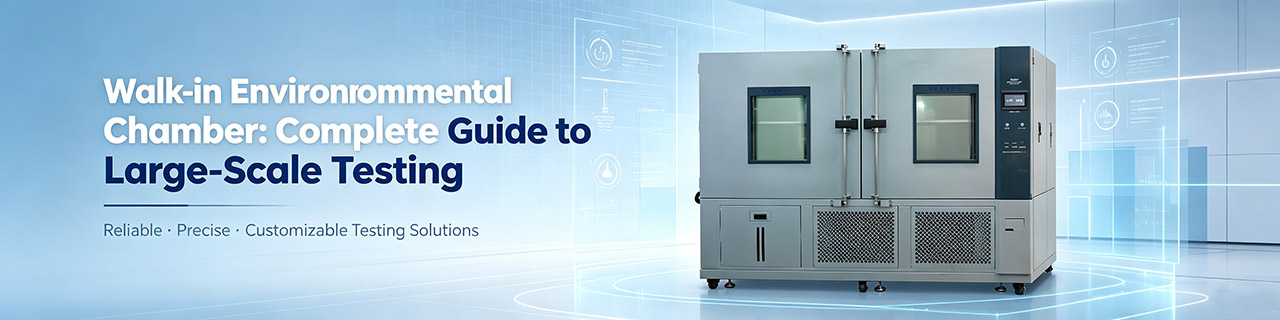
As products become larger, more complex, and more demanding in terms of reliability, conventional laboratory environmental chambers may no longer provide sufficient testing space. This is where a Walk-In Environmental Chamber becomes an important solution.
A walk-in environmental chamber provides a large controlled test environment for evaluating products, assemblies, materials, vehicles, battery systems, and other large-scale samples under simulated environmental conditions. Compared with standard benchtop or floor-standing chambers, walk-in chambers offer substantially greater internal capacity and can be customized around the dimensions, testing requirements, and operating conditions of the application.
For manufacturers, research laboratories, automotive companies, aerospace organizations, electronics manufacturers, and new energy companies, walk-in environmental chambers can support large-scale reliability and environmental simulation testing.
GESTER specializes in environmental and climatic test chambers and provides standard and customized environmental testing solutions. The company's product portfolio includes temperature and humidity chambers, high and low temperature chambers, thermal shock chambers, rapid temperature change chambers, salt spray chambers, rain and spray testing equipment, and other environmental simulation systems.
What Is a Walk-In Environmental Chamber?
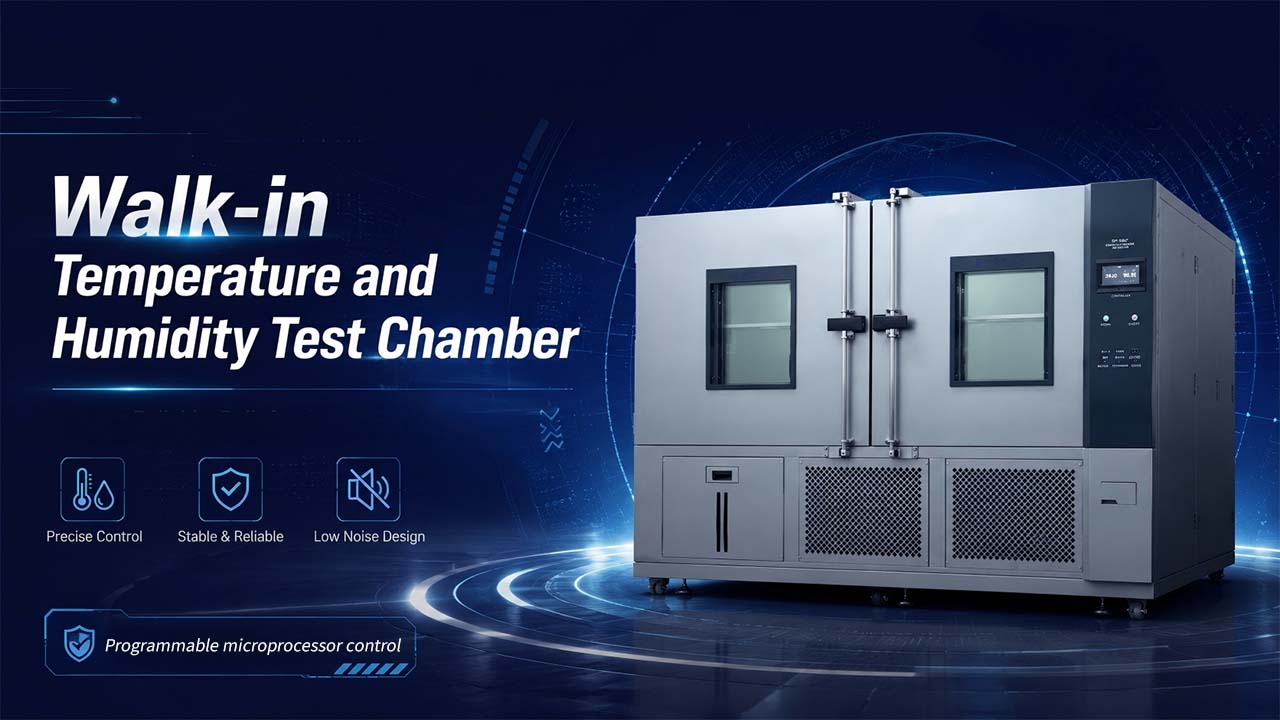
A Walk-In Environmental Chamber is a large-scale environmental testing system designed to create and maintain controlled environmental conditions around products or test specimens that are too large to fit inside conventional laboratory chambers.
The walk in temperature chamber creates a controlled environment in which engineers can expose products to defined temperature and humidity conditions and evaluate their performance, durability, reliability, and environmental resistance.
Unlike a conventional environmental chamber, the key characteristic of a walk-in chamber is its large internal test space.
This makes it suitable for applications involving large assemblies, multiple products, production-scale samples, and equipment that cannot be disassembled for laboratory testing.
Why Use a Walk-In Environmental Chamber?
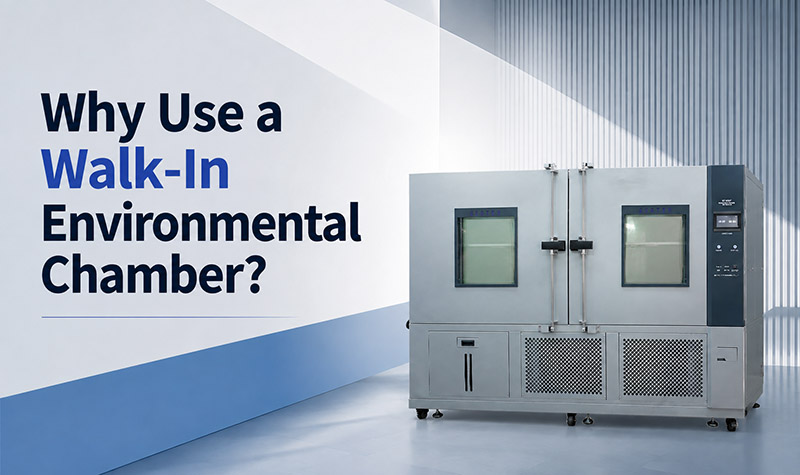
Environmental conditions can significantly affect the performance and service life of industrial products.
Temperature changes can cause thermal expansion and contraction. High humidity can contribute to corrosion, moisture absorption, insulation degradation, and material deterioration. Repeated environmental cycling can also reveal weaknesses that may not appear during normal laboratory conditions.
A walk-in temperature humidity chamber allows manufacturers to reproduce controlled environmental conditions before products are deployed in real-world environments.
1. Test Large Products
Large products may simply be too big for a conventional chamber.
A walk-in temperature humidity chamber can provide sufficient internal volume for:
- Automotive components and assemblies
- Large electronic equipment
- Battery systems
- Industrial equipment
- Large materials and structures
- Aerospace components
- Production-scale products
2. Test Complete Assemblies
Some products cannot be accurately evaluated after being separated into individual components.
Testing a complete assembly can provide a more realistic understanding of how different components interact under environmental stress.
3. Test Multiple Samples Simultaneously
Large internal space can also be used to place multiple specimens inside the same controlled environment.
This can improve testing efficiency when the test procedure permits multiple samples to be evaluated simultaneously.
4. Support Production-Level Testing
Walk-in temperature and humidity test chambers can be designed for industrial environments where testing requirements go beyond conventional laboratory R&D.
They can support product validation, reliability testing, quality control, and environmental conditioning at a larger scale.
Walk-In Environmental Chamber vs. Standard Environmental Chamber
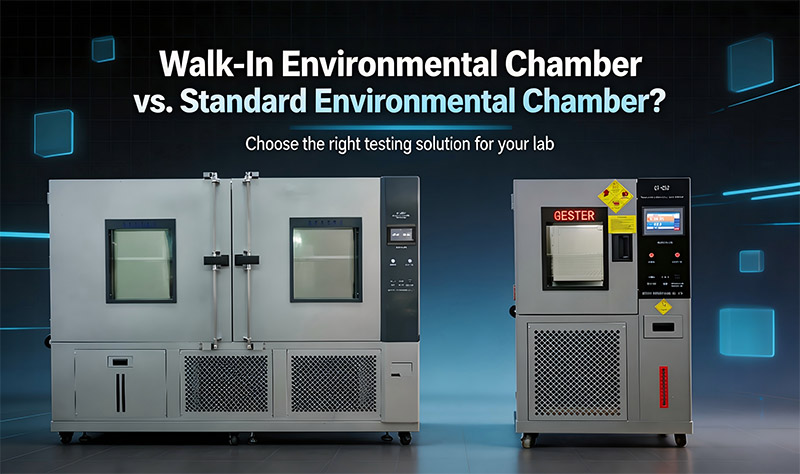
The primary difference is test space and application scale.
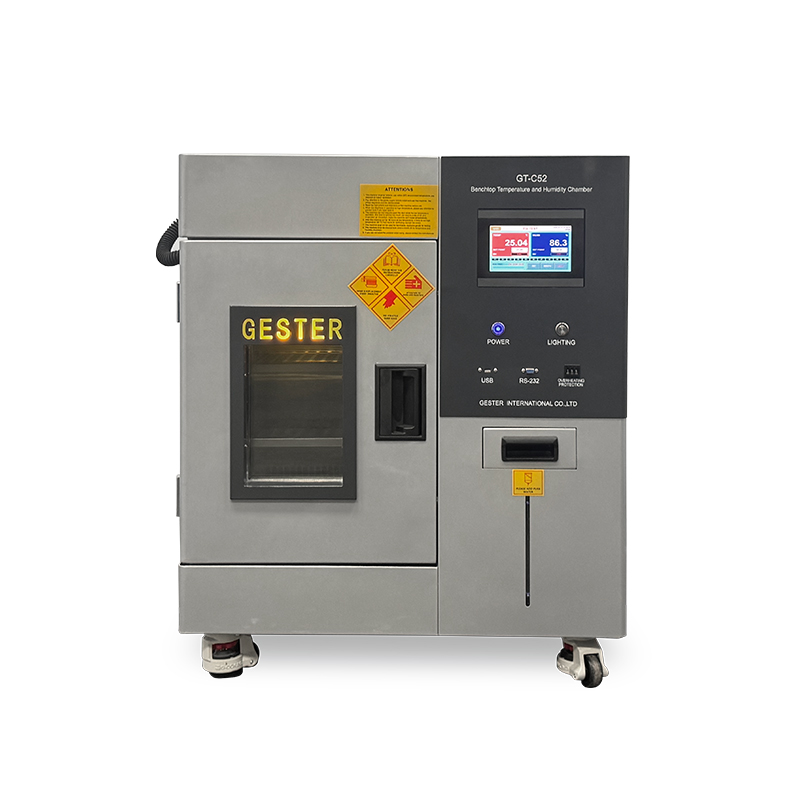
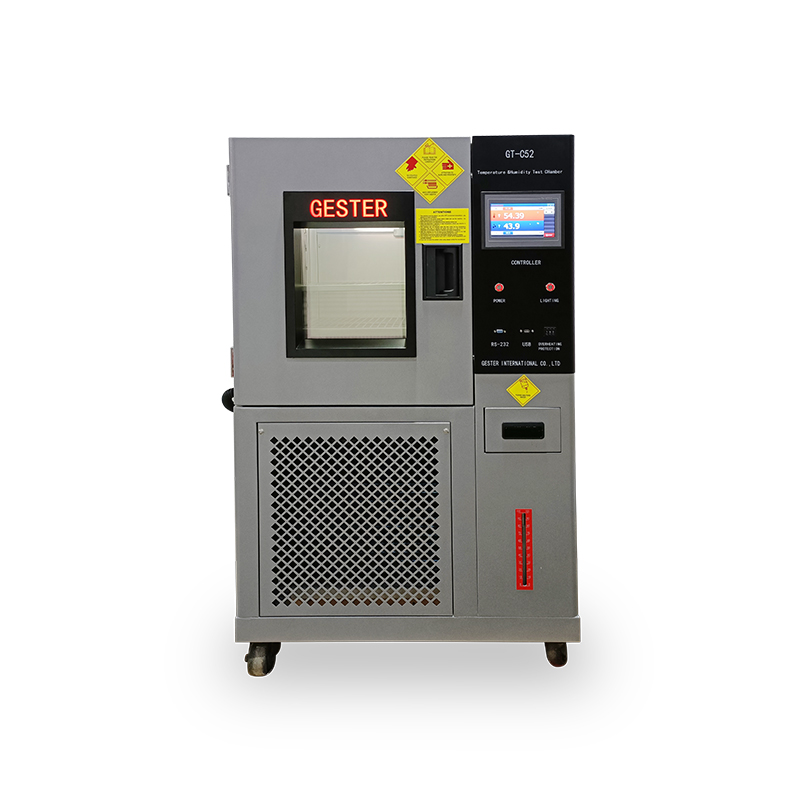
A standard environmental chamber is generally appropriate for components, materials, small products, and laboratory research. GESTER's temperature and humidity chamber range includes compact benchtop models and floor-standing configurations from smaller capacities through larger chambers.
A walk-in temperature humidity test chamber is designed when the product, assembly, or quantity of samples exceeds the physical capacity of a conventional chamber.
A simple rule is:
If the product cannot physically fit inside a standard environmental chamber, a walk-in environmental chamber may be the more appropriate solution.
Main Applications of Walk-In Environmental Chambers
Walk-in environmental chambers can be used across many industries because environmental simulation is an important part of product reliability testing.
Automotive Testing
Automotive components and assemblies may be exposed to significant temperature and humidity changes throughout their service life.
Walk-in temperature humidity test chambers can be used for testing:
- Automotive electronic systems
- Interior components
- Electrical assemblies
- Large components
- Battery systems
- Vehicle-related equipment
Environmental simulation can help engineers identify potential performance changes and reliability issues before products enter field operation.
Aerospace Testing
Aerospace equipment must operate reliably under demanding environmental conditions.
Large environmental chambers can provide controlled conditions for evaluating components and assemblies that cannot fit into conventional laboratory chambers.
Potential applications include:
- Aerospace components
- Electronic systems
- Structural assemblies
- Materials
- Avionics-related equipment
Electronics and Semiconductor Applications
Electronic products can be sensitive to temperature and humidity.
Environmental testing can help evaluate:
- Thermal performance
- Moisture resistance
- Component reliability
- Long-term stability
- Environmental durability
For larger electronic systems, a walk-in chamber provides the necessary space for testing complete assemblies rather than individual components.
New Energy and Battery Testing
Battery systems can require environmental testing at different stages of development.
Large chambers may be used for:
- Battery modules
- Battery packs
- Energy storage systems
- Large battery assemblies
- Related components
For battery testing, the chamber configuration should be selected according to the product size, required environmental range, safety requirements, test procedure, and applicable regulations.
Industrial Equipment Testing
Industrial equipment may need to operate under controlled or extreme environmental conditions.
Walk-in temperature humidity chambers can accommodate large machinery, assemblies, and production-scale products for environmental reliability evaluation.
Temperature and Humidity Testing in a Walk-In Chamber
One of the most common applications is combined temperature and humidity testing.
A temperature and humidity chamber controls temperature and relative humidity to reproduce specified environmental conditions.
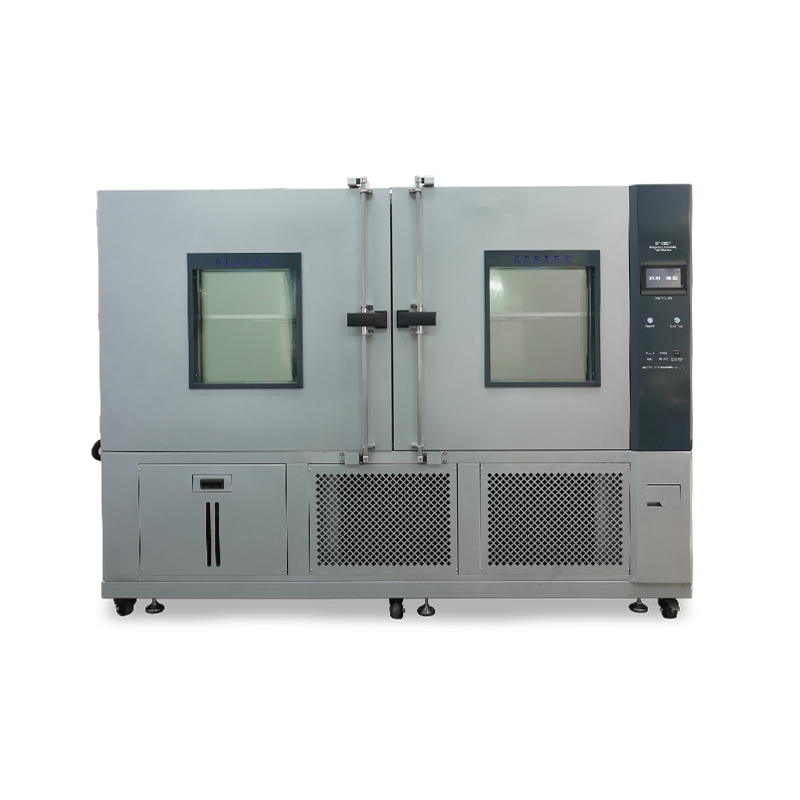
GESTER's standard temperature and humidity chamber series is designed for programmable environmental simulation, while the company's walk-in temperature and humidity chamber configuration is intended for larger products and assemblies.
Typical testing procedures may include:
Constant Temperature Testing
The product is maintained at a defined temperature for a specified period.
This can be used to evaluate performance and stability under constant environmental exposure.
Constant Humidity Testing
The test environment is maintained at a defined relative humidity level.
This can help assess moisture-related effects on materials and components.
Temperature-Humidity Cycling
Temperature and humidity conditions are changed according to a programmed test profile.
This type of testing can be useful for identifying problems associated with repeated environmental changes.
Long-Duration Environmental Exposure
Some reliability programs require products to remain under controlled environmental conditions for extended periods.
A walk-in temperature and humidity chamber provides sufficient space for larger products while maintaining the required environmental conditions throughout the test.
Key Features to Consider When Selecting a Walk-In Environmental Chamber
Choosing a walk-in environmental chamber requires more than simply selecting the largest available chamber.
The system should be designed around the actual testing application.
1. Chamber Size
Determine the required internal dimensions based on:
- Product dimensions
- Number of samples
- Sample arrangement
- Required clearance
- Access requirements
- Future testing requirements
Do not size the chamber only according to the current product.
If product dimensions are expected to increase, additional internal capacity may be worthwhile.
2. Temperature Range
The required temperature range depends on the test standard and application.
Before selecting the chamber, define:
- Minimum temperature
- Maximum temperature
- Operating temperature
- Temperature cycling requirements
- Heating and cooling rate requirements
3. Humidity Range
If humidity testing is required, determine:
- Minimum relative humidity
- Maximum relative humidity
- Required humidity accuracy
- Humidity cycling requirements
- Condensation requirements
Not every environmental test requires humidity control, so a temperature-only chamber may be sufficient for some applications.
4. Temperature Uniformity
For large chambers, temperature uniformity becomes especially important.
The chamber should maintain consistent environmental conditions throughout the usable test space so that samples in different positions are exposed to comparable conditions.
5. Air Circulation
Large internal volumes require effective air circulation.
Proper airflow helps distribute conditioned air throughout the chamber and contributes to stable environmental conditions.
6. Control System
A programmable controller allows users to create and execute defined environmental test profiles.
Important considerations include:
- Temperature setting
- Humidity setting
- Test duration
- Programmed cycles
- Data recording
- Alarm functions
- Communication and data export
7. Safety Configuration
Large environmental chambers may require additional safety features depending on the product being tested.
For example, applications involving batteries or electrical products may require specialized safety considerations.
The chamber configuration should therefore be discussed with the manufacturer before purchase.
Why Choose GESTER for Walk-In Environmental Testing Solutions?
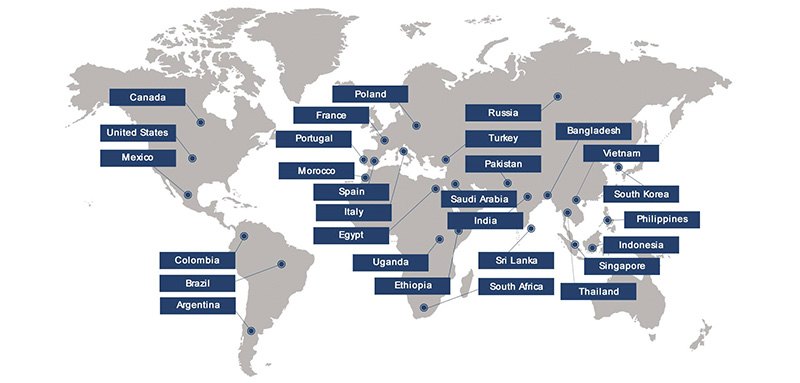
GESTER International Co., Ltd. specializes in the R&D and manufacturing of environmental and climatic test chambers and has nearly 30 years of experience in the field. The company's product range covers temperature and humidity chambers, high and low temperature chambers, thermal shock chambers, rapid temperature change chambers, salt spray chambers, and other environmental simulation equipment.
GESTER's environmental testing solutions are designed for laboratories, research institutions, manufacturers, and industrial applications worldwide.
The company also provides customization, installation and calibration support, maintenance, repairs, and operator training.
For large-scale environmental testing projects, customization can be particularly important because chamber dimensions, temperature requirements, sample loads, test procedures, and safety requirements can vary significantly between applications.
Frequently Asked Questions
What is a walk-in environmental chamber?
A walk-in environmental chamber is a large environmental testing system designed to simulate controlled environmental conditions for large products, assemblies, multiple samples, and industrial-scale test specimens.
What is a walk-in temperature and humidity chamber used for?
It is used for environmental reliability testing of large products and assemblies. Typical applications include automotive components, battery systems, aerospace equipment, industrial products, electronics, and large materials.
What is the difference between a walk-in chamber and a standard environmental chamber?
The main difference is internal test capacity. Standard chambers are generally used for smaller samples and products, while walk-in chambers provide a much larger test space for large assemblies and production-scale samples.
Can a walk-in environmental chamber control humidity?
Yes. A walk-in temperature and humidity chamber can be configured to control both temperature and relative humidity according to the requirements of the test application.
Can walk-in environmental chambers be customized?
Yes. Walk-in temperature and humidity test chambers can be customized according to product dimensions, temperature and humidity requirements, chamber capacity, testing procedures, safety requirements, and installation conditions.
What products can be tested in a walk-in chamber?
Depending on the chamber configuration, large automotive components, battery systems, electronic assemblies, aerospace equipment, industrial products, materials, and other large-scale samples can be tested.
How do I determine the required chamber size?
Consider the dimensions and weight of the test product, the number of samples, sample arrangement, required clearance, airflow requirements, and potential future testing needs.
Do walk-in environmental chambers require special installation?
Yes. Installation planning should consider floor space, electrical power, ventilation, heat dissipation, access routes, drainage, maintenance space, and other site requirements.
How long does a walk-in environmental test take?
Test duration depends entirely on the product, test standard, environmental profile, and test objective. Some tests may last several hours, while reliability or aging programs can require much longer exposure periods.
Conclusion
A Walk-In Environmental Chamber provides a practical solution when conventional environmental chambers cannot accommodate the size, quantity, or configuration of the test product.
From automotive components and battery systems to aerospace assemblies, electronics, industrial equipment, and production-scale products, large environmental chambers can provide controlled conditions for reliability, durability, and environmental performance testing.
The right chamber should be selected according to the product dimensions, environmental conditions, test profile, applicable standards, installation environment, safety requirements, and future testing needs.
For large-scale or specialized applications, working with an experienced environmental chamber manufacturer can help ensure that the chamber is correctly configured from the beginning.
Looking for a Walk-In Environmental Chamber for your application?
Contact GESTER with your required chamber dimensions, temperature range, humidity range, test product, test standard, and testing requirements. GESTER's technical team can help develop a suitable environmental testing solution based on your project.

Related Products
More Resources:
Environmental Test Chamber: Complete Guide to Environmental Testing Equipment – Source: GESTER
What Is a Temperature and Humidity Test Chamber? – Source: GESTER
Temperature Chamber vs Temperature Humidity Chamber: What Is the Difference? – Source: GESTER
The Different Types Of Temperature Chambers And How To Choose The Right One – Source: GESTER