NSS, AASS and CASS Salt Spray Tests: What Is the Difference?
Oct 14, 2026
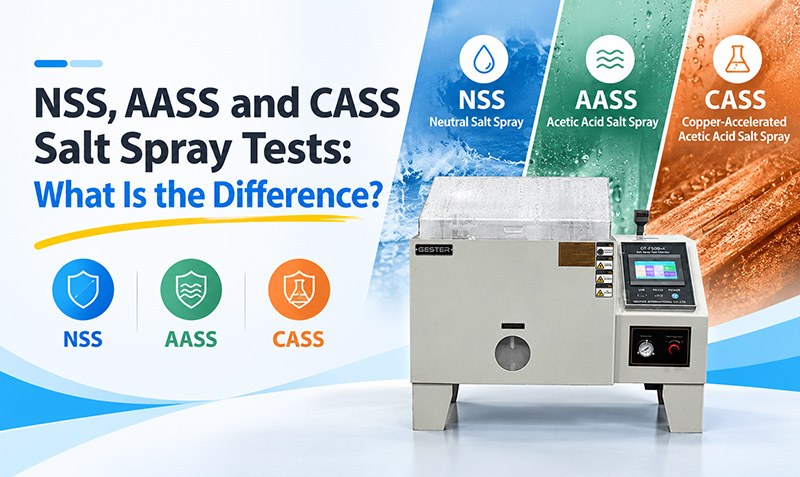
NSS, AASS and CASS salt spray tests have distinctive characteristics that make them suitable for different industrial applications. Understanding the differences between these methods is essential for selecting the right test procedure for quality control, coating evaluation, and other engineering applications.
A reliable salt spray test machine helps manufacturers evaluate corrosion resistance under controlled laboratory conditions. Whether a laboratory needs a standard salt spray chamber for routine inspections or a more advanced salt spray corrosion test chamber for demanding coating evaluations, choosing the appropriate test method and equipment is essential for obtaining consistent, repeatable results.
What Is NSS Salt Spray Test?
NSS stands for Neutral Salt Spray test, the most widely adopted accelerated corrosion test method governed by international standards such as ISO 9227 and ASTM B117. This test relies on atomized salt fog to simulate salt-laden atmospheric conditions inside a salt spray test chamber, such as the GESTER GT-F50 series salt spray test chamber.
An NSS test uses a neutral sodium chloride solution to expose specimens to a continuous salt fog environment. For decades, this method has been recognized for its repeatable test conditions and straightforward operation when assessing general corrosion performance. NSS testing is commonly applied to metallic substrates, electroplated surfaces, conversion coatings, and organic paint layers.
A properly configured salt spray testing machine maintains the required temperature, spray conditions, and solution properties throughout the test. Depending on laboratory requirements, a salt spray tester can be used to evaluate zinc-plated steel, aluminum alloys, fasteners, painted metal components, and general hardware products.
NSS testing is widely used in metal manufacturing, household hardware, electronics, construction, and automotive quality inspection. It also serves as a baseline method for verifying whether protective surface finishes meet specified corrosion-resistance requirements and for identifying pores or discontinuities in coatings.
What Is AASS Salt Spray Test?
AASS stands for Acetic Acid Salt Spray test. It is an acidified salt spray method based on a sodium chloride solution, with glacial acetic acid added to lower the solution's pH.
The acidic environment increases corrosive attack compared with neutral NSS conditions. This modification creates a moderately aggressive fog environment suitable for evaluating decorative electroplated layers and anodized surfaces. AASS is valued for its combination of controlled acidity and salt fog, providing useful results when assessing the corrosion resistance of decorative metal finishes.
For laboratories conducting these tests regularly, a programmable salt spraying test chamber can help maintain consistent operating conditions and simplify the transition between different testing procedures. Before selecting equipment, users should confirm that the chamber supports the temperature, pH, and spray requirements specified by the applicable test standard.
What Is CASS Salt Spray Test?
CASS stands for Copper-Accelerated Acetic Acid Salt Spray test. In addition to sodium chloride and acetic acid, copper chloride is added to the test solution as an accelerating agent to increase the corrosion rate.
Thanks to copper-ion catalysis, CASS produces more aggressive corrosion conditions than NSS and AASS. The higher chamber operating temperature further accelerates material degradation. This method is widely used to expose weaknesses in high-grade decorative multilayer plating systems.
A dedicated salt spray corrosion tester or a compatible multifunctional chamber can support CASS evaluations when it meets the relevant temperature-control, solution-preparation, and corrosion-testing requirements. CASS is particularly useful for strict quality validation when decorative coatings must withstand demanding humid and salty environments.
Differences Between NSS, AASS and CASS Tests
1. Test Solution Composition
NSS: Neutral Sodium Chloride Solution
The NSS solution typically consists of 5% sodium chloride dissolved in purified water. No additional acid or metallic additives are required. Its neutral chemical properties make it suitable for broad material screening. The resulting salt fog simulates a general salt-laden atmosphere.
AASS: Acetic Acid-Modified Salt Solution
AASS uses the same 5% sodium chloride base, with glacial acetic acid added to bring the solution into the specified acidic range. This changes the chemical environment and encourages corrosion reactions that may not develop as readily under neutral NSS conditions.
CASS: Copper-Accelerated Acetic Acid Salt Solution
CASS shares the sodium chloride and acetic acid base formula of AASS, with copper chloride added as the accelerating ingredient. Copper ions participate in corrosion reactions, significantly accelerating specimen deterioration.
The differences in chemical composition directly influence the aggressiveness of each salt spray test. A suitable salt spray resistance chamber must therefore be compatible with the selected test solution and operated according to the applicable standard.
2. Operating Parameters
pH Value
NSS typically maintains a pH of 6.5–7.2, providing a near-neutral testing environment.
Both AASS and CASS generally maintain a lower pH of 3.1–3.3 because of the addition of acetic acid. The acidic fog accelerates corrosion reactions and coating deterioration.
Chamber Temperature
NSS operates at 35 ± 2°C, the standard temperature range for neutral salt fog testing.
AASS also operates at 35 ± 2°C. Its increased corrosive effect comes primarily from the lower pH rather than a higher test temperature.
CASS operates at 50 ± 2°C. The elevated temperature works together with copper-ion catalysis to create more aggressive corrosion conditions.
A well-designed salt spray test cabinet should provide stable temperature control, reliable spray generation, and appropriate specimen placement. These features help laboratories maintain consistent conditions throughout the testing cycle.
3. Corrosive Severity
NSS provides relatively mild corrosive stress under standard test conditions. Visible rust or coating breakdown may require longer exposure periods, depending on the specimen and coating system.
AASS produces more aggressive corrosion than NSS because of its acidic salt fog. It is particularly useful for assessing decorative coatings that require a higher level of corrosion resistance.
CASS offers the most aggressive conditions among these three methods. The combined effects of copper catalysis, acidity, and elevated temperature accelerate the appearance of coating defects and substrate corrosion.
A salt fog test chamber designed for these applications must maintain the appropriate operating parameters to ensure that differences in test results reflect specimen performance rather than equipment instability.
4. Test Purpose
NSS is designed for general-purpose corrosion screening. It evaluates the overall corrosion resistance of metals and protective coatings, helping manufacturers verify baseline anti-rust requirements and identify defects in surface layers.
AASS primarily targets decorative electroplated finishes. Its acidic salt fog evaluates the ability of decorative plating systems to resist corrosion under specified test conditions.
CASS is intended for demanding quality assessments. It rapidly reveals subtle defects in premium multilayer decorative plating and supports quality validation for products exposed to challenging service environments.
When choosing a salt spray testing chamber, laboratories should consider the required test methods, specimen dimensions, throughput, control accuracy, and compliance with relevant standards. A suitable salt fog test machine can improve testing efficiency while maintaining repeatable environmental conditions.
5. Durability and Defect Detection
NSS can reveal large-scale coating damage and general rust formation. It is suitable for materials with moderate corrosion resistance but may not reveal every microscopic defect in high-performance decorative coatings.
AASS can detect fine defects within decorative plating layers that may be less apparent under neutral conditions. Its acidic fog can promote localized corrosion at small coating discontinuities.
CASS provides high sensitivity for detecting micropores and microcracks in decorative Cu-Ni-Cr and Ni-Cr coating systems. Its accelerated corrosion conditions help reveal minor flaws within a shorter laboratory testing period.
All three test methods can be performed using compatible salt spray equipment, including the GESTER GT-F50 series. A properly configured salt spray chamber testing setup helps maintain stable and repeatable test conditions, supporting reliable comparisons across specimen batches.
When evaluating a salt fog test machine or other corrosion-testing equipment, laboratories should verify temperature uniformity, spray collection performance, solution control, and compatibility with the intended test method. These factors are essential for obtaining meaningful results.
6. Applications
NSS Applications
NSS is used across a wide range of industries. Typical specimens include zinc-plated steel parts, aluminum alloys, painted metalwork, fasteners, and general hardware components. NSS also serves as a routine quality-control method for construction hardware, electrical parts, and transportation components.
AASS Applications
AASS is primarily applied to decorative plating products. Common test specimens include copper-nickel-chromium plated fittings, decorative anodized aluminum components, consumer-product hardware, and sanitary-ware surface finishes.
CASS Applications
CASS is used for high-specification decorative surface-finish validation. Common applications include premium bathroom fixtures, automotive decorative trim, and multilayer electroplated hardware. Decorative metal fittings and plated connectors may also undergo CASS testing when stricter corrosion-resistance verification is required.
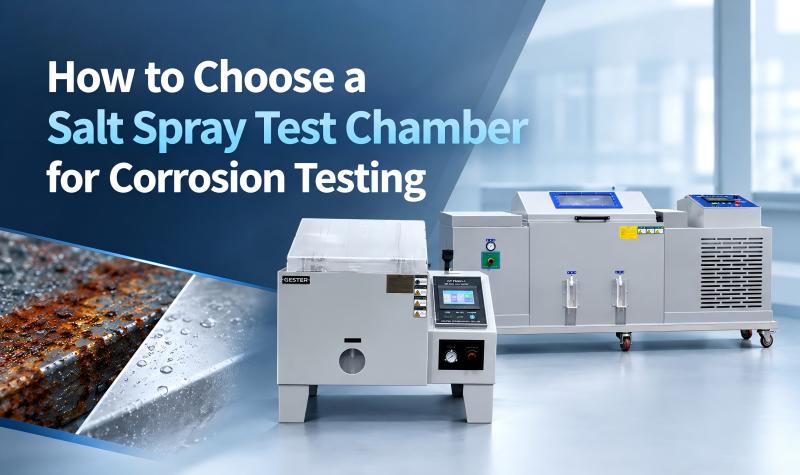
For manufacturers and testing laboratories, choosing the right salt spray test machine depends on the required test standard, specimen size, testing frequency, and available laboratory space. Laboratories that need to perform multiple test methods should also verify whether a single salt spray test chamber can support NSS, AASS, and CASS under the required operating conditions.
How to Choose the Right Salt Spray Test Equipment
When comparing a salt spray chamber with other corrosion-testing systems, consider the following factors:
Applicable standards: Confirm compatibility with the required ISO, ASTM, JIS, or industry-specific test methods.
Test modes: Determine whether the equipment supports NSS, AASS, CASS, or additional corrosion-testing procedures.
Temperature and spray control: Evaluate temperature uniformity, spray stability, and solution management.
Chamber capacity: Select an appropriate working volume based on specimen size, quantity, and laboratory throughput.
Material compatibility: Check the chamber construction, seals, spray system, and accessories for resistance to corrosive solutions.
Maintenance and calibration: Review cleaning requirements, calibration procedures, spare-part availability, and technical support.
The salt spray chamber price can vary depending on chamber capacity, automation, control functions, construction materials, and supported test methods. Similarly, the salt spray test machine price depends on the equipment configuration, optional accessories, and customization requirements.
For specialized applications, a customized salt spray test chamber may be appropriate when standard models cannot accommodate unusual specimen dimensions, specific loading arrangements, or particular testing workflows.
When comparing salt spray test chamber suppliers and salt spray chamber suppliers, buyers should assess technical specifications, compliance documentation, installation support, calibration services, and after-sales assistance rather than choosing equipment based on price alone.
Working with an experienced salt spray chamber manufacturer can help laboratories identify an appropriate configuration for their testing needs. Before placing an order, request detailed specifications, the supported test standards, the working chamber dimensions, and a quotation for the required configuration.
Conclusion
Although NSS, AASS, and CASS salt spray tests share the same basic principle of accelerated corrosion testing, they differ significantly in solution composition, operating parameters, corrosive severity, and practical applications.
NSS is suitable for general corrosion screening, AASS is commonly used for decorative coating evaluation, and CASS provides more aggressive conditions for assessing high-grade decorative plating systems.
Understanding these differences helps quality-control laboratories, manufacturers, and engineering teams select suitable test methods and equipment. By considering test requirements, chamber performance, calibration, and supplier support, users can establish a more reliable corrosion-testing process.
FAQ
Which standard covers NSS, AASS and CASS salt spray tests?
These three salt spray test methods are addressed by ISO 9227, which specifies neutral salt spray, acetic acid salt spray, and copper-accelerated acetic acid salt spray testing. ASTM B117 covers salt spray (fog) testing, while ASTM B287 and ASTM B368 address acetic acid salt spray and copper-accelerated acetic acid salt spray, respectively. Manufacturers should verify the current editions and applicable requirements before testing.
Can one salt spray test chamber run NSS, AASS and CASS?
A single salt spray testing chamber may support all three test methods if its design and controls meet the relevant temperature, pH, solution-preparation, and spray requirements.
Before switching between methods, users should follow the manufacturer's cleaning and maintenance procedures for the solution tank, spray nozzles, specimen supports, and collection system. Thorough cleaning helps prevent cross-contamination from residual copper chloride or acetic acid, which could affect test results.
Is a CASS test result equal to real outdoor corrosion life?
No. Salt spray testing is an accelerated laboratory test and cannot directly convert exposure hours into real-world service life. CASS accelerates corrosion through acidity, copper catalysis, and elevated temperature, but it does not fully reproduce natural factors such as UV radiation, temperature cycling, wet-dry alternation, and industrial pollutants.
CASS is best used for relative comparisons between coatings, production batches, or process improvements rather than predicting an exact service life.
How often should I calibrate my salt spray test cabinet?
Calibration and verification should follow the applicable test standard, equipment manufacturer's recommendations, and laboratory quality-management requirements.
Key parameters include spray collection rate, temperature accuracy and uniformity, solution pH, salt concentration, and collected liquid volume. Some laboratories conduct routine verification monthly or quarterly and arrange formal calibration annually, depending on their quality procedures and testing requirements.
Regular verification helps ensure that a salt spray test cabinet delivers consistent test conditions and supports reliable comparisons between NSS, AASS, and CASS results.
What affects the price of a salt spray chamber?
The salt spray chamber price and salt spray test machine price are influenced by working volume, construction materials, temperature-control accuracy, automation, supported test methods, and optional accessories. A standard chamber for routine NSS testing may have different specifications from a system designed for multiple test modes or specialized specimens.
When requesting quotations from salt spray equipment suppliers, provide your required standards, specimen dimensions, expected workload, and any customization needs. This allows suppliers to recommend an appropriate configuration and provide a more meaningful price comparison.
Tell us more about your corrosion‑testing project today, and our engineers will design and fabricate custom salt spray test chambers for your application.
Salt Spray Tester GT-F50BB
Salt Fog Chamber GT-F50BA
Compound Salt Spray Test Chamber GT-F50C
Read More