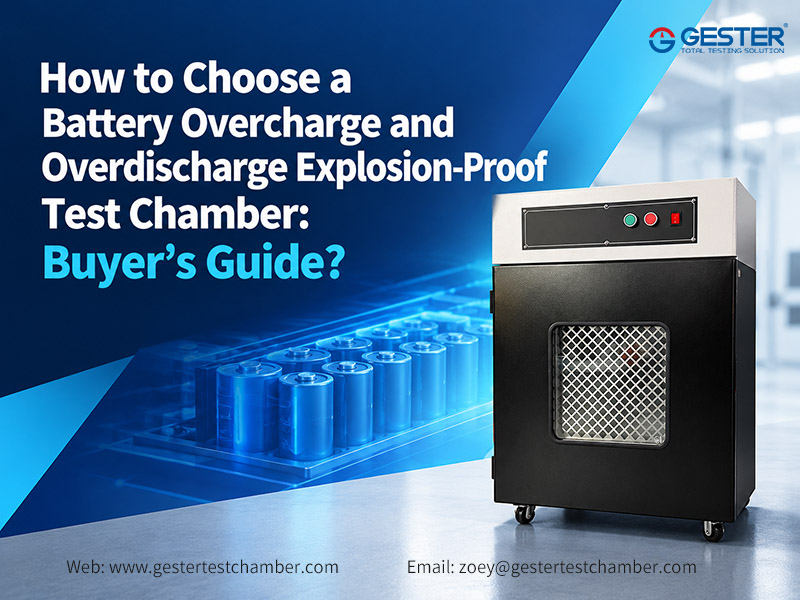
A battery overcharge and overdischarge explosion-proof test chamber is a critical safety testing enclosure used to protect operators and instruments during lithium‑ion battery abuse tests, including overcharge and overdischarge evaluations. A qualified battery explosion proof test chamber comes with robust explosion‑resistant hardware, safety interlock structures, smoke exhaust systems, reserved wiring ports and reliable mechanical locks. It can perform battery safety testing following GB, UL, UN38.3 and IEC standards. This guide will explain how dedicated explosion‑proof chambers improve safety and reliability for battery overcharge and overdischarge testing. What is a Battery Overcharge and Overdischarge Explosion‑Proof Test Chamber? An optimum battery overcharge overdischarge test chamber offers physical containment for lithium‑ion cells or packs during overcharge and overdischarge abuse tests, where batteries may catch fire, vent gas or rupture. For quality control and R&D departments, this equipment is not just for documentation purposes; this safety enclosure directly protects lab staff, supports product certification approval and battery product development work. With its reinforced steel housing, thermal insulation layer, magnet‑adsorbed pressure‑relief door, smoke exhaust fan and built‑in explosion‑proof LED lighting, it provides secure, repeatable conditions for battery abuse testing. How are General Environmental Chambers and Battery Explosion‑Proof Test Chambers different? A general environmental test chamber mainly provides controlled temperature‑humidity conditions for material aging and performance inspection. On the other hand, a battery safety test chamber designed for overcharge and overdischarge testing is purpose-built to contain fire, blast impact and toxic gas released during battery thermal‑runaway abuse tests. GESTER battery overcharge and overdischarge explosion-proof test chamber features specialized anti‑explosion locks, pressure‑relief mechanism, high‑temperature smoke exhaust and insulating Teflon base plate. These dedicated safety‑focused components enhance operator safety and test credibility for battery abuse evaluations. Major Tests By using a battery overcharge overdischarge test chamber, we can carry out overcharge tests and overdischarge tests for lithium‑ion cells and small battery packs, in accordance with standards including GB 31241, IEC 62133, UL1662 and UN38.3. External charge‑discharge equipment connects through the reserved wire lead hole of the chamber. We must select suitable battery safety testing equipment to reduce lab safety risks and guarantee valid certification‑grade test results. Which Institutes Need a Battery Overcharge and Overdischarge Explosion‑Proof Test Chamber? Battery Manufacturing Industries Battery factories, production QC departments and new‑energy manufacturers perform abuse safety validation for finished lithium‑ion cells and packs. A modern explosion‑proof chamber such as GT‑I08 delivers reliable physical containment for routine overcharge‑overdischarge production‑lot testing. Battery Testing Laboratories Specialized battery laboratories handle large batches of cell and module samples. A heavy‑duty explosion‑proof chamber with proper inner dimension and complete safety accessories fits high‑workload testing and supports all main international battery safety standards. Consumer‑Electronic Manufacturers Brands making mobile devices, power banks and portable electronics also need dependable explosion‑proof enclosures. Reliable containment helps accelerate product certification decisions and supports compliance documentation for market access. Universities and Research Institutes University battery research groups require explosion‑proof test chambers for cell chemistry and abuse‑mechanism studies. The chamber needs flexible wiring‑pass‑through design and solid explosion‑proof structure to support research‑oriented overcharge‑overdischarge testing of diverse lithium‑based samples. Third‑Party Inspection & Certification Houses Third‑party inspection teams test high volumes of battery specimens for regulatory compliance. They need qualified explosion proof test chambers for lithium cells and battery packs that satisfy multiple global standards. Robust mechanical safety features reduce operational risks for high‑throughput abuse‑test workflows. Price of a Battery Overcharge Overdischarge Explosion‑Proof Test Chamber The price of a battery explosion proof test chamber does not depend only on cabinet outer dimension; it mainly depends on explosion‑proof structural design, material grade, complete safety‑protection accessories, standard‑compliance capability and long‑term service life. While professional explosion‑proof chambers cost more than simple un‑reinforced metal boxes, low‑end simple boxes often suffer structural risk and lack formal standard‑validated safety design for battery‑abuse scenarios. Inner Test‑Chamber Volume Common typical inner dimension is 500 × 500 × 500 mm. Larger customized inner volume will push equipment cost higher. Cabinet Material Outer A3 steel‑plate thickness, inner SUS stainless‑steel grade and thickness, plus thickness of interlayer thermal‑insulation material directly influence explosion‑proof performance and equipment price. Safety‑Protection Accessories Magnet‑adsorbed pressure‑relief door, high‑temperature smoke‑exhaust fan, multiple explosion‑proof lock sets, built‑in safety‑type control‑panel, explosion‑proof LED lamp and Teflon insulating base plate all contribute to total equipment cost. Reserved Wire‑Lead Hole Proper‑diameter cable‑pass‑through opening allows external charge‑discharge‑tester wiring to connect test samples inside chamber, which is essential for overcharge‑overdischarge abuse workflows. Mechanical Calibration & Structural Validation Factory structural safety validation ensures chamber containment performance satisfies GB, IEC and UL battery‑abuse test requirements, supporting audit and certification‑lab acceptance. Standard‑Compliance Support Modern explosion‑proof chambers that satisfy multiple lithium‑battery safety standards simplify customer product audits and certification‑submission procedures. Ask Questions Before Buying a Battery Explosion‑Proof Test Chamber Types of Battery Samples That It Can Contain Confirm whether the chamber can safely hold your test objects: cylindrical, pouch, prismatic lithium‑ion cells, power‑bank products and small assembled battery packs under overcharge‑overdischarge abuse conditions. For certain applications, a lithium ion battery explosion proof box may be suitable, provided its structure and safety features meet the requirements of the intended tests. What Kind of Safety Standards Does It Follow? A qualified explosion‑proof chamber shall support key standards: GB 31241, IEC 62133, UL 1662, UN38.3, GB/T 18287 and related lithium‑battery safety specifications. Chamber Inner Working Dimension Check inner width‑depth‑height dimension to confirm your largest battery sample can be placed inside test area. Compatibility with External Charge‑Discharge Testers Verify wire‑lead hole diameter matches your cycler cables. Confirm mechanical structure will not interfere external tester signal‑wiring routing. Major Mistakes While Buying an Explosion‑Proof Test Chamber If you select battery explosion‑proof testing equipment based only on the battery test chamber price, you may face issues like insufficient explosion‑proof structure, poor smoke extraction performance, safety hazards during thermal runaway, non‑compliant test results and frequent equipment failures. When considering how to choose a battery explosion proof test chamber, evaluate its containment structure, pressure‑relief design, exhaust capacity and compatibility with your test requirements rather than focusing on price alone. Conclusion Investing in a proper modern battery overcharge‑overdischarge explosion‑proof test chamber is not just for laboratory hardware upgrading; it is for protecting lab staff and obtaining valid, certification‑acceptable battery‑abuse test data. The right explosion‑proof test system includes robust blast‑resistant mechanical construction, reliable pressure‑relief mechanism, effective smoke‑extraction function and complete locking safety‑interlock design, delivering stable containment performance for destructive battery abuse scenarios. As essential battery safety performance testing equipment, it helps laboratories conduct battery abuse tests with improved safety and reliability. Related Battery Testing Equipment Battery Nail Penetration Testing Machine GT-I04 Battery Short Circuit Testing Machine GT-I09 Battery Extrusion Testing Machine GT-I05 Electromagnetic Vibration Test Bench GT-I12
Read More
Leave A Message
If you are interested in our products and want to know more details,please leave a message here,we will reply you as soon as we can.